Annabelle Mander on Why Saudi Arabia Is Becoming a GCC Launchpad
Tahaluf's Annabelle Mander says companies now treat Saudi Arabia as a base for Gulf-wide expansion, with fintech, AI and biotech among the sectors to watch.
Karim El-Sayed Karim El-Sayed covers company news, policy and regulation across the UAE and wider MENA for Anecdoted, with a focus on how new rules and licences reshape how startups operate. karim@anecdoted.com
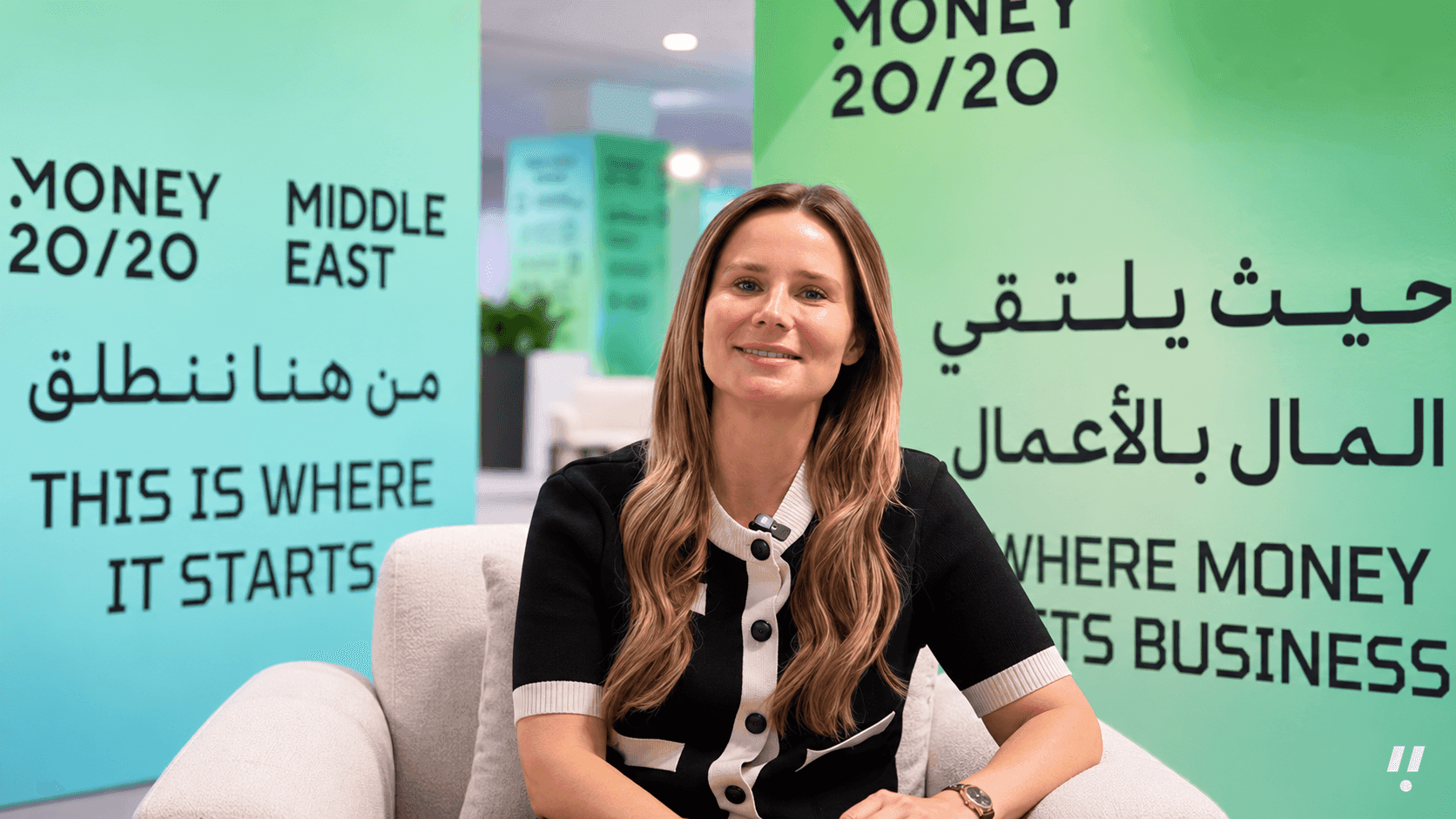
Saudi Arabia's economic diversification and digital build-out are doing more than pulling in foreign capital. The Kingdom is increasingly positioning itself as a base for companies that intend to grow across the Gulf, says Annabelle Mander, Executive Vice President at Tahaluf.
Speaking at Money20/20 Middle East, Mander described a change in how businesses treat the market. Saudi Arabia is no longer simply a destination that international firms want to enter. Companies are now setting up operations there as a strategic starting point for expansion into the wider region. She treats that shift as a significant one, and her assessment covers both the industries driving the next phase of growth and the conditions entrepreneurs need to operate in a GCC economy whose member markets are drawing closer together.
Fintech, AI, gaming and biotech lead the list
Mander named fintech, financial services, artificial intelligence, gaming and biotechnology as sectors she expects to keep expanding. The Kingdom's continuing investment in innovation and its developing entrepreneurial ecosystem sit behind that outlook.
The spread is wide, taking in regulated finance, consumer entertainment and life sciences. Each draws on different pools of talent and capital.
Easier trade and closer markets
Industry mix is only part of the story. Mander linked the opportunity to greater connectivity between GCC economies and to improvements in the ease of doing business. As those markets become more interconnected, companies operating from Saudi Arabia can extend their reach, build partnerships across borders and find customers throughout the region.
For founders, that changes the calculation. A presence in the Kingdom can serve as a platform rather than a single-market bet. Expansion of that kind depends on relationships and structures that take time to put in place, which is why the groundwork matters as much as the initial entry.
Taking risk, and letting go
On entrepreneurship itself, Mander returned to basics: take risks, believe in your vision, and surround yourself with the right people. Professional relationships can open doors to opportunities that would otherwise stay closed. Delegation, she argues, becomes more important rather than less as a company grows.
The implication for founders is a change of mindset. Managing every part of the business personally stops being viable at scale. Building a team that can support long-term ambitions is the alternative.
A decision window measured in years
Mander's broader point is about the choices companies make now. Those decisions can shape where a business sits in its market years later. Firms that invest in people, products and technology in Saudi Arabia today may be well placed to benefit as the Kingdom's development continues over the next five to ten years.
The opportunity has moved on from entering a promising market. It now lies in building companies with the reach to scale across the GCC and beyond.
%22%3E%3Crect%20x%3D%22-10%22%20y%3D%222%22%20width%3D%22120%22%20height%3D%220%22%20fill%3D%22%2300ff89%22%20opacity%3D%220.9%22%2F%3E%3C%2Fg%3E%3Ccircle%20cx%3D%22108%22%20cy%3D%2296%22%20r%3D%22-0.7692307692307692%22%20fill%3D%22%2300ff89%22%20opacity%3D%220.75%22%2F%3E%3C%2Fsvg%3E)
