Aramco CEO Warns Oil Stocks Are 'Scarily Thin' as Saudi Cuts Asia Prices
Amin Nasser says refilling emergency inventories could take two years, as Aramco takes November Asian prices to six-year lows.
Tariq Benali Tariq Benali covers business and corporate news across the UAE and MENA for Anecdoted, tracking the deals, leadership moves and regulatory shifts behind the region's companies. tariq@anecdoted.com
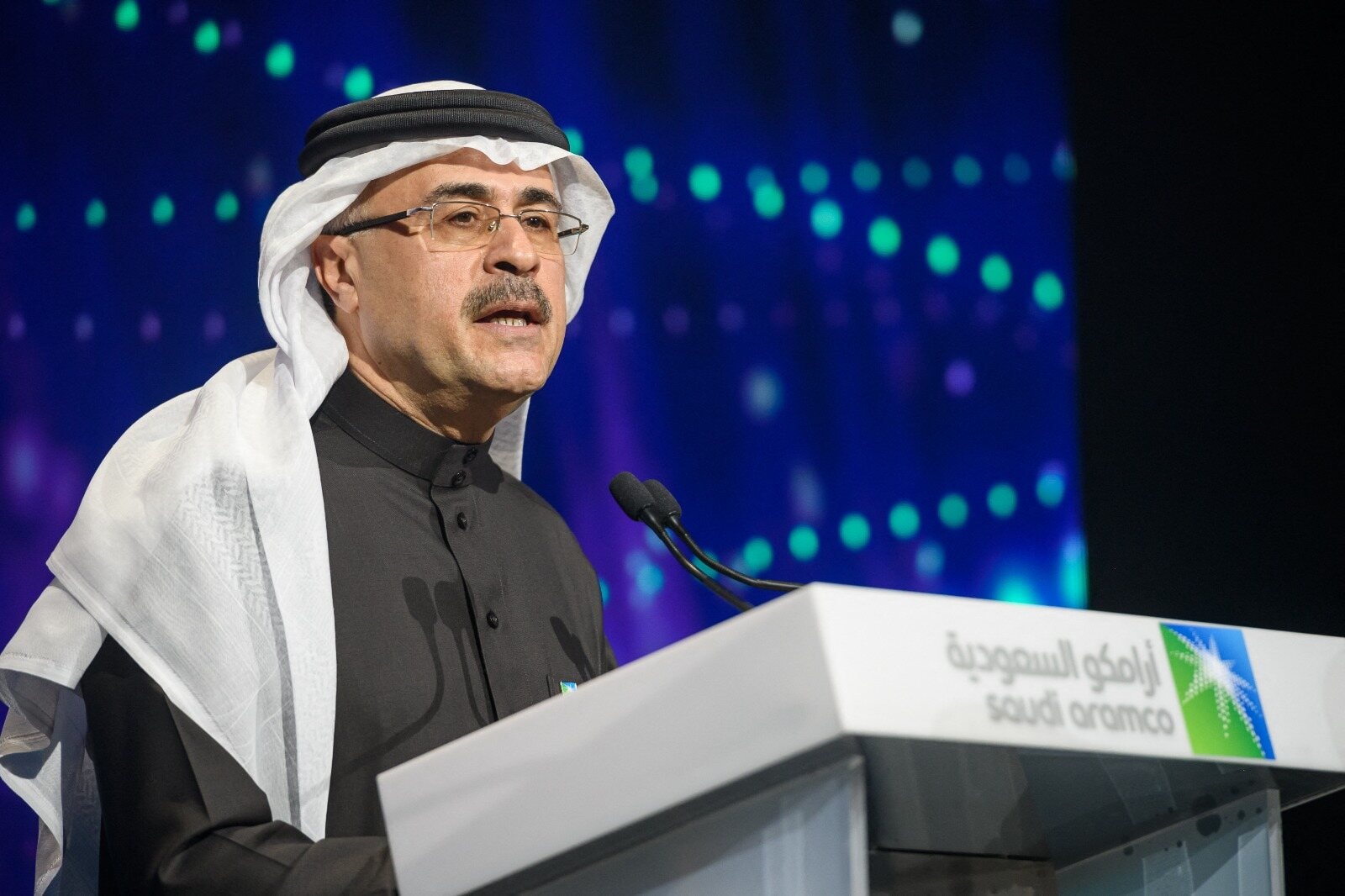
Global oil inventories have grown “scarily thin,” and the situation will worsen unless the Strait of Hormuz, the Gulf’s main crude export channel, reopens, Saudi Aramco chief executive Amin Nasser said on Monday at an energy industry conference in London.
Refilling the stockpiles that governments have drawn down as an emergency measure could take two years, Nasser said. Emergency reserves may cover the winter but leave the longer-term supply gap untouched. Crude and refined product markets will stay under pressure until the waterway is fully reopened and confidence returns. He put the commercial inventory left at less than six billion barrels, most of it inaccessible in practice.
His warning came days after the world’s largest economies announced plans to release as much as 100 million barrels of emergency crude and diesel. European Union states agreed on Friday to a French proposal for further diesel releases: governments discussed 50 million barrels of diesel, with International Energy Agency members contributing another 50 million barrels of crude. IEA members had already agreed in March to make 400 million barrels available — their largest release on record.
In a September 24 interview in Tokyo, Nasser said that release, along with China’s reduction of oil imports, had masked the severity of the disruption and was only temporary. On Monday he said Aramco is studying additional export routes and more storage abroad. In the earlier interview he described a possible fourth and a fifth route alongside its three primary ones, one of which runs through Hormuz, and talks in Japan on expanding storage there.
He also said open-source material such as satellite imagery and shipping logs is increasingly used as a weapon against infrastructure and tankers. Aramco starts repairing assets while they are still on fire, he said. Asked for 12 million barrels per day, the company could supply it within days.
The comments landed alongside a surprise cut to Saudi Arabia’s November prices for Asian buyers, bringing them to six-year lows, while prices for northwest Europe and the Mediterranean rose. Arab Light, Aramco’s flagship grade, will sell to Asia at $5 a barrel under the average of the Oman and Dubai benchmarks — $3 below October and the widest discount since June 2020. Arab Medium and Arab Heavy were cut by $5 a barrel, to discounts of $6 and $7.35.
Three Asian refining sources, speaking on condition of anonymity, said the cuts appeared aimed at compensating buyers for elevated freight costs. OPEC+ agreed on Sunday to keep November production unchanged, with seven members holding September output levels.
Chartering a very large crude carrier able to haul 2 million barrels from the Gulf to China cost $1.2 million a day on Friday, against roughly $80,000 a day a year earlier. Millions of barrels of Aramco crude have moved since September through ship-to-ship transfers outside Hormuz, lifting flows through the strait back to pre-conflict levels. Aramco began offering Arab Light, Arab Medium and Arab Heavy to Asian term buyers for loading via transfers off Oman’s Sohar port in mid-September, after attacks shut its East-West pipeline on September 11 and slowed exports from Yanbu. The 1,200-kilometre pipeline restarted on September 22, and Yanbu loadings reached about 2 million barrels a day by late September. Saudi Arabia was expected to ship about 5.4 million barrels a day in September, more than double August’s 2.4 million, according to preliminary tanker tracking.
In Europe, Aramco raised November prices by $3 a barrel across all grades. Arab Light moves to an 85-cent premium over Brent from a $2.15 discount in October; Mediterranean prices rose by the same $3. US buyers saw no change, with Arab Light staying $4.60 above the Argus Sour Crude Index.
Aramco reported adjusted net income of $33.6 billion for the first quarter of 2026 and ranks first in a 2026 ranking of the region’s 100 most valuable companies, at a market value of $1.7 trillion as of January 31, 2026. It places fifth in a global ranking of the 2,000 largest public companies, and Nasser, who has led Aramco since 2015, tops a 2026 list of the region’s 100 CEOs.

%22%3E%3Crect%20x%3D%22-10%22%20y%3D%2260%22%20width%3D%22120%22%20height%3D%226%22%20fill%3D%22%2300ff89%22%20opacity%3D%220.9%22%2F%3E%3C%2Fg%3E%3Ccircle%20cx%3D%2270%22%20cy%3D%2260%22%20r%3D%2215%22%20fill%3D%22%2300ff89%22%20opacity%3D%220.75%22%2F%3E%3C%2Fsvg%3E)