Argon Mechatronics Wins FII Innovators Pitch With Robots for Smaller Firms
Argon Mechatronics, one of five winners from 1,321 applications, sells benchtop robots from about US$10,000 to manufacturers and labs priced out of industrial automation.

Argon Mechatronics was one of five startups named winners of the third FII Innovators Pitch, a competition run by the Future Investment Initiative Institute in partnership with MIT Solve. The five were selected from 1,321 applications submitted across 90 countries and recognized for technologies that address global challenges.
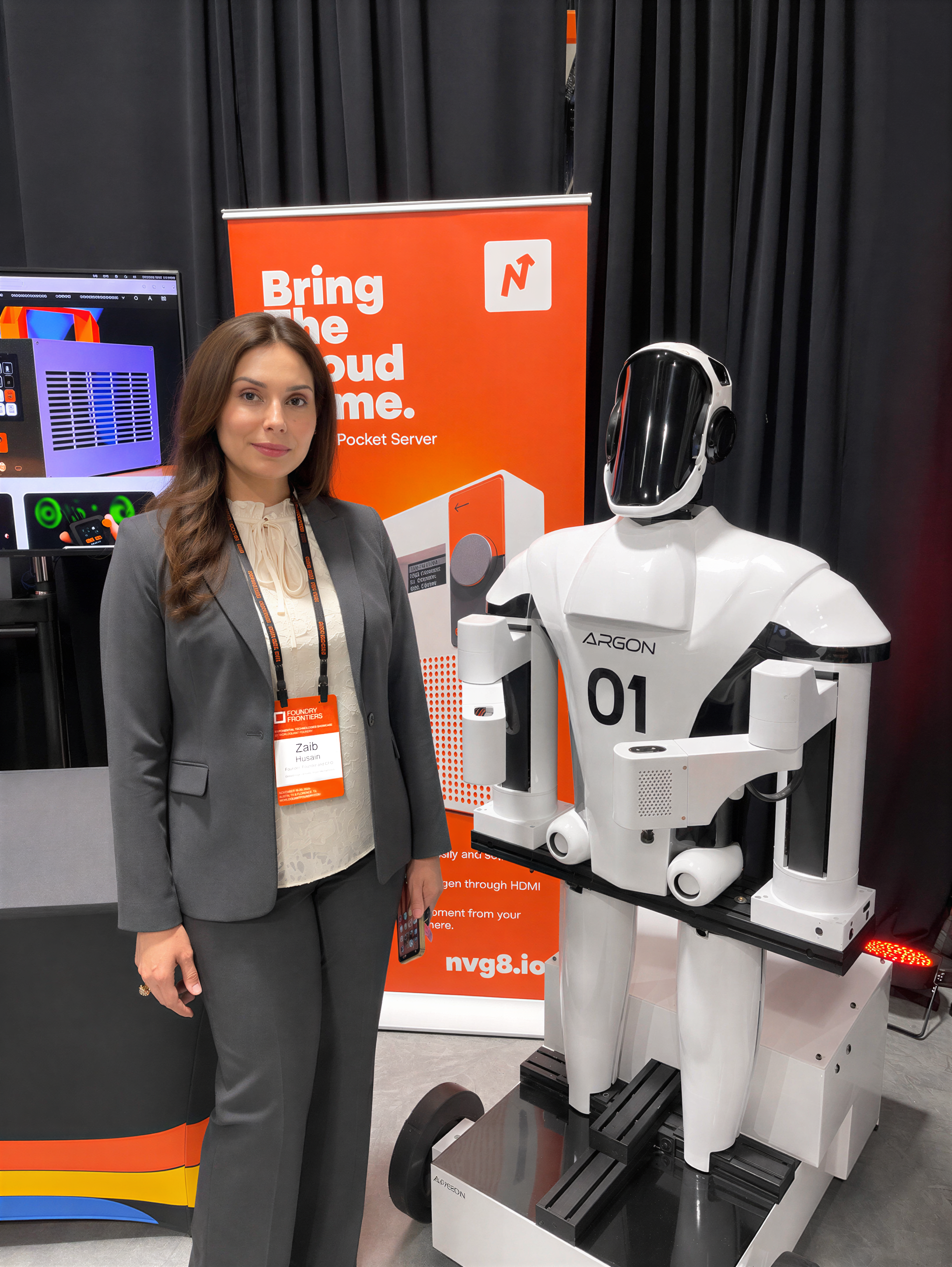
The US-based company builds robotic arms with toolheads that can be swapped. Its founder and board chair, Zaib Husain, and board director Amir Husain came to that design after noticing a pattern in how robots were being deployed.
Robotics is a large and growing market. It was estimated at US$106.69 billion in 2026 and is projected to reach US$223.28 billion by 2032. Growth is driven by automation in manufacturing, demand for faster and more efficient operations, take-up in healthcare and logistics, and improvements in robotic sensors and artificial intelligence.
Much of that demand, in Argon's reading, has been served badly. 'Industrial robots were built for the largest automakers,' Husain said. They are expensive, built for a single purpose, and depend on specialist integrators to install.
The firms left out are the majority. Most manufacturers and research labs are small or mid-sized, and their work changes every few months. Husain said such firms were either priced out of automation or ended up stuck with a robot that could do only one job.
Argon was started in 2024 to build robots that are precise, easy to use and affordable. It has two products so far.
A benchtop arm and a two-armed humanoid
Argon SCARA is the company's first product: a benchtop robotic arm with swappable toolheads. It can pick and place, dispense, 3D print, laser engrave, mill and handle other applications. Argon One, the company's debut humanoid, pairs two of those arms with a mobile base so it can carry work between stations on a lab or factory floor. The software includes computer vision and AI.
Argon describes its systems as versatile robots with interchangeable tools that cover several manufacturing and laboratory tasks, among them 3D printing, laser engraving and material handling.
Labor shortages and the cost of automating
The robotics industry is working against two constraints at once: a shortage of skilled workers and the high cost of automation.
Deloitte and The Manufacturing Institute project that US manufacturers could need 3.8 million new workers between 2024 and 2033, and that 1.9 million of those jobs could go unfilled.
Laboratories face a similar squeeze. Highly trained scientists spend hours on repetitive work such as dispensing and sample preparation. The International Federation of Robotics notes that most manufacturers are small and medium-sized companies. High upfront costs and low production volumes have historically kept many of them from automating at all.
Around US$10,000 to start
Argon SCARA starts at about US$10,000. It sits on a benchtop, runs on standard G-Code and one-click predefined tasks, and can be deployed without a large integration project. When the work changes, customers swap the toolhead instead of buying another robot.
The cost of leaving that gap open is large. Global studies estimate US$8.5 trillion in potential annual revenue losses for manufacturers by 2030 under traditional automation models.
In pharmaceuticals the gains run the other way. Automation could save 9 to 12 months in development timelines and generate up to US$400 million in additional net present value for each new drug, through earlier access and lower costs.
Argon's technology is already in use at the University of Mississippi School of Pharmacy, where researchers use its robots to test drug formulations. They measure and dispense different doses of medication into individual blister packs.
Self-funded, then Moneta Ventures
The founders paid for development themselves at first. Argon then secured investment from Moneta Ventures in July 2026, which the company describes as an important step toward scaling the business.
Husain is direct about why that took time. Hardware is harder to fund than software, he said. Hardware startups need more capital and more time to get from a prototype to a product, and investors know a robot has to work in the real world, not just in a demo.
His answer is that Argon's biggest challenge was proving it could 'ship, not just build.' With the technology deployed, he said, the focus is now on scaling and helping customers reach their efficiency and productivity goals.
Back to Riyadh
Argon launched both products at FII8 in Riyadh in 2024. Returning as a pitch winner, Husain said, 'feels like coming full circle.' He called the win 'a real validation' of the team's work and journey.
The company is using the event for more than recognition. It wants to meet strategic partners in Saudi Arabia and the wider MENA region who can host deployments, along with investors who understand hardware and the longer runway that scaling manufacturing requires. Husain called FII 'an incredible launch point' for international expansion beyond Argon's Texas home market.
Three openings in Saudi Arabia
The industrial backdrop is expanding. Saudi Arabia's National Industrial Strategy targets approximately 36,000 factories by 2035, and its Future Factories Program aims to help 4,000 factories adopt automation and advanced manufacturing technologies. Husain sees three openings for Argon in that build-out.
Mixed, changing production
The first is new and growing manufacturers that need precision automation for mixed, changing production rather than a single high-volume line.
Pharmaceuticals and life sciences
The second is pharmaceutical and life sciences, where the kingdom is investing in local production and Argon's dispensing and lab automation work applies.
Education and workforce training
The third is education and workforce training, an area of heavy Saudi investment in technical skills. Husain said an affordable, programmable robot is well suited to training the next generation of engineers.
Argon is looking for local partners to make those openings real: industrial operators to run pilots, distributors and integrators to support customers on the ground, and universities for research and training programs. Husain said the goal is to leave FII with concrete next steps, meaning partnership conversations and relationships that support the company's next phase of growth.
The founder's job changes
Husain said a founder's job changes as a company grows, and that having the right people alongside for the journey makes all the difference. Argon appointed Lainey Corliss as CEO this year, a move Husain said lets him focus on customer success and revenue while building long-term strategy, partnerships and governance. The company has also assembled an advisory board and a leadership team with experience across a range of industries.
Product decisions keep coming back to three words, he said: precise, intuitive and accessible. Agreement across the team on those words helps people make good decisions. Investing in people, he said, means trusting them: the right hires need clear goals, ownership of real outcomes and room to deliver, not close management.
What Argon takes home from Riyadh will be measured in follow-ups rather than a trophy — pilot hosts, distributors who can service machines locally, and investors comfortable with a hardware timeline. The company has a simpler benchmark. It has to ship.

