Banks Want AI Agents, Not Just Another AI Tool
Bank technology buyers are pushing past efficiency pilots toward agents that act, and asking who answers when one gets it wrong.
Nadia Mansour Nadia Mansour covers fintech across the UAE and MENA for Anecdoted -- digital banking, payments licences and the startups building around them. nadia@anecdoted.com
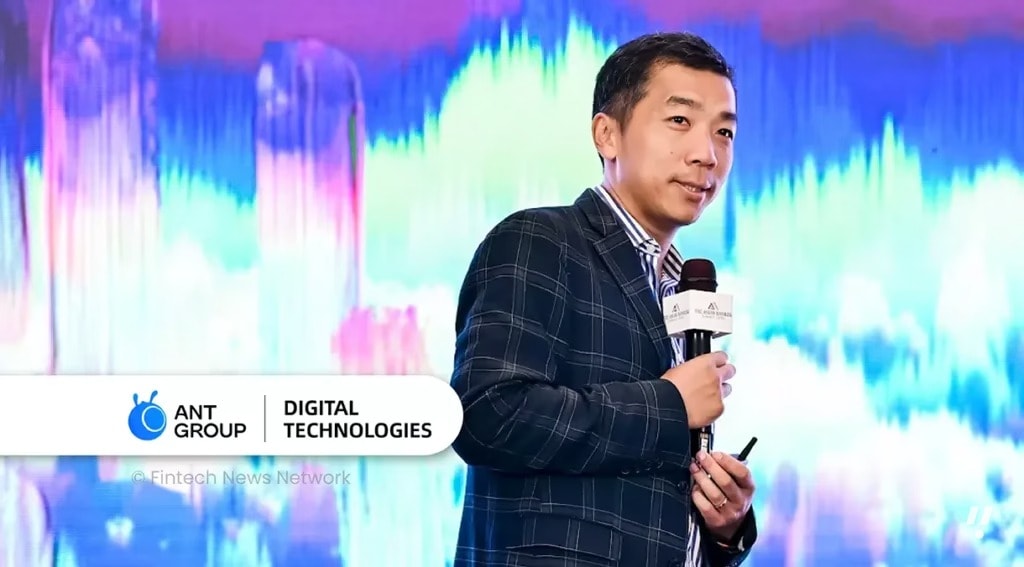
A year or two ago, bank executives asked how artificial intelligence could make employees faster or cut operating costs. Garry Sien, chief innovation and solutions officer for international business at Ant Digital Technologies, says the conversation has moved on. Since the start of 2026, interest has swung toward revenue generation. Executives now put it bluntly: show me the return.
The shift matters most in markets still building formal banking access. In the Philippines, 58% of adults had a formal financial account in the first quarter of 2026, up from 48% a year earlier, according to a survey commissioned by the Bangko Sentral ng Pilipinas. E-wallets drove most of that growth.
Data quality, not the model
Getting AI from pilot to production remains the bigger obstacle, and the model is rarely the problem. Sien says the first barrier banks hit is the quality of their data and knowledge. Disorganised data forces them toward larger, costlier models to compensate. Ant Digital structures data first, then matches models to tasks, because a well-organised bank can often run smaller, cheaper ones.
Technology is not the hardest part. Getting business teams, not just IT, to own the project is. Writing code is no longer the constraint either: some of Ant's internal teams generate around 90% of their code with AI. Knowing what to build is what matters now.
GCash rebuilds identity checks
GCash was already onboarding customers remotely before working with Ant Digital, but verification could involve a human agent calling an applicant by video, and even a smooth case could take days. It wanted faster remote identity checks without weakening regulatory and risk requirements. ZOLOZ, which began as the KYC technology behind Alipay, was adapted for GCash's eKYC process.
The Philippines added a complication. Filipinos can open accounts with a far wider range of identity documents than markets relying on a few accepted IDs. Ant trained the system to recognise those variations, combining document checks with biometric recognition. Confirming that the face on screen belongs to a real person keeps getting harder, so GCash upgraded its ZOLOZ deployment in 2026 with more advanced anti-deepfake capabilities and changes meant to let more legitimate applicants finish onboarding.
Smaller banks see an opening
Digital banks on newer core systems can apply AI more directly than institutions carrying decades of legacy infrastructure. Sien points to Malaysia's Ryt Bank, which has handled double-digit concurrent account openings per second during acquisition campaigns. Traditional banks must retrofit AI without breaking existing systems and controls. Fewer branches and smaller balance sheets can mean fewer systems to untangle, so smaller banks can move faster once they commit.
Philippine thrift banks are testing that. Sector net profit rose 11.8% to PHP 5.86 billion in the first quarter of 2026, with fee income more than doubling, even as digital banks and fintechs sharpen competition, according to the Chamber of Thrift Banks.
Jaime Valentin Araneta, the chamber's president and head of Equicom Savings Bank, says thrift banks are using AI to cut manual back-office work, free staff for higher-value tasks, and improve credit decisions and fraud detection.
"Digital transformation is an existential imperative for banks," Araneta said.
He cautioned that fraud-monitoring systems required by law can be costly, particularly for banks relying on third-party providers.
Accountability when agents act
The stakes rise once AI stops recommending and starts acting. Agentic AI could eventually carry out tasks on a customer's behalf. Earlier technology needed a human operating it; an agent acts as an extension of its user, until it misreads an instruction involving someone's money. Sien's answer on accountability: you still are. AI, he argues, should be treated as an extension of the person using it rather than a separate actor.
Not every institution has changed how it works to match its AI spending. Dropping AI into an unchanged organisation, without adjusting the processes, controls and audit practices around it, tends to disappoint. Araneta makes a similar case on security: banks that skip cybersecurity spending now will pay far more once a breach forces the issue.
From a single tool to an agent factory
Banks are asking harder questions about what AI spending returns, and Sien expects that to shape what they buy next. Instead of another standalone feature, some want systems that take on several jobs across the business. Microsoft has pursued a similar idea through its "Agent factory" strategy, though its approach differs from Ant Digital's. "Customers want a whole solution," Sien said.
At WAIC 2026, Ant Digital Technologies introduced a "Commercial Agent Super Factory", which lets enterprises deploy multiple agents for different roles rather than one tool for one use case. Banking fits that structure. Underwriting needs customer data and risk checks, while KYC and fraud detection depend on their own systems, rules and workflows. Agentar 2.0, launched at the same event, included nearly 200 role-based digital expert templates and hundreds of skill modules that institutions can subscribe to and combine. Sien sees it suiting banks that want to widen their use of AI without building every capability themselves. Ant Digital is carrying that approach into its overseas strategy.

