Doctors at Abu Dhabi Summit Say Banning Longevity Therapies Would Backfire
A Dubai clinic director argues regulators should license stem cell and immune cell anti-aging treatments rather than ban them, as the emirate's rules near implementation.
Tariq Benali Tariq Benali covers business and corporate news across the UAE and MENA for Anecdoted, tracking the deals, leadership moves and regulatory shifts behind the region's companies. tariq@anecdoted.com
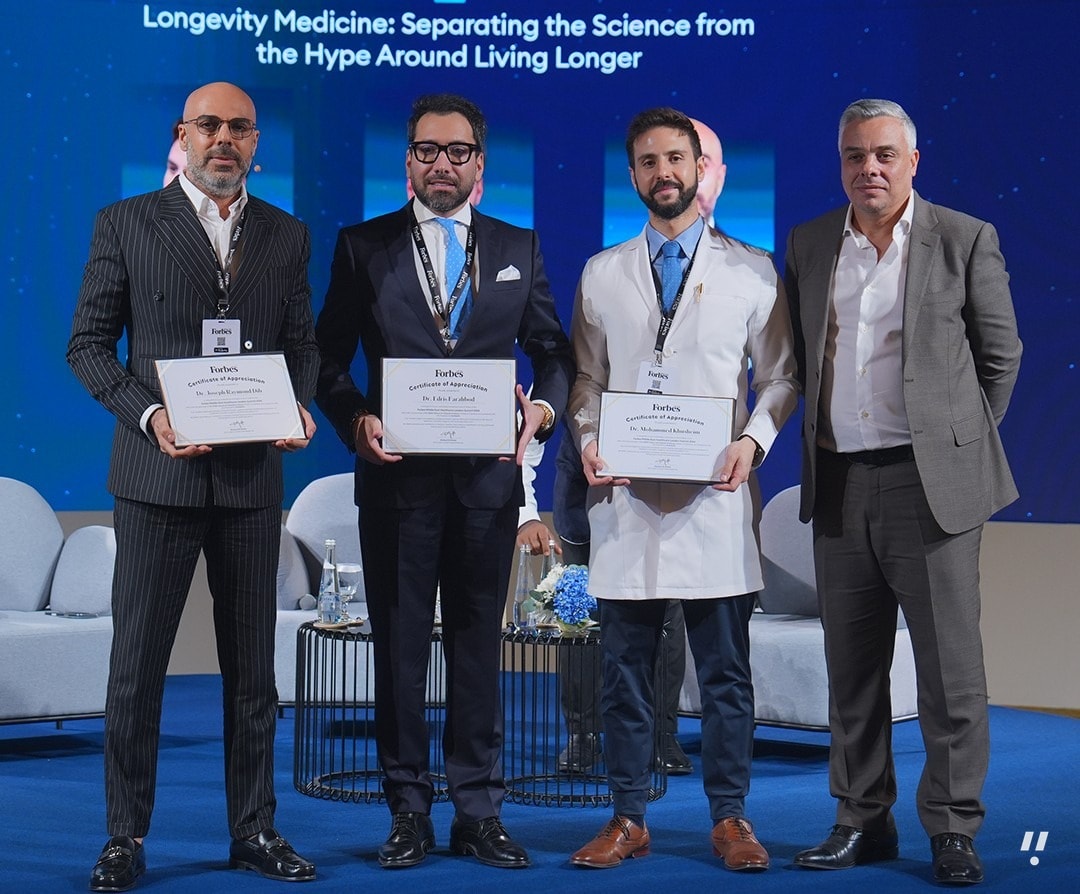
Banning stem cell and immune cell treatments sold as anti-aging medicine would drive them underground rather than remove them, the medical director of Dubai's Longevity Hub by Clinique La Prairie told a doctors' session at the Healthcare Leaders Summit in Abu Dhabi. Edris Farahbod argued that authorities should keep such therapies inside a licensing framework and restrict them to laboratories certified for good manufacturing practice, because shutting them down would grow a black market that is difficult to control.
He was speaking during the Doctors Circle at the summit's fifth edition, held at Emirates Palace Mandarin Oriental on September 22-23, 2026, on a panel titled "Longevity Medicine: Separating the Science from the Hype Around Living Longer."
Longevity Medicine: Separating the Science from the Hype Around Living Longer.
With Dubai's oversight of these treatments due to take effect soon, Farahbod said the timing suits investors and business owners entering the field. The Dubai Longevity Authority was created in June to regulate longevity therapies, and the Department of Economy and Tourism, whose director general chairs the authority, said in July that the implementation timeline would be published in due course. Abu Dhabi's Department of Health issued a licensing standard for longevity medicine centers in October 2024 that took effect in April 2025, requiring that a drug prescribed there for an unapproved use, or an oral supplement, be supported by positive randomized controlled trial data in humans.
Farahbod called the UAE roadmap clear and said he doubted another country would share the risk with providers by allowing emerging interventions such as nicotinamide adenine dinucleotide (NAD), peptides or stem cells. NAD is a molecule sold in infusions and supplements as an anti-aging booster. Performed under a regulator's umbrella, he said, these procedures can be done safely and will yield more human data. He expects substantial changes next year, with the regulation landing in January, and identified insurer funding for research as the sole remaining obstacle.
Healthspan versus lifespan
Mohammed Khusheim, a consultant in internal and geriatric medicine at Care Medical and the Ministry of Health in Saudi Arabia, said the biology is genuine but much of the work sits in phase one and phase two trials, the early stages that test safety, dose and preliminary signs of benefit. Reaching routine clinical practice will take more investment in research, he said.
Khusheim separated healthspan, the years lived in good health, from total lifespan. The UAE has a wide gap between the two, he said, and while many studies cover mortality, few look at healthspan. He posed the question of whether a person who reaches 100 but spends the final decade bed-bound, fed through a tube, breathing through a tracheostomy and with diminished cognition lived to 100 or to 90. The World Health Organization's UAE country profile put life expectancy at birth in 2019 at 76.1 years and healthy life expectancy at 66.0 years, a difference of 10.1 years spent in less than full health.
Exercise, Khusheim said, has a documented effect on healthspan. Muscle built early functions as the currency the body spends later, he said, protecting against the pneumonia of a person's 80s or the fracture of their 70s.
Luxury framing and market growth
Farahbod said longevity is being marketed as a luxury product through polished clinics, when it should not be, and pointed to a gap in public awareness. More than one billion people worldwide are 60 or older, he said, and the UAE's count will reach 1.2 million within 20 years. The WHO projects 1.4 billion people aged 60 and above globally by 2030 and 2.1 billion by 2050. The field still cannot measure whether a given treatment adds healthy years, he added.
The global longevity market is projected to reach $46 billion to $67 billion within a decade, according to Mordor Intelligence, while the UAE's market is expected to grow from $19 billion in 2020 to $32 billion by 2026.
Joseph Raymond Dib, a medical practitioner at the Longevity Clinic in Sheikh Shakhbout Medical City, moderated the panel and offered his own yardstick: whether a person remains physically able, mentally capable and metabolically stable for as many years as possible. Genes cannot be altered, he said, but they can be maintained by eating well, sleeping well, exercising and lowering stress. The goal is not adding years to life, he said, but living in a healthier way.

