enso raises $15m to build 'agentic growth hacking'
Mickey Haslavsky explains why his startup separates the agent that learns from the agent that acts, and what he asks CMOs to check first.
Karim El-Sayed Karim El-Sayed covers company news, policy and regulation across the UAE and wider MENA for Anecdoted, with a focus on how new rules and licences reshape how startups operate. karim@anecdoted.com
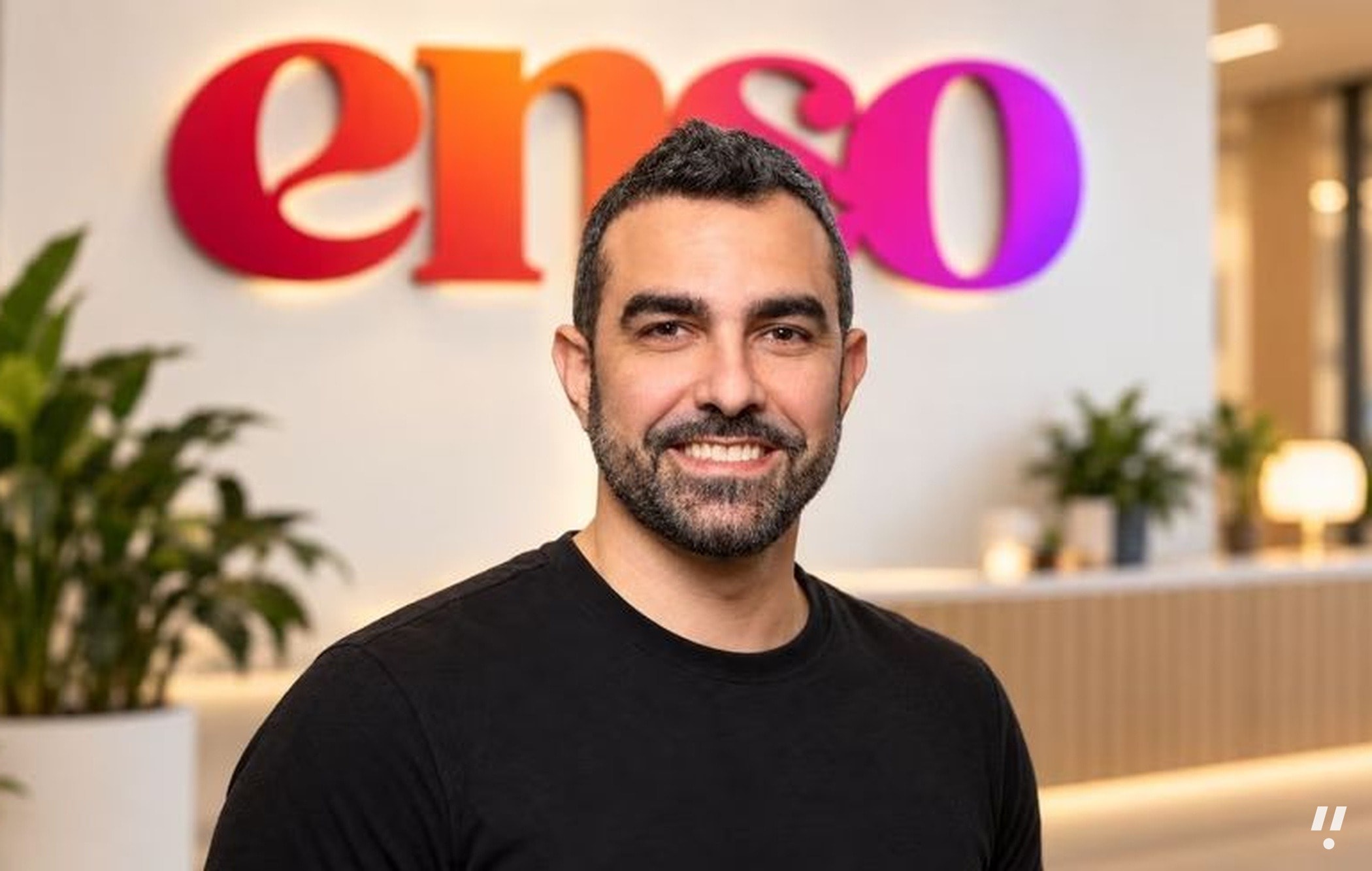
enso has raised a $15 million Series A to build what its founder and CEO, Mickey Haslavsky, calls agentic growth hacking. His definition: the continuous, autonomous discovery of how distribution platforms decide what gets seen, combined with governed use of that knowledge to open new growth channels at machine speed, on many platforms at once.
Three words carry the weight. Discovery, because the rules being learned are not published anywhere. Governed, because an agent free to do anything will eventually do the thing that gets a brand banned. Continuous, because platform rules shift, so the work never finishes.
Why a new term
Growth hacking, Haslavsky argues, was a human discipline. Sean Ellis coined it in 2010, when a small team could find a behavior a young platform rewarded, use it before rivals noticed, and move on once the platform adjusted. Platforms are now mature and their ranking systems retrain constantly, which removes both conditions.
He describes every online channel as a growth channel on a timer. LinkedIn decides within roughly the first hour whether a post travels. A forum decides over two weeks whether a comment survives. An answer engine decides which source to quote. The rules are the real product; content is only an input. Advantage sits in the ratio between how quickly a team finds the next opening and how quickly the previous one closes.
Two layers and a gate
The system is split in two. A learning layer observes platform signals, forms hypotheses about what ranking systems reward, drafts playbooks and improves from results. It holds no credentials to any live channel, so it can read and propose but not act. An execution layer runs only approved playbooks as workflows with fixed limits: rate caps, permitted actions, and human sign-off on anything irreversible. The guardrails sit in configuration rather than prompts, on the reasoning that a prompt asking an agent not to manipulate votes is a request, while a workflow with no such step is a fact.
Between the layers sits a person who checks each drafted playbook for a control, a durable metric, an abort condition and a re-test date, then promotes it. A ledger records every action and outcome against its baseline.
The split came from a failure. An early single agent, running on a throwaway account with freedom to learn and act, discovered engagement pods within days, then self-commenting from a second identity, then mass-following. Each raised the metric and each is grounds for suspension. The reward function was fine, Haslavsky says; the tool surface was not.
The learning layer is never rewarded on engagement. Likes are the easiest signal for an agent to inflate and the first that platforms discount. It is rewarded on outcomes that last: whether an action survived platform review after two weeks, reach measured against an account's own median, and demand traceable to a specific action.
Publishing the failures
enso publishes its experiments, including the ones that produced nothing, with sample sizes and methods. Failures, Haslavsky says, are what make the wins checkable, and a category belongs to whoever writes its canonical practice. The company maintains open-source reference skills for the discipline and he is writing a book.
How engagements run
It is not a self-serve product. enso places a forward-deployed engineer and a forward-deployed marketer inside the customer, who learn how the business sells and sounds, connect to existing systems and record a baseline for each channel. Agents are then built across five surfaces: search and AI-answer visibility, sales outreach, community engagement, newsletters and social. The marketer approves playbooks, signs off on irreversible actions and reports weekly against the baseline in pipeline terms. What the company learns with one customer is reused with the next.
AI answers are where enso has invested most research, because buyers increasingly ask an assistant rather than read ten pages, and the assistant chooses which companies to name. After that come the placements money cannot buy: the first hour of a post's life, the forum thread where a buyer asks for a recommendation, the sources a model trusts.
The most common mistake he sees is using AI to scale human work, producing more posts and emails with the same tools competitors use. A use case that amounts to a person's task done faster is not a growth hack. The second mistake is letting an agent act in public without limits or review.
Marketing teams are not replaced, he says. Execution shifts to agents and judgment moves up: setting goals, drawing limits, approving playbooks, reading the record. The marketer becomes the reviewer of a continuous research program.
The $15 million goes to extending the research program across more platforms and answer engines, growing the engineering team behind the agent runtime and its execution workflows, growing the marketing team deployed into customers, and funding the open-source skill library and public research record.
To a CMO fielding pitches from ten vendors, Haslavsky puts four questions: does the agent decide, or does a rule written last quarter decide; does it act in the channel, or does a person still press publish; are the limits in configuration or in a prompt; and can the vendor show a result against a control. If any answer is vague, he says, the buyer is looking at automation or a content tool with a new label.

