Karma Al-Taher: Strong Brands Are Built on Strong Businesses
The IHCC brand marketing head on why marketing cannot cover a weak proposition, why localization is not translation, and what AI still cannot do.
Karim El-Sayed Karim El-Sayed covers company news, policy and regulation across the UAE and wider MENA for Anecdoted, with a focus on how new rules and licences reshape how startups operate. karim@anecdoted.com
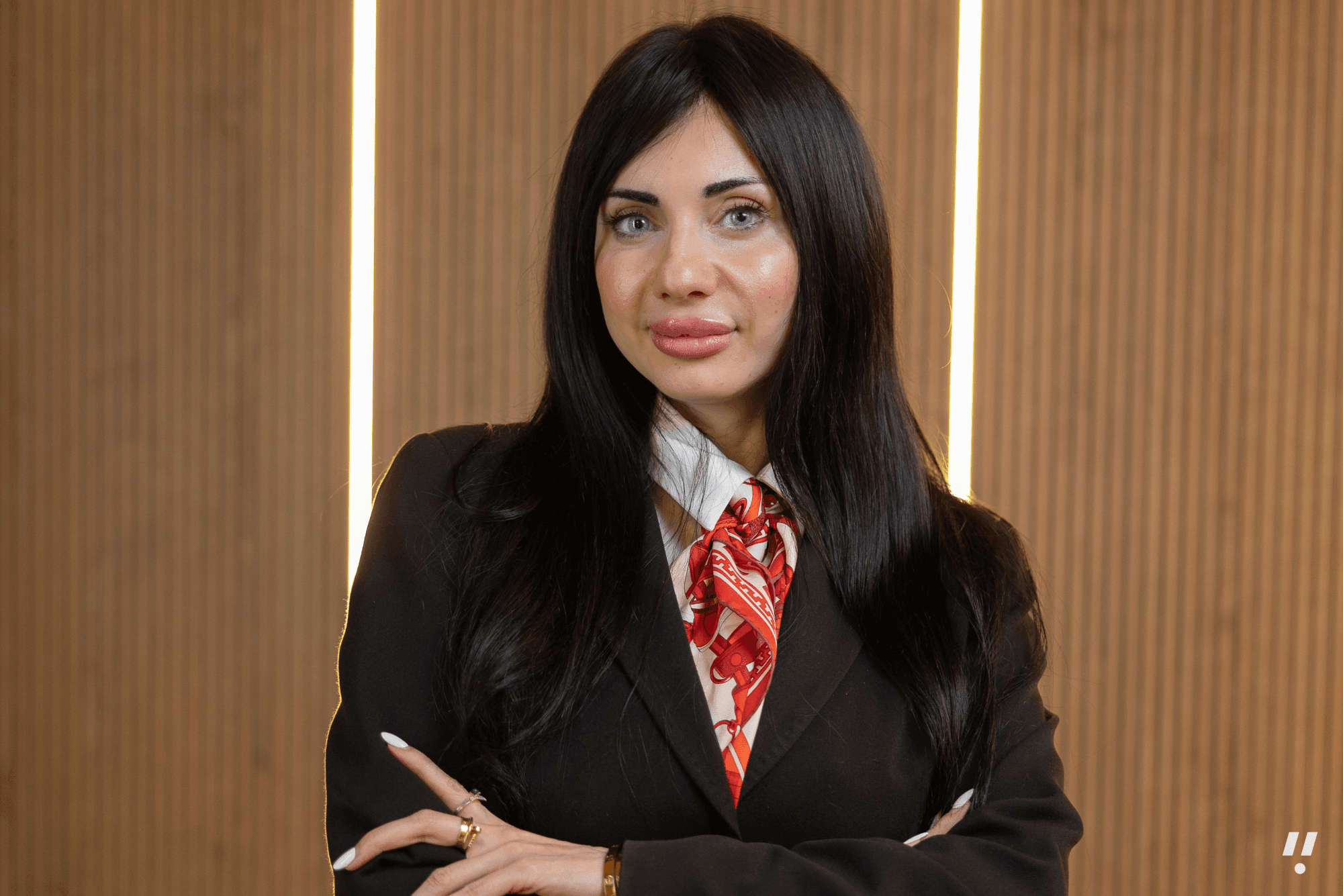
Karma Al-Taher, head of brand marketing and communications at IHCC, treats logos, campaigns, advertising and social media as the visible layer of a brand rather than the thing itself. Underneath that layer sits the business.
Her position is blunt. A weak commercial proposition cannot be wrapped in strong branding. Marketing buys attention — introductions to millions of people, faster awareness, excitement around a launch — but it cannot indefinitely hide a gap between what a company promises and what it delivers. The strongest marketing leaders, she argues, understand the business model, the commercial goals and the customer, then use the brand to tie all three together.
Visibility before clarity
Launching a company today is often followed immediately by launching an Instagram page, producing content, hiring a PR agency and buying digital ads. Al-Taher sees founders communicating before they have settled what they are communicating about: why the company exists, what problem it solves, why anyone should choose it, and what people should remember. Her warning is that visibility without clarity does not fix confusion — it accelerates it.
Scaling without losing character
Most successful businesses pass through the same evolution. The entrepreneurial company becomes a growth company, and the growth company becomes an organization with expanding teams, new processes, departments and approval layers. Somewhere in that shift, the personality that made customers care can disappear. Structure is unavoidable, she says, but it should not wipe out character, and the risk is a brand that starts speaking like an institution instead of a person. Personality, values, tone and the customer promise need to survive growth.
She has described herself as a brand policeman, though the policing is about organizational consistency rather than colour codes. A brand is built through thousands of small decisions, and every department can strengthen or weaken it. When marketing, sales, leadership and the actual customer experience each say something different, credibility erodes, and credibility is hard to win back. Consistency produces recognition; trust is the more valuable result.
On authenticity, she draws a hard line. An image can be manufactured. Authenticity cannot be sustained that way, because consumers are quick to detect the distance between a stated purpose and how leaders actually behave. Alignment — between what is said, what is done and what people experience — is the real test.
Psychology behind the purchase
A large part of modern marketing is psychology presented as strategy. Data reveals what people do; psychology often explains why. She sees the best marketers reading both, since customers meet brands emotionally rather than through dashboards.
The ethical boundary is intention. Insight can be used to explain value clearly, remove friction and design experiences that fit what people need. It can also be used to exploit vulnerability, manufacture fear or steer people toward choices that do not serve them. That approach may close a transaction and destroy trust at the same time.
Saudi Arabia: localization is not translation
Saudi consumers are sophisticated, digitally connected, ambitious and increasingly discerning, and they benchmark products and service against the world's leading brands. Global standards do not remove the need for local understanding. Localization is not translation, she says; it requires grasping the market's nuances, values, aspirations and shifting expectations. The companies that succeed will respect local identity while delivering to a genuinely global standard.
The traffic is no longer one-way. Businesses born in Saudi Arabia, the UAE and across the region are looking outward, and she rejects the idea that going international means erasing origins. Regional distinctiveness can function as the competitive advantage rather than an obstacle to remove.
The AI paradox
AI compresses work that once took hours into seconds, covering copy, campaign concepts, images, analysis and personalization. What it cannot replicate, in her view, is lived experience, empathy, human instinct and the cultural sensitivity to read a room without being told what people feel. Those qualities may become more valuable as the technology improves, because people will keep seeking what feels genuinely human.
She does not frame the future as AI against people. The strongest companies will pair machine intelligence, scale and speed with human empathy, creativity and judgment. A second risk is homogenization: identical tools, prompts and datasets produce sameness unless original thinking is added. Access to AI will not separate businesses, since nearly everyone will have it. Originality will.
Leadership is about people
Her career has run through Big Four firms, multinational corporations, family businesses, government entities and global advertising agencies, across the US, UK, China, the UAE, Saudi Arabia, Egypt and Oman. She credits that variety, rather than any single employer, with shaping how she leads. The strongest leaders she met shared a sense of purpose — they knew why they were leading and what impact they wanted to leave.
Managing people is harder than managing brands. Asked which presents the greater challenge, she answers without hesitation: the personalities. A senior marketer needs more than creative skill, because the best strategy fails without trust, clear communication and the ability to bring people along. Emotional intelligence is a leadership skill, not a soft one, and the shift from execution to empowerment means no longer needing to hold every answer. She measures her own contribution by what the people around her are able to achieve.
Her philosophy comes down to a hypothetical. Hand her AED1 million and one instruction — make people care about a company — and she would not put the first dirham into advertising. She would spend it understanding the customer, the proposition, the competitive landscape and the story, searching for both the emotional and commercial reason the business deserves attention. Only then does the remaining AED999,999 get allocated.

