MENA startups raise $173 million in July as Saudi Arabia regains lead
Debt drove a modest month-on-month rebound, while equity investment stayed weak across the region.
Anecdoted Desk Anecdoted Desk covers rolling funding rounds and startup news across the UAE and MENA -- the wire for deals as they're announced. team@anecdoted.com
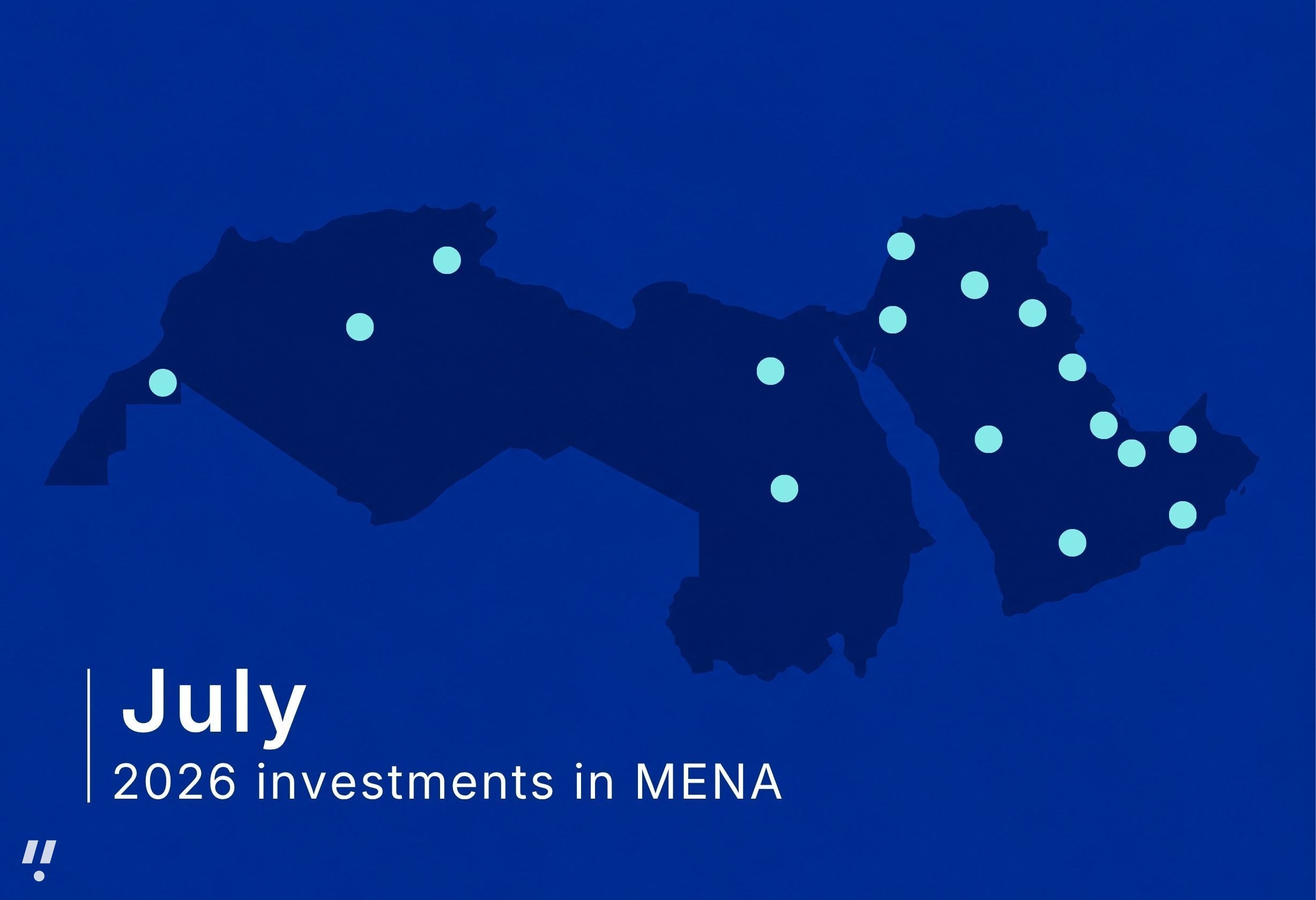
Startup funding across the Middle East and North Africa rose to $172.6 million in July 2026, a 16% gain from June. The total came from 45 deals. It was still 78% below the same month last year. Debt made up 56% of the July total, against 11.5% in June and 2% in July 2025. The rebound was therefore real but narrow.
Saudi Arabia back on top
Saudi Arabia led the regional rankings for the first time in seven months. Its startups raised $106.6 million across 16 transactions, about 62% of all capital deployed. The UAE matched that deal count with 16 transactions of its own, yet finished second by value at $46.6 million. Syria came third, an unexpected position, after three startups collected $10.16 million. Egypt, normally a top-three market, raised $7.25 million from eight deals. Morocco took fifth with $2 million from one startup, and Qatar recorded a single transaction of roughly $100,000.
Concentration remained extreme. Saudi Arabia and the UAE combined for nearly 89% of monthly funding. The rest of the region shared just over $19 million.
E-commerce leads the sectors
E-commerce returned to the top of the sector table, drawing 55% of all investment. The figure came from a handful of sizeable rounds, not from widespread activity. Govtech placed second after Whiteshield raised $15 million. Super apps came third, with two startups based in Syria and Morocco raising a combined $12 million. Fintech fell out of the top three by value but stayed the busiest sector by deal count. Its nine transactions produced $10.9 million, a sign that investor appetite persists despite smaller round sizes. Proptech followed with eight deals and $11.9 million.
Early-stage rounds dominate
No mega deals or late-stage rounds were announced in July. Early-stage startups did the heavy lifting, with 33 companies raising $49 million. Another nine startups raised $27.5 million but did not disclose their funding stages. The lack of big transactions lowered the overall total, yet the number of early-stage deals suggests investors remain willing to deploy smaller amounts.
B2B keeps the lead, female founders stay underfunded
B2B companies once again captured most of the capital. They raised $136 million across 33 transactions, nearly 79% of all money invested. Consumer startups drew $13.3 million from five deals. Seven companies serving both businesses and consumers raised $23.3 million. The split points to a persistent preference for business models with clearer revenue visibility.
Funding for female-founded startups stayed marginal. Companies founded solely by women raised $1.7 million across four deals, under 1% of the total. Male-founded startups received 97% of all funding. Four mixed-gender teams raised $3 million. The gap remains one of the most durable structural features of the regional ecosystem.
July's figures show a modest headline improvement, but the market leaned on debt and a narrow set of transactions. Saudi Arabia's return to the lead and e-commerce's rise reshuffled the monthly rankings. The absence of late-stage rounds and mega deals left equity investment subdued. Whether the second half of 2026 gains momentum depends on bigger rounds and a wider spread of capital across countries, sectors, and founder profiles.

%22%3E%3Crect%20x%3D%22-10%22%20y%3D%2211%22%20width%3D%22120%22%20height%3D%221%22%20fill%3D%22%23faf9f6%22%20opacity%3D%220.9%22%2F%3E%3C%2Fg%3E%3Ccircle%20cx%3D%22119%22%20cy%3D%22115%22%20r%3D%223.0769230769230766%22%20fill%3D%22%23faf9f6%22%20opacity%3D%220.75%22%2F%3E%3C%2Fsvg%3E)