Microsoft to Invest Over $10 Billion in Gulf Cloud and AI by 2030
The framework spans cloud and AI infrastructure, connectivity, cybersecurity and training across the UAE, Saudi Arabia, Qatar and Kuwait.
Karim El-Sayed Karim El-Sayed covers company news, policy and regulation across the UAE and wider MENA for Anecdoted, with a focus on how new rules and licences reshape how startups operate. karim@anecdoted.com
Microsoft will direct more than $10 billion toward infrastructure and operations in the Gulf through 2030, widening its cloud and artificial intelligence footprint in the United Arab Emirates, Saudi Arabia, Qatar and Kuwait.
The money covers both capital projects and the cost of running them. A further $400 million-plus is set aside for subsea and overland connectivity in the region by the end of the decade, building on work already committed to the SeaMeWe-6 cable system, which has landing points in the UAE, Saudi Arabia and Qatar.
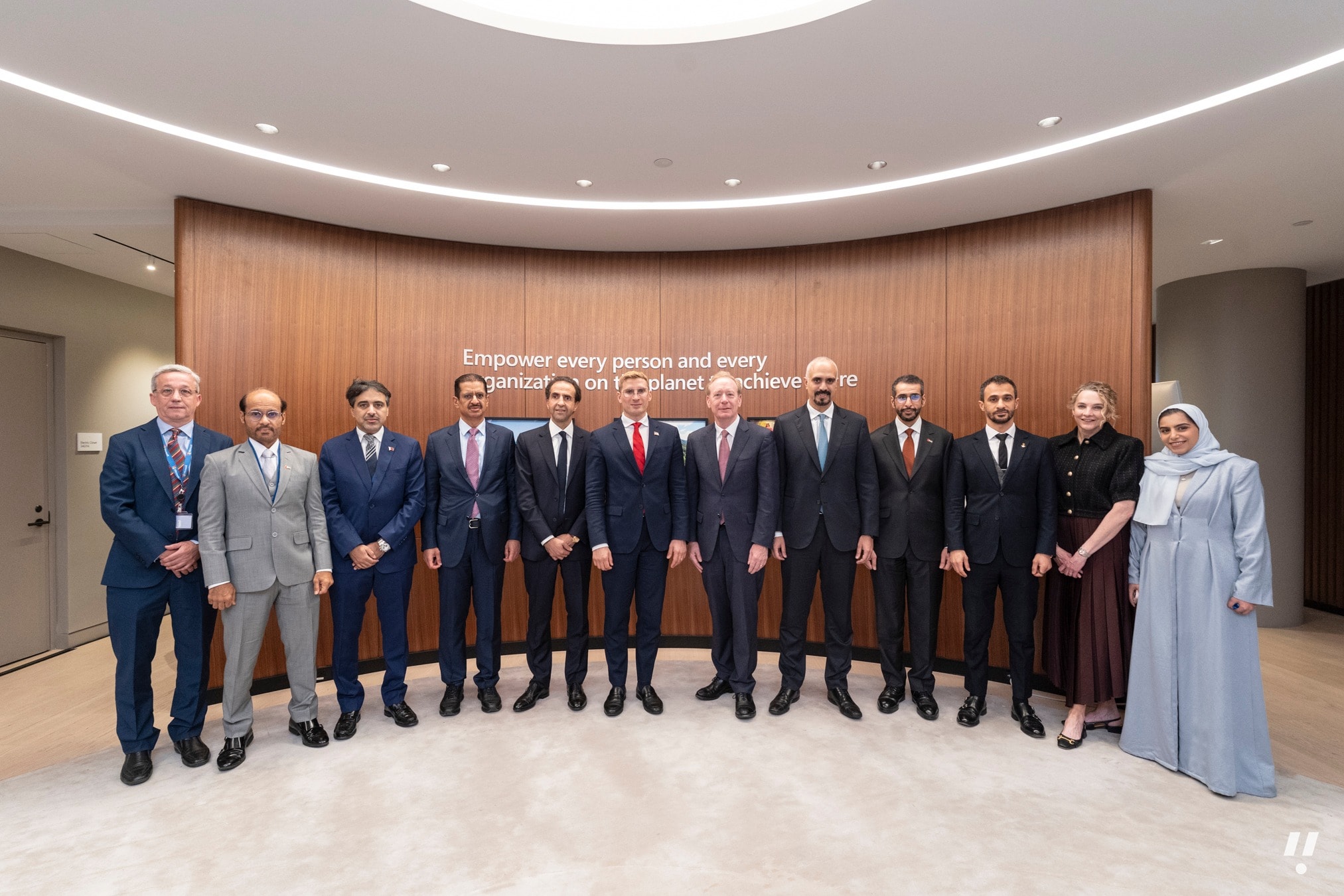
Brad Smith, Microsoft's vice chair and president, and Naim Yazbeck, who leads the company's Middle East and Africa business, set out the framework at a roundtable held on the margins of the United Nations General Assembly in New York. Representatives of the four governments attended.
The plan rests on three areas:
- Technology infrastructure
- Digital resilience
- Workforce development
On partnerships, Microsoft will deepen its work with governments and national AI bodies, among them the UAE's G42, Saudi Arabia's HUMAIN, QAI and the Government of Kuwait. Programmes already running include TAMM in the UAE, ALLaM from Saudi Arabia's SDAIA, TASMU in Qatar and adoption of Microsoft 365 Copilot across Kuwait's government.
A Middle East Digital Resilience initiative will address business continuity and recovery. Through Microsoft Sovereign Public Cloud, Sovereign Private Cloud and Project Digital Shield, the company intends to broaden data protection, sovereignty and continuity services for governments and customers that qualify. Cybersecurity cooperation with national authorities in each of the four markets will grow, with Microsoft placing dedicated security specialists in every one.
On responsible AI, Microsoft will expand its collaboration with the Responsible AI Future Foundation, which it set up with G42 and Abu Dhabi's Mohamed bin Zayed University of Artificial Intelligence.
The commitments sit alongside an existing target to reach more than 4.2 million trainees across the four countries by 2030. Named efforts include Saudi Arabia's AI Global Leadership Program, AI Skills 4 Women in Saudi Arabia and Qatar, and the Women's Datacenter Academy in Saudi Arabia.
“Countries across the region aren't waiting for the future of AI to be written elsewhere – they're helping shape it themselves, and our role is to be a long-term partner in that journey,” Yazbeck said.
Microsoft also said it would work with governments, educational institutions and employers across the region on AI literacy, workforce readiness and the responsible use of AI in education.

