Middle East Lending's Same-Day Gap: 50% Expect It, 19% Get It
A September 2026 paper from Stitch and IBS Intelligence forecasts that by 2028 the region's leading lenders will run on unified data, real-time automation and composable infrastructure.
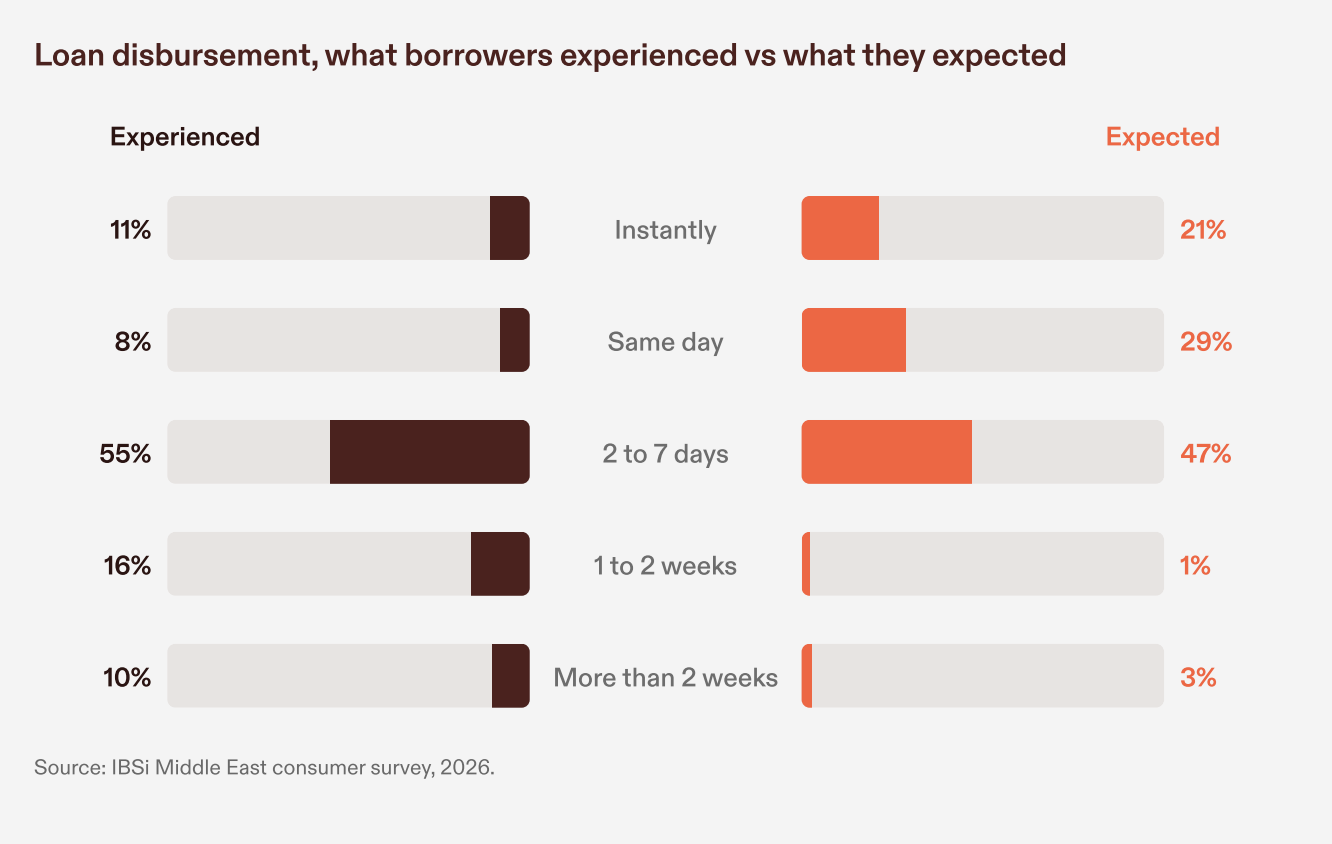
Half of the borrowers in the Middle East expect loan money to arrive the same day they apply. Fewer than one in five get it. That gap — 50% expectation against 19% delivery — sits at the centre of a September 2026 paper from Stitch and IBS Intelligence on why lending in one of the world's fastest-growing credit markets still feels slow to the people using it.
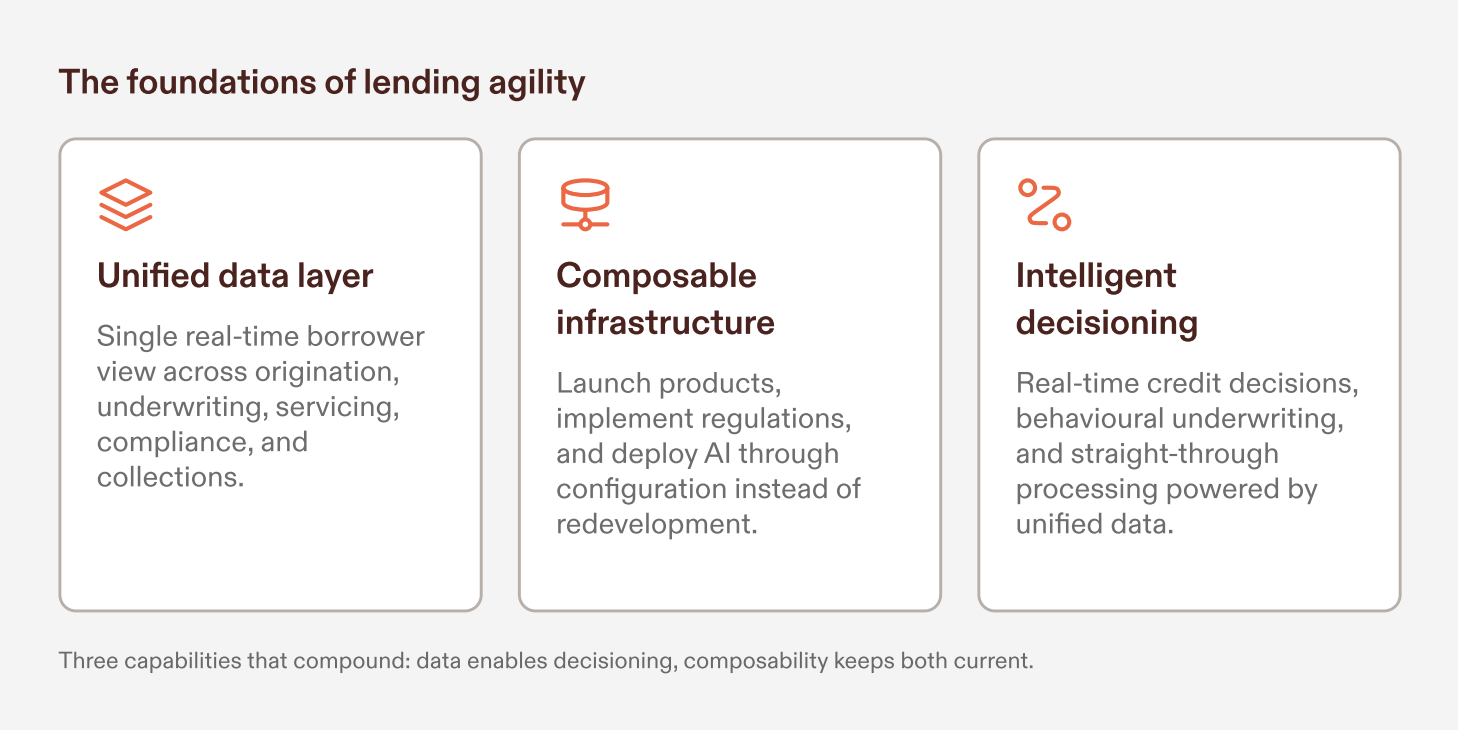
By 2028, the paper predicts, the region's most competitive lenders will run on three foundations: unified data, real-time intelligent automation and composable infrastructure. That combination is as much about resilience as speed. Lenders built this way will not have to rebuild their core systems every time a product changes, a regulator writes new rules or a new technology lands. They reassemble components around a stable core instead.
The conclusions come from two bodies of evidence. One is a survey of more than 100 consumers across six Middle Eastern markets about how their borrowing went. The other is a set of interviews with senior lending executives at banks around the region. Both pointed the same way: loan processes have been modernised late, inefficiencies have piled up, and a clear gap has opened between what customers expect and what lenders can currently do.
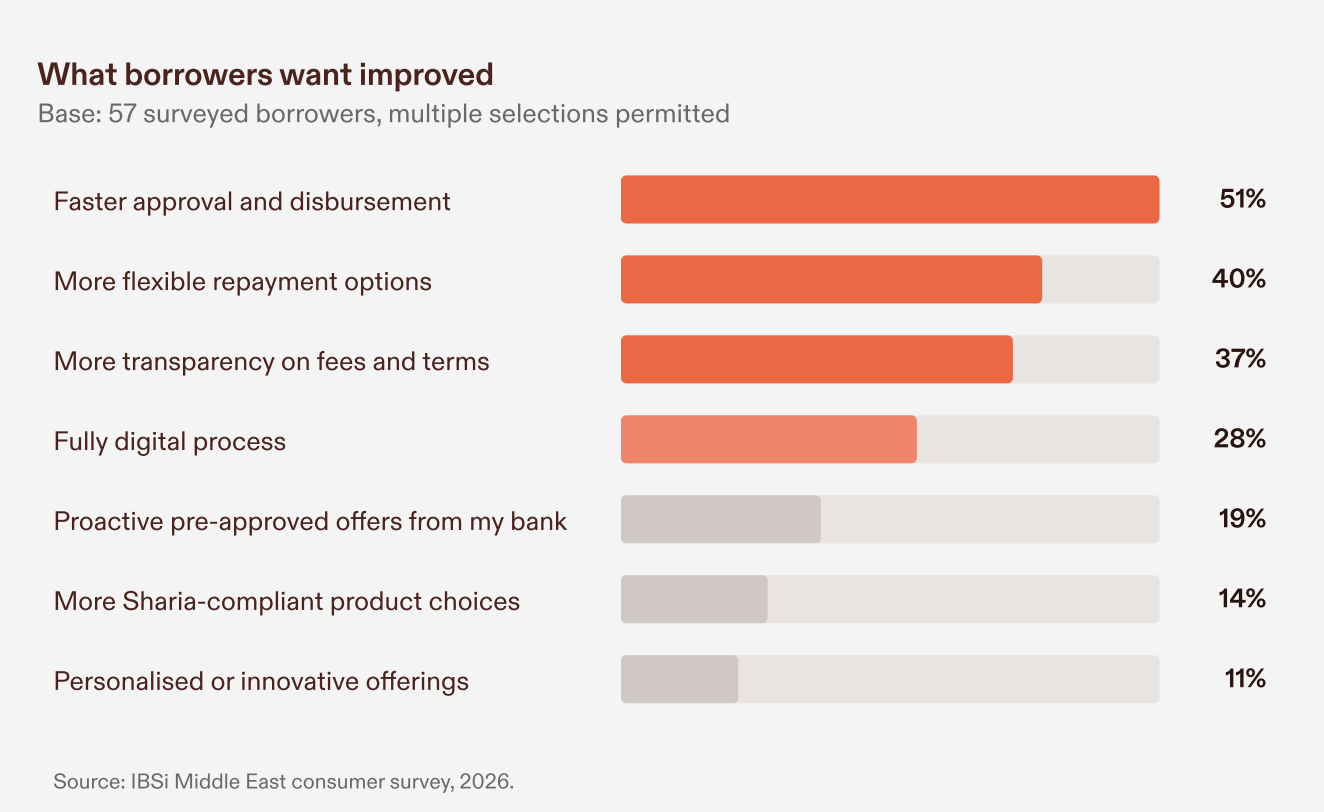
Asked what should improve, borrowers were specific. Faster approval and disbursement came first, named by 51%. More flexible repayment options followed at 40%, then greater transparency on fees and terms at 37%. A fully digital process was named by 28%, and proactive pre-approved offers by 19%.
The experiences behind those numbers vary widely. Just under half — 47% — said their most recent application was entirely digital, with no branch visit and no paperwork. A quarter, 25%, completed the application online but still had to take documents to a branch. For 12%, the digital route was interrupted by technical glitches. Another 16% described the process as mostly manual, with only limited digital support. Read together, those figures suggest progress is uneven rather than absent.
About one-third of the borrowers surveyed had abandoned an application before finishing it. Complexity was the leading reason, named by 16%. Slowness accounted for 7%, technical faults 5%, finding a faster option elsewhere 4%, and an unavoidable branch visit 2%. Abandonment is rarely one dramatic failure. It is the cumulative cost of friction, and each of those reasons maps to a step in the workflow that a lender could remove.
Alternative lenders are already absorbing some of that lost demand. One in five respondents had taken credit from a fintech or a buy now, pay later provider instead of a bank, and almost all of them said the bank was too slow or the process too complex. A further 23% looked at an alternative lender and stayed with their bank anyway. Just over half, 56%, said their bank simply met the need.
The shift toward instalment credit is measurable. Research by Redseer found one in ten consumers in the UAE and Saudi Arabia used BNPL services in 2022; by 2023 that had doubled to one in five. For banks, the significance is less the ticket size than the habit. A customer who finances a purchase through an app has already learned to skip the branch.
The wider credit market is expanding quickly. UAE loan portfolios grew 17.8% in 2025, on central bank data, with retail and private corporate lending leading. Net loans at Saudi Arabia's ten listed banks were up 7% year on year by the end of the second quarter of 2026. Market Research Future expects the GCC personal loans market to compound at 7.6% a year between 2025 and 2035. PwC puts growth in private credit across the GCC and Egypt at 15% to 30% a year over the next five to six years, driven by industrial demand — particularly from small and medium-sized businesses — and a supportive regulatory and macroeconomic backdrop. Private credit is money lent to companies by non-bank lenders.
Demography pushes in the same direction. More than 60% of the GCC population is under 30 and grew up digital. The paper argues that this group has little patience for lending processes that predate the smartphone.
Smaller companies present the sharpest mismatch. Channel Capital estimates they generate about 50% of GCC GDP and make up 90% of all businesses in the region. They receive less than 10% of bank lending. The resulting financing gap is put at US$250 billion.
Islamic finance adds another design requirement. The Middle East holds 53% of global Islamic finance assets. A platform built without native support for Sharia-compliant products would shut out a large share of the market it was built to serve.
Regulators are not standing in the way. Central banks across the Middle East are promoting banking modernisation and encouraging innovation and new technology, which gives lenders both cover and pressure to rebuild.
The commercial logic is blunter than the technology story. A lender that takes a week to disburse is losing a retail customer to an instalment app and, on the corporate side, ceding ground to private credit funds that are growing at double-digit rates. Disbursement speed has become a balance-sheet question rather than a service nicety, which is why the paper treats composability as the objective instead of a single replacement core.
The horizon it sets is short. Two years separate today's 19% same-day cohort from the 2028 benchmark, and the survey already shows what borrowers do when the wait runs long.


