Mohammed Al Falasi Takes Emirati Hospitality Abroad, One Brand at a Time
Saddle has grown from a single Dubai food truck into 21 sites across four countries, and its founder is now weighing expansion into Europe and the United States.

Mohammed Al Falasi left a decade-long career in business and finance to open a food truck. The vehicle was custom-built in the UK and shipped to Dubai, where it began trading at Al Qudra in 2017 under the name Saddle. Nine years later the brand runs 21 locations in four countries across three formats: Saddle Trucks, Saddle Café and Saddle House.
Before that, Al Falasi worked for the Dubai Government and for KPMG, the tax, audit and advisory firm. He gave up both for what he describes as a genuine passion for food, coffee and the experiences that bring people together. The market he entered was already climbing, and it has kept climbing. A report by Mordor Intelligence values the UAE's foodservice industry at US$27.28 billion in 2026.
A truck first, then a portfolio
Travel shaped the idea. "Travelling and discovering different cultures always fascinated me, particularly the way certain hospitality concepts could create a sense of belonging and build lasting connections with their customers," Al Falasi says. He wanted a business that reflected his own interests and upbringing, and the values of the UAE. Dubai, in his reading, encouraged ambition and gave ideas room to grow. The gap he identified sat between international standards of quality and design on one side and the authenticity and warmth of Emirati hospitality on the other. "That vision became the foundation of Saddle."
That vision became the foundation of Saddle.
He is emphatic that the goal was never simply to open a coffee shop. "I wanted to build a brand with a distinct identity, one that people could connect with emotionally and that could eventually represent Emirati hospitality beyond our borders," he says. Even at the food-truck stage he treated every detail as consequential, from the products to the design of the space to the way guests were greeted. The first truck, he points out, was built in the UK rather than bought locally because he was not willing to compromise on those details.
Growth has not meant repeating the same format. "I believe every brand must have its own reason to exist," he says.
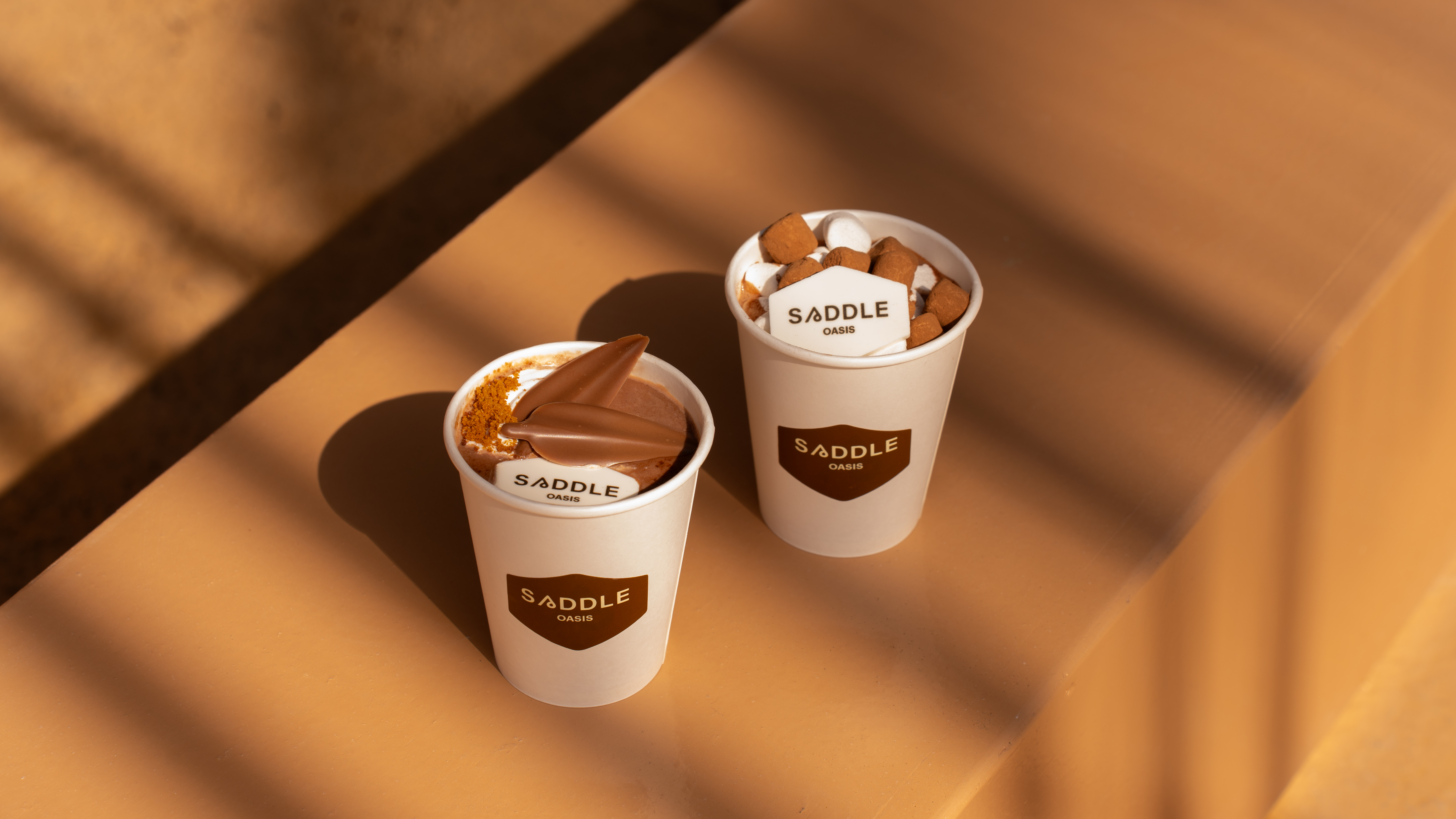
Saddle has moved beyond the UAE into Saudi Arabia, France and the UK, with sites in Cannes, Saint-Tropez and London. In 2025 Al Falasi signed the group's first franchise agreement, with Emirates Leisure Retail, which brought the brand to Dubai International Airport's Terminal 3 as the airport's first Emirati café.
Two more brands, two more identities
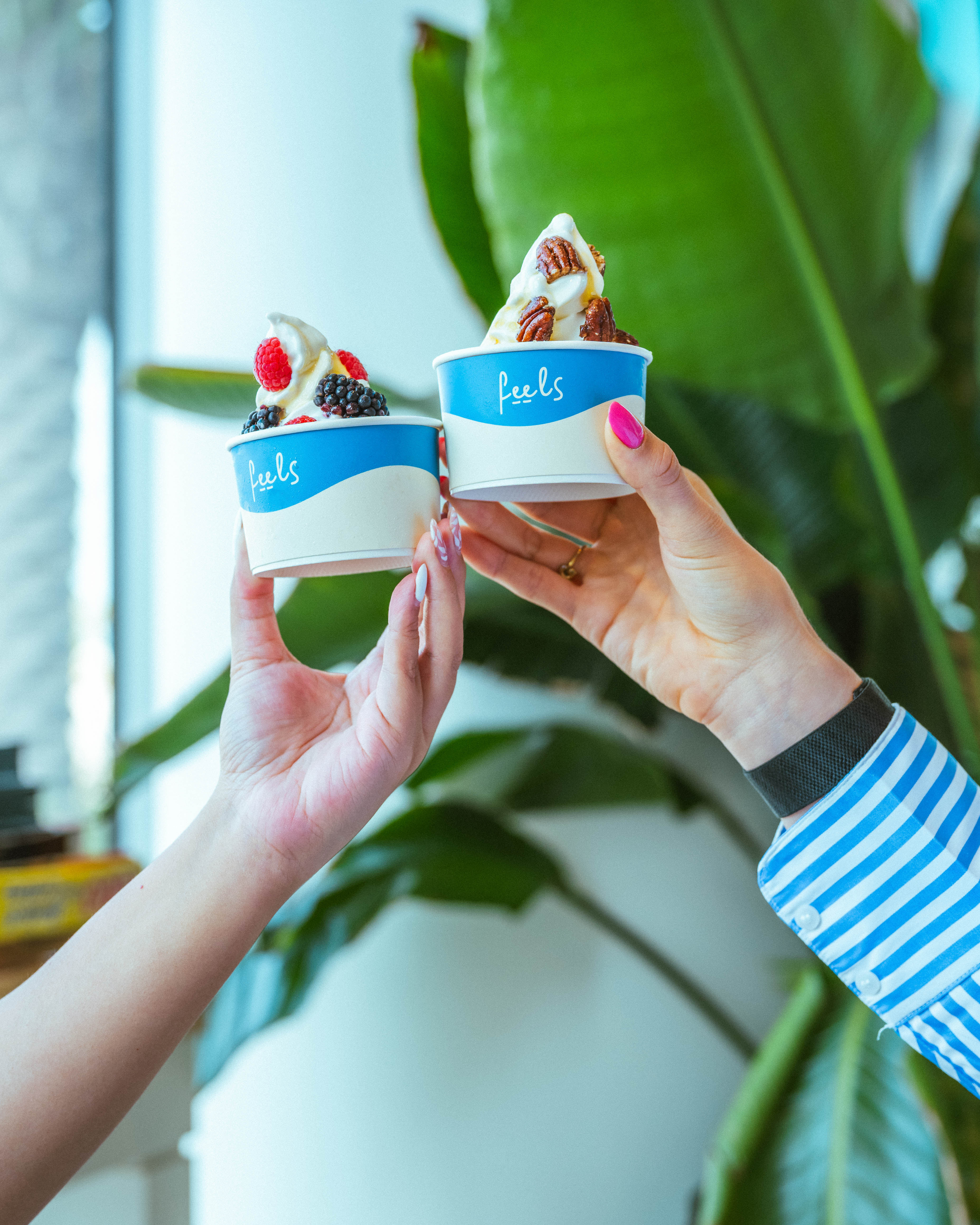
Feels Juice Bar & Kitchen arrived in 2020, built around wellness. The interiors run to teal and burnt orange, with large surfboards and thatch-roofed patios lending the space a beachside feel. The menu covers fresh-pressed juices, smoothies, healthy breakfasts, salads, sandwiches, bowls and wellness drinks, all made with natural, additive-free ingredients.
"It came from my interest in wellness, balanced living, and the relationship between food and lifestyle," Al Falasi says. "I wanted to create an environment where fresh, nutritious offerings and a positive sense of community could naturally come together."
Cherryhouse launched in 2026 and looks nothing like it. Burgundy and beige interiors are accented with copper and black steel. Behind the counter sit an in-house coffee roastery and an artisan bakery; the kitchen serves all day. The concept is built around craft and the senses. "Cherryhouse reflects another dimension of my passion for hospitality: craftsmanship, discovery, and the appreciation of exceptional products. It celebrates the journey behind what we serve," he says.
The three brands, he argues, have separate identities, audiences and philosophies, but a shared commitment to quality, creativity and meaningful hospitality holds them together. "For me, the greatest achievement is not simply building multiple brands. It is creating concepts that people genuinely value and that have the potential to grow while remaining true to their identity."
Heritage that is allowed to change
However international the menus look, Al Falasi says each venture is anchored in Emirati culture. "Emirati hospitality is something I grew up experiencing long before I entered the F&B industry," he says. "It is deeply rooted in generosity, respect, kindness, and making every guest feel genuinely welcome." Those are not slogans, in his account, but principles that shape daily life and the way people are received at home. Saddle was meant to carry that spirit from the start. The name itself points to the country's equestrian heritage, and coffee has long stood in Emirati tradition for hospitality, conversation and connection.
Heritage, he adds, does not have to stand still. "But I also believe that celebrating our heritage means allowing it to evolve."
That outlook tracks the country's demographics. Non-Emiratis make up 88-89% of the UAE's population, a group that spans more than 200 nationalities. "The UAE today represents a remarkable combination of tradition, ambition, innovation, and openness to the world," Al Falasi says. He describes Saddle as an attempt to express a contemporary Emirati identity through design, service, creativity and detail. A visitor might walk in knowing nothing about the culture; the hope is that they leave having encountered some part of it through the welcome, the service and the care behind each element. "Our ambition is not simply to take an Emirati brand to the world, but to allow the world to experience Emirati hospitality through our brand."
Partnerships, chosen sparingly
The group's ambitions have not stayed inside food. Over the years Al Falasi has overseen tie-ups with brands in luxury watches, automotive, beauty and fragrance, among them LVMH, Richard Mille, Sephora, KAYALI, Bentley, Nike and Lululemon. The effect has been to position Saddle as a lifestyle-led hospitality business rather than a café chain. "A strong hospitality brand becomes part of people's lifestyles, interests, and everyday experiences," he says. "That creates opportunities to engage with different industries in ways that feel authentic and meaningful."
Visibility is not the motive, he insists. Creative fit is. Partnerships work, in his view, when two brands share an interest in quality, innovation and customer experience, because the combination reaches audiences neither would find alone. He is also selective about which ones he signs. "I do not believe in collaborating simply for visibility," he says. "The strongest partnerships are not built around two logos appearing together. They are built around two brands creating something neither could have achieved in quite the same way independently."
The tenth year
Saddle turns ten in 2027, and Al Falasi treats the date as a starting point rather than a retrospective. "I see it as a defining moment for the future of Saddle Group, an opportunity to build on our foundations, strengthen our international presence, and continue developing brands that can represent the UAE on a global stage," he says. The pipeline he describes runs across the Middle East, Europe and the United States. The constraint he sets on it is internal: foundations first. Opening in new markets matters, in his framing, less than protecting the quality, culture and consistency that existing customers recognised.
"For me, success is not measured by how many locations we open, but by how consistently we deliver the experience and values that made people believe in us in the first place."
His read on leadership comes out of the same trade. Guests, he argues, forget the specifics of what was served but remember how they were treated, and that has shaped how he deals with customers, teams and partners. As the group has expanded, he has come to see culture-building as the core of the job: hiring and keeping people who share the values and buy into the plan. "At the heart of every successful hospitality business are people," he says. "And I believe the same is true of every successful leader."


