Object 1's Egor Maslennikov on Handovers, Abu Dhabi, and Scaling With Discipline
The Dubai developer's founder explains why completion, not launch count, now defines the company's next phase.
Karim El-Sayed Karim El-Sayed covers company news, policy and regulation across the UAE and wider MENA for Anecdoted, with a focus on how new rules and licences reshape how startups operate. karim@anecdoted.com
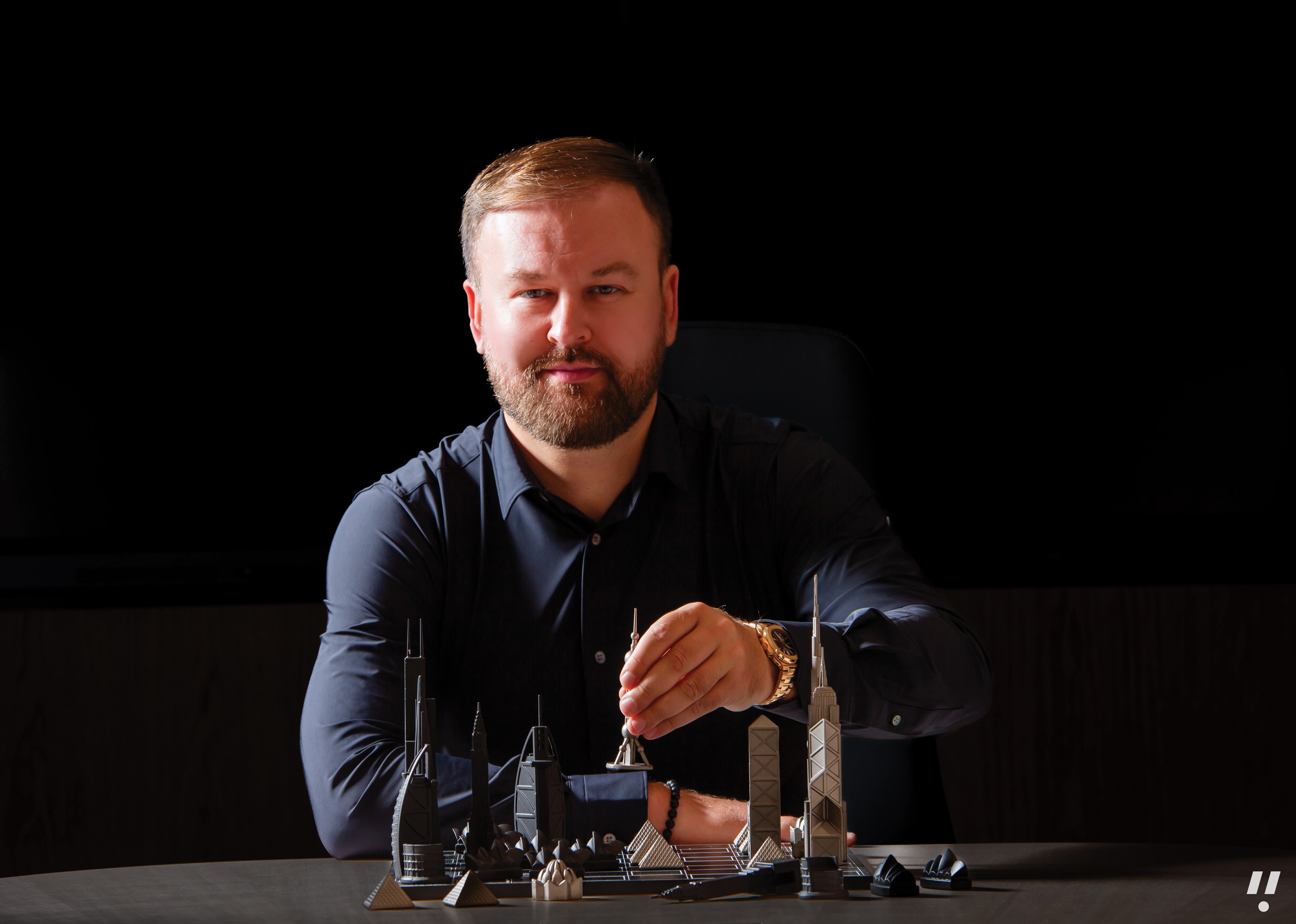
Object 1 entered the UAE market in 2022 with a plan that reached past individual buildings. Founder and chairman Egor Maslennikov describes the early ambition as building a development platform that could contribute to Dubai's urban landscape over the long term, starting with the team and operating structure needed to carry growth. More than 30 projects have followed, concentrated in fast-expanding residential districts such as JVC and JVT.
For Maslennikov, the milestone that counts most is not a launch tally or a sales number. It is that the company's earliest developments are now finished and being handed to residents. Any developer can present a concept or a master plan, he argues. The test arrives when people take their keys and start living in the space. That moment moves Object 1 from a business organised around expansion to one organised around delivery and resident satisfaction.
The first handovers
RA1N Residence and V1TER are the first two projects to complete handover this year. Maslennikov frames the step as the opening of a new chapter, one in which decisions made across the development cycle are experienced by real people in real time. It validates the company's ability to execute, and it produces information that planning alone cannot. Handovers show how residents move through the spaces, which amenities they actually use, and which parts of the living experience matter once a building is occupied.
RA1N Residence was conceived as a calm, balanced environment inside one of Dubai's busiest residential districts, offering comfort and wellbeing without cutting residents off from the wider city. Contemporary architecture sits alongside shared areas designed to fit into daily routines and to support both rest and social contact. Maslennikov places projects of this kind within a broader shift in urban residential living toward wellness.
V1TER, also in JVC, was built around community and long-term value. JVC now appeals to owner-occupiers and investors alike, and the design tried to serve both while keeping everyday liveability central: practical layouts, quality finishes, shared amenities that strengthen a sense of community, and close attention to ergonomics in apartments and common areas. Landscaping and greenery were treated as part of the design brief, with the goal of a building that stays relevant throughout its lifecycle rather than only at launch. Maslennikov reads that as part of a wider Dubai emphasis on greener, more comfortable urban environments.
What buyers are choosing
The handovers have reinforced a simple point for Maslennikov: people are not buying square metres alone. They are choosing somewhere to raise a family, keep routines, work, rest, meet neighbours and belong to a community. He points to the UAE's continued investment in safety, infrastructure, education, quality of life and long-term residency as the reason families and investors feel able to settle. With 2026 designated the Year of Family, and with 2026 also the company's year of handover, the two threads run together.
Amenities are treated as part of the living experience rather than extras. Children's areas, pools, sports zones, lounges, wellness facilities and shared community spaces shape how a building is used each day. Whether families feel at ease and whether a community feels alive is, for Maslennikov, the real measure.
Abu Dhabi and the second chapter
After entering the ranks of Dubai's top 15 developers, Object 1 looked for where its model could create long-term value next and settled on the capital. Maslennikov cites Abu Dhabi's Economic Vision 2030, with its focus on diversification, regulation, quality of life and sustainable urban growth, as closely aligned with the communities the company builds. Market momentum supports the move: Abu Dhabi recorded AED142 billion in real estate transactions in 2025, a 44% increase, while residential sales rose 67% to AED76 billion. Al Reem Island, Saadiyat Island, Yas Island and Masdar City are strengthening the capital's appeal to families, professionals and long-term investors.
The first Abu Dhabi project, A1LA Residence on Al Reem Island, will hold 171 units across one-, two- and three-bedroom apartments plus a limited collection of duplexes, with amenities planned around family living, wellbeing and community. It follows the acquisition of four waterfront plots on Al Reem Island spanning more than 2 million sq ft, with a combined project value of AED4.5 billion.
Maslennikov describes the next stage as maturity. Object 1 now operates as a full-cycle business that combines design, development and construction inside a single holding company, which he says gives tighter control and allows each project to improve on the last. Portfolio expansion across the UAE will continue, but discipline is the constraint he keeps returning to: growth matters, and growth that holds matters more. He sees room in technology, sustainability and wellness-focused design as resident expectations shift.
The next chapter will be judged on the same terms he set for the first. Whether the buildings work once people have moved in.

