Philips' Peter Skillman: Trust, Not Capability, Will Decide AI in Healthcare
Philips' global head of design says the future of clinical AI turns on transparency and human judgment, not technical capability alone.
Karim El-Sayed Karim El-Sayed covers company news, policy and regulation across the UAE and wider MENA for Anecdoted, with a focus on how new rules and licences reshape how startups operate. karim@anecdoted.com
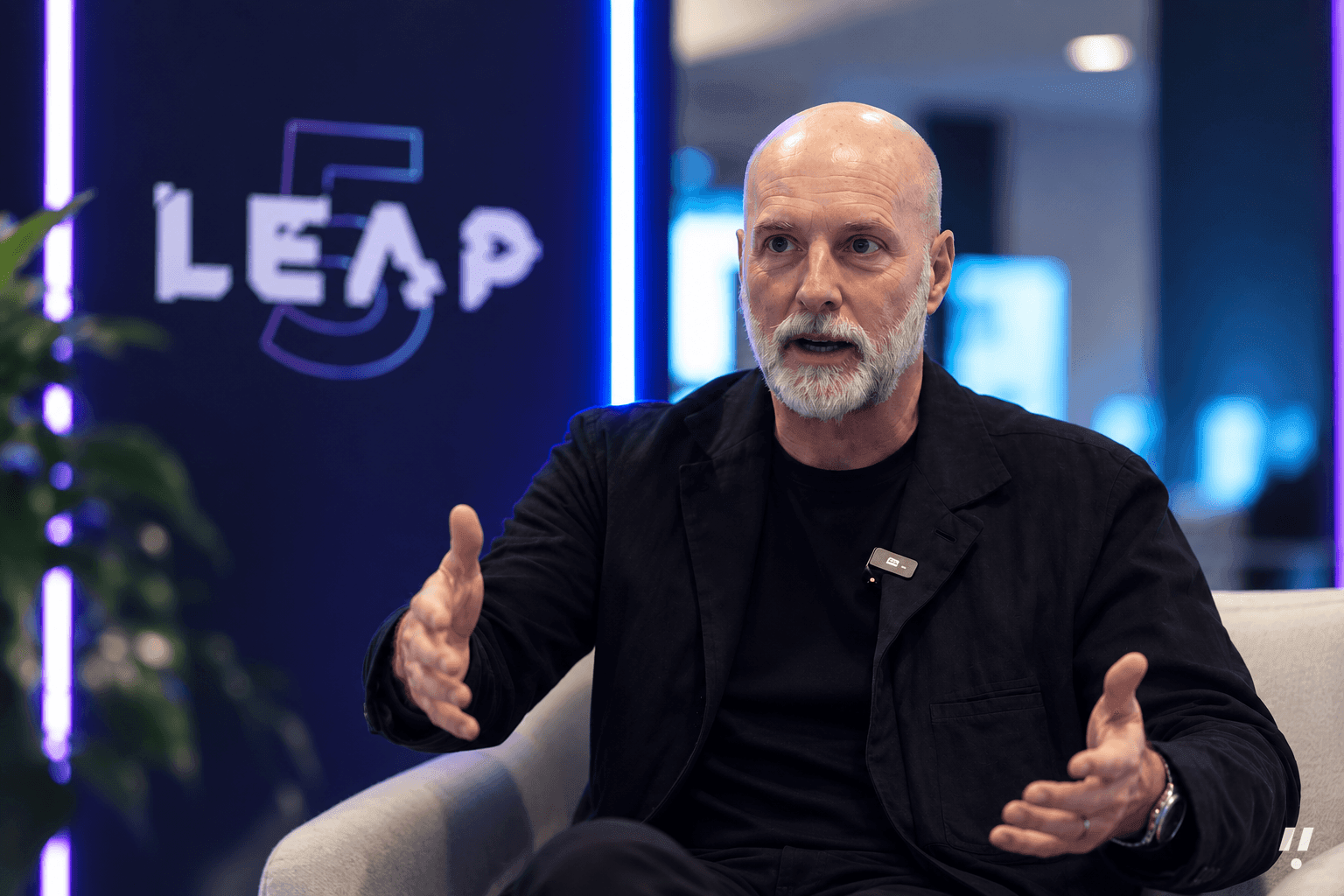
Handing a clinical decision to software feels reasonable right up to the moment a patient's health depends on it. That tension sits at the center of how health systems are adopting AI, and it shaped the argument Peter Skillman, global head of design at Philips, made in conversation with Entrepreneur Middle East at LEAP 2026 in Riyadh.
AI already sits inside clinical workflows across healthcare systems. It helps clinicians move through information, identify patterns, and carry complicated workloads. The promise is faster, more efficient care, and in some cases access to expertise that was previously out of reach. Skillman's position is that none of this counts for much if trust and transparency lag behind technical capability.
Capability is not the whole conversation
Skillman says the discussion cannot stop at what technology can do. It has to cover how clinicians and patients encounter, interpret, and come to trust a recommendation produced by a machine. That is a design problem as much as an engineering one.
The most important medical decisions, in his view, should still involve human judgment, especially where the consequences are significant. AI's role is to assist: surfacing relevant information, helping clinicians make sense of data at a scale no person holds in their head. What it should not become is an opaque black box that produces an answer with no account of how it arrived there.
Transparency is what makes adoption possible. Clinicians need to understand the reasoning behind an AI-generated recommendation before they act on it. Patients, increasingly, want clarity on how technology shaped their treatment. An unexplained answer is difficult to trust and harder still to challenge.
Reaching patients outside the hospital
Skillman points to tele-ICUs, wearable monitoring, and mobile imaging as tools that can deliver sophisticated clinical support to patients without easy access to specialists. The shift could be significant as health systems absorb larger populations while managing costs, staffing constraints, and rising expectations about quality.
Remote monitoring allows clinicians to track patients continuously, and connected technologies can help medical teams intervene earlier when something changes. Expertise moves closer to the patient instead of the patient travelling to the expertise.
The practical consequence is that adoption gets decided twice: once when a health system buys a tool, and again when a clinician chooses whether to act on what it says. Trust earned in the second moment is what determines whether the first was worth it.
Saudi Arabia and the local layer
In Saudi Arabia, Skillman sees an opportunity to build infrastructure and partnerships for next-generation healthcare innovation. Investment in digital transformation and technology creates an environment where new care models can be developed at scale.
Importing global technology is not the same as making it work. Localized infrastructure, partnerships, and a grasp of specific patient and provider needs affect whether any of it lands.
The question that matters
Whether AI becomes part of healthcare is settled, because that transition is already underway. The open question is how it is designed, governed, and integrated into the relationship between clinician and patient. Skillman says technology should stay a tool serving people rather than the end goal.
His measure of success is not how advanced AI becomes, how many processes it automates, or how sophisticated it appears. It is whether clinicians make better decisions, whether patients gain greater access to care, and whether lives improve.
As AI becomes embedded in healthcare, that distinction may turn out to be one of the industry's most important decisions.
The article was published by Entrepreneur Middle East on September 15, 2026, and written by Mina Vucic, director of production and multimedia at BNC Publishing. Entrepreneur Middle East is an international franchise of Entrepreneur Media. Opinions expressed by Entrepreneur contributors are their own.

