QNB Syria Issues First Local Mastercard Card in 15 Years
The lender becomes the first in Syria to produce a Mastercard inside the country, widening access to international payments.
Tariq Benali Tariq Benali covers business and corporate news across the UAE and MENA for Anecdoted, tracking the deals, leadership moves and regulatory shifts behind the region's companies. tariq@anecdoted.com
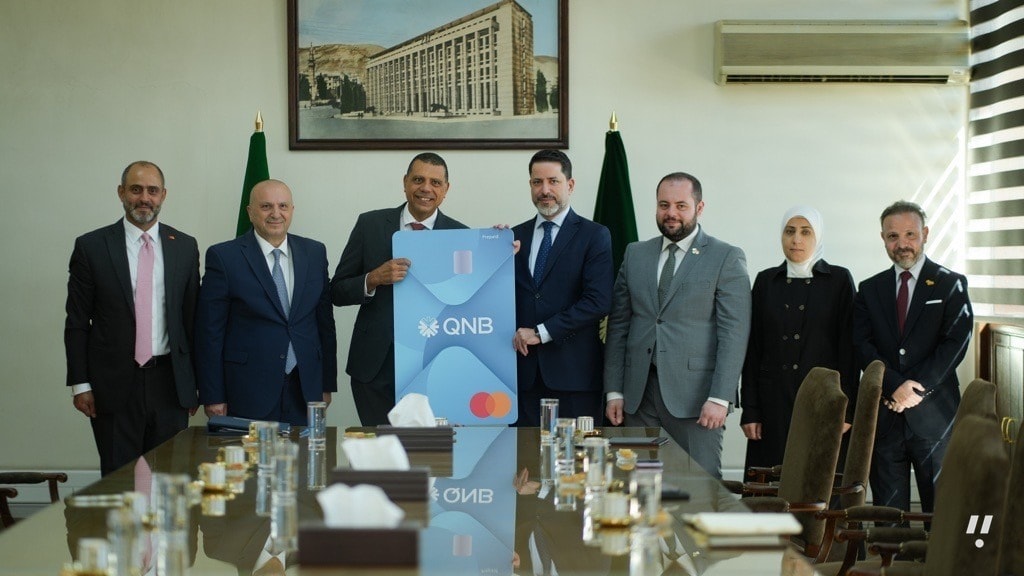
QNB Syria has issued the country's first locally produced Mastercard, ending a 15-year stretch in which Syrian consumers and businesses could only reach international payment rails through cards issued elsewhere.
The first transaction on one of the new cards was routed through an overseas point-of-sale terminal, the bank said in a statement issued on Sunday. The milestone restores local card issuance as the country works to rebuild the plumbing of its financial system.
Central bank chief attends launch
Mohammed Safwat Raslan, who leads the Central Bank of Syria, attended the launch. He called the internationally enabled QNB Syria Mastercard a significant move toward broader digital banking access, tighter integration across the banking and monetary sectors, and better payment tools for consumers and companies.
Raslan also said that building an electronic payments and transfers ecosystem that is secure, inclusive and interoperable underpins stronger banking infrastructure and better links to global payment networks.
From acceptance to issuance
Khalid Ahmed Al Sada, senior executive vice president of QNB Group Corporate and Institutional Banking and chairman of QNB Syria, said the launch gives customers and businesses a route to international payments through internationally issued cards and through locally issued QNB Syria cards alike — the first time both have been available together in over 15 years.
Eligible customers can use the new cards for secure payments abroad. QNB Syria said the rollout will be phased and controlled rather than an immediate, bank-wide release.
The shift matters because QNB Group's partnership with Mastercard in Syria now covers issuance as well as acceptance. Cardholders no longer depend on instruments issued outside the country to pay at foreign merchants. Syria is working to modernize its financial system, including monetary reforms backed by a $100 million World Bank grant, and the reconnection of its payments ecosystem to Mastercard's global network has advanced in stages. In August, the country completed a transaction with an internationally issued Mastercard, its first in more than 15 years.
QNB Group, the parent of QNB Syria, ranked 11th on Forbes Middle East's 100 Most Valuable Companies 2026 list. Group chief executive Abdulla Mubarak Al-Khalifa placed 8th on the publication's Top 100 CEOs in the region this year.
The cards are reaching customers in stages, starting with those who qualify under the bank's criteria, as QNB Syria widens access to its newer payment products.

