Saudi startup RIME raises over $2M in SEEDRA-led Seed round
RIME raises $2M+ to expand its edge-driven AI agent platform in Saudi Arabia and accelerate development.
Anecdoted Desk Anecdoted Desk covers rolling funding rounds and startup news across the UAE and MENA -- the wire for deals as they're announced. team@anecdoted.com
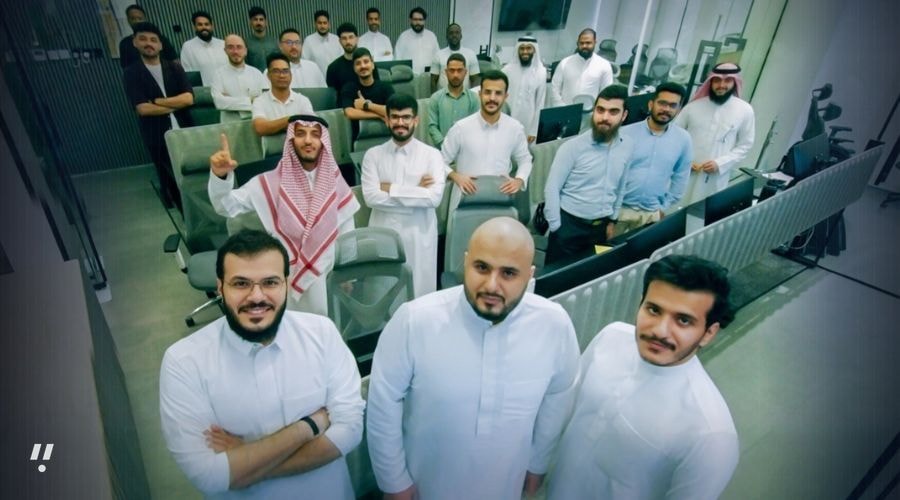
RIME, a Saudi startup founded in 2024 by Mohammed Almarshidi and Arif Alotaibi, has raised more than $2 million in a Seed round led by SEEDRA Ventures. Athla Investment, Unity Invest Partners and angel investors also participated.
The company builds a platform that lets enterprises deploy AI agents at operational sites. The platform runs on edge computing and AIoT, processes data on-site, and connects those AI agents to cameras and sensors already installed. That setup is designed for real-time, on-premise decisions and removes the need to route data through remote data centres.
RIME says it now links more than 6,000 cameras to AI agents and operates across 2,000 sites. Its clients include major retail and service chains in the GCC, and the company calls itself one of the region's fastest-growing Physical AI platforms.
"Edge computing is foundational for field-level AI agents," co-founder Mohammed Almarshidi said. He cited ultra-fast processing, integration and real-time response as the core advantages. RIME also aims to give customers a secure, user-friendly platform with end-to-end infrastructure management.
Edge computing is foundational for field-level AI agents,
The new capital will be used to strengthen RIME's position in Saudi Arabia, speed up platform development, and help enterprises deploy scalable AI applications. The company links those goals to Saudi Arabia's National Strategy for Data and AI and to Vision 2030.
SEEDRA Ventures had already led RIME's pre-Seed round. Abdullah Al Munif, co-founder of SEEDRA Ventures, said the follow-on investment fits the firm's Venture Studio model. SEEDRA has been with RIME from its earliest stages, he said. Al Munif argued that model capabilities alone are no longer the key differentiator. The real value, he said, is in delivering intelligent decisions to operational frontline environments. He described legacy cameras and sensors as an infrastructure layer that can be turned into active operational intelligence, and pointed to RIME's expansion across 2,000 sites as evidence of market demand.
The bet behind RIME is that operators do not need new hardware to make their premises intelligent. If existing cameras and sensors can carry the AI workload, the platform can slip into retail and service chains without a costly retrofit. That approach appears to be gaining traction in the GCC, but the larger question is whether it transfers to other industries with distributed sites. RIME now has the capital to try to answer that.

%22%3E%3Crect%20x%3D%22-10%22%20y%3D%2211%22%20width%3D%22120%22%20height%3D%221%22%20fill%3D%22%23faf9f6%22%20opacity%3D%220.9%22%2F%3E%3C%2Fg%3E%3Ccircle%20cx%3D%22119%22%20cy%3D%22115%22%20r%3D%223.0769230769230766%22%20fill%3D%22%23faf9f6%22%20opacity%3D%220.75%22%2F%3E%3C%2Fsvg%3E)