Securitize Adds ADI Chain Support as Tokenisation Rails Multiply
ADI Foundation's network becomes one of the chains Securitize supports, giving eligible tokenised products a route onto it — subject to regulatory checks.
Nadia Mansour Nadia Mansour covers fintech across the UAE and MENA for Anecdoted -- digital banking, payments licences and the startups building around them. nadia@anecdoted.com
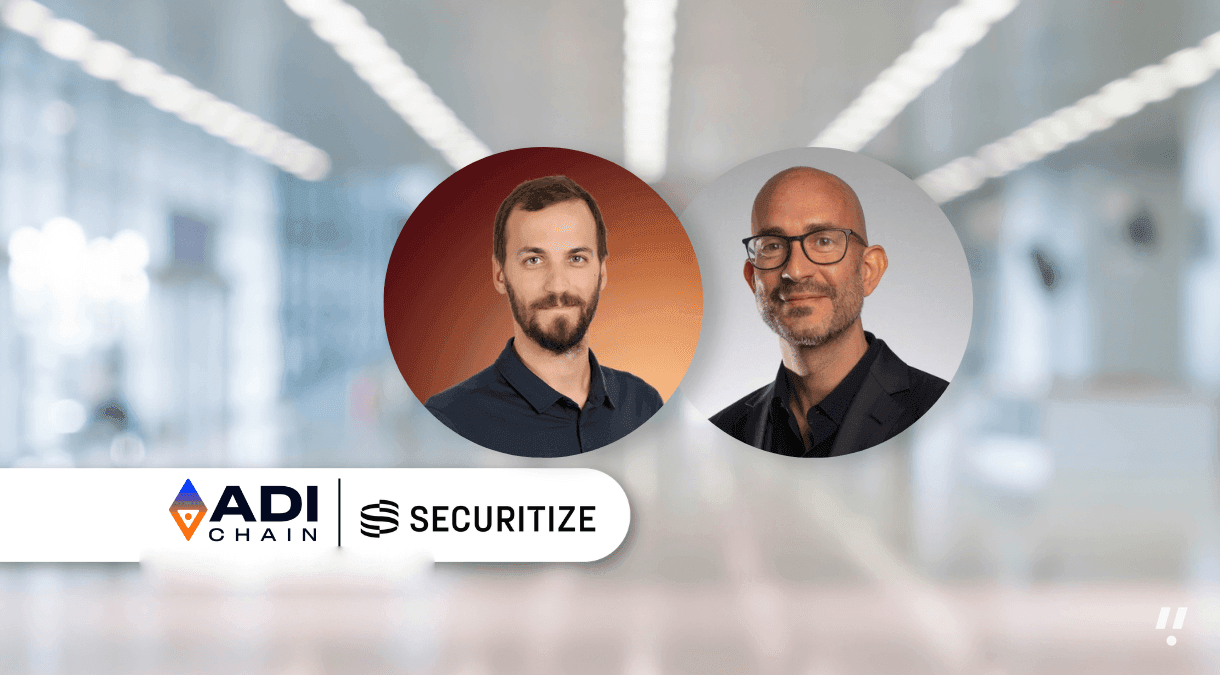
ADI Chain has added Securitize to the list of blockchains it can work with. The ADI Foundation, which built the network, said the two organisations have completed an integration that links Securitize's tokenisation technology to ADI Chain's infrastructure.
The scope is narrower than a broad alliance. ADI Chain becomes one of several networks Securitize supports, and tokenised financial products issued through Securitize pick up a pathway onto it — if they qualify. Anything routed to ADI Chain still has to satisfy regulatory, product and jurisdiction requirements. Clearing those hurdles is not automatic, and the pathway is not a guarantee of access.
ADI Chain was designed to move digital assets, payments and real-world value across borders. Securitize supplies regulated systems for issuing, managing, distributing and trading tokenised securities. Combined, the arrangement plugs a set of institutional-grade tools into an ecosystem already oriented around tokenised assets, regulated digital currencies, payments and settlement.
The foundation treats the integration as groundwork rather than a finished product. Banks and asset managers need particular infrastructure before they can run meaningful operations onchain, and ADI Foundation describes this as one step toward supplying it.
Andrey Lazorenko, chief executive of the ADI Foundation, said bringing that capability to ADI Chain marks a major advance toward a network where real-world value can be issued, distributed and settled worldwide.
Carlos Domingo, co-founder and CEO of Securitize, framed distribution as the problem worth attacking. Access to high-quality financial products remains uneven across markets, he said, and tokenisation can help close that gap. He called the UAE a natural hub for connecting investors in different markets with regulated products issued around the world.
For issuers, the practical question is rarely whether a chain exists. It is whether the products sitting on it can legally be sold in a given market, to a given investor. That is why the regulatory caveat attached to this integration matters more than the technical connection itself: a tokenised fund that clears one jurisdiction's rules may not clear another's, and the chain it settles on does not change that. Tokenisation platforms have spent the past few years building issuance and transfer-agent machinery that satisfies securities regulators, while networks have competed on settlement speed and compliance tooling. Deals like this one suggest the two sides are converging — issuance platforms staying chain-agnostic, networks positioning themselves as compliant rails. Whether institutions follow depends less on the announcement than on which products clear which regulators first.
ADI Chain's ecosystem already spans tokenised assets, regulated digital currencies, payments and settlement. Adding Securitize's issuance and management layer gives that ecosystem a regulated route for securities specifically, rather than digital assets in general.

