The Architects of Trust: An Unranked Look at Credibility in the Middle East
A new editorial edition examines the law, audit, governance, formation and technology professionals whose work turns business intentions into commitments.

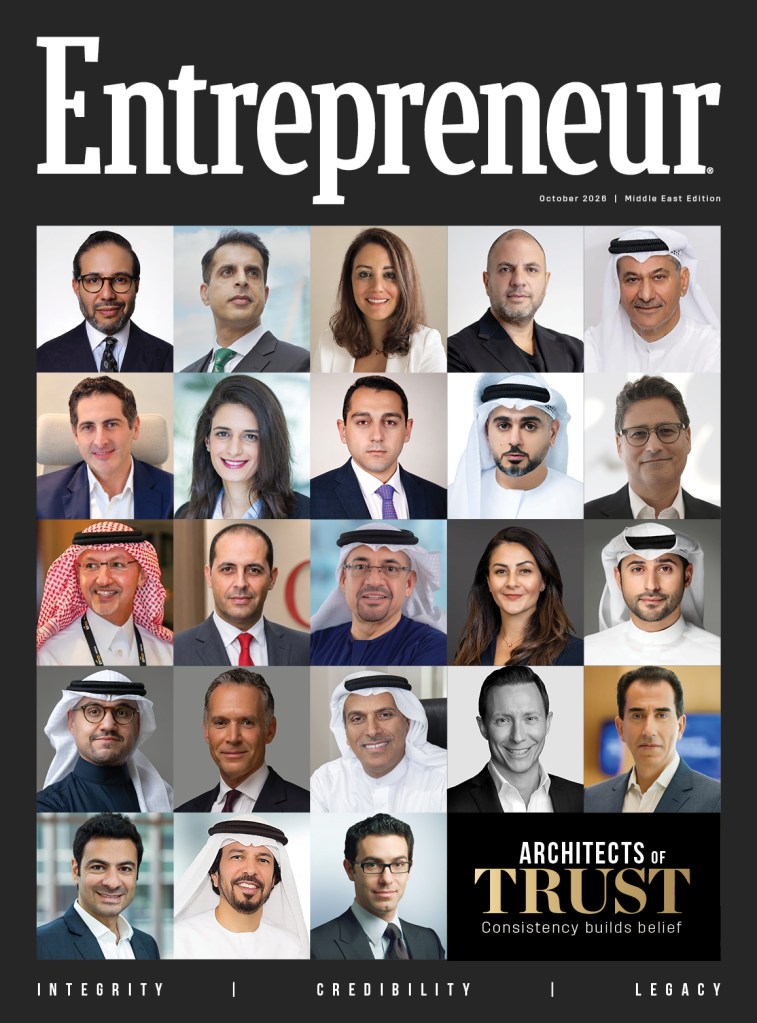
An editorial edition titled Architects of Trust, dated October 22, 2026, examines the people and institutions building confidence in business across the Middle East. The firms and professionals it profiles are presented without ranking. The point is not a league table. It is a map of the work that sits behind a deal, a filing, a board decision or a first market entry.
The edition covers five broad groups. Law firms establish and defend rights. Audit and advisory practices help organizations examine their performance and make decisions. Governance specialists concentrate on how authority is exercised. Formation providers guide a business through its first choices. Technology providers raise new questions about evidence, confidentiality and control. Each group works at a different point in the life of a company. Each can shape whether a commitment survives contact with pressure.
The path from intention to commitment
The edition's stated interest is how expertise moves businesses from intention to commitment, and how those commitments hold over time. That question applies to a company being formed, a cross-border partnership being negotiated, a board weighing a proposal, or a firm deciding how to treat a piece of evidence. Expertise matters at those moments because the choices made are often difficult to reverse. A document drafted in a week can govern a relationship for years. A structure chosen before incorporation can constrain a founder long after the launch.
The edition is explicit that no professional title or institutional reputation places anyone beyond scrutiny. That is a useful standard. Trust that depends on status alone is thin. The edition states that willingness to be questioned is part of what makes trust credible. It also states that trust must leave room for disagreement, correction and accountability. Those are not soft additions to a professional brand. They are the conditions under which advice can be tested, errors can be corrected and responsibility can be assigned.
Where the value appears later
Much of the value described in the edition is delayed. A well-designed agreement may prove its worth years after it is signed. Advice given before incorporation may save a founder from an expensive constraint much later. Sound governance may be most consequential in a decision a company chooses not to make. None of those outcomes produce a dramatic announcement. They show up as options preserved, disputes avoided, or a difficult conversation made possible because the lines of authority were clear.
Cross-border expansion puts those issues under stress. The edition states that expansion requires both sides' expectations to become explicit and supported by arrangements each can understand and rely on. That is a practical demand, not a diplomatic one. If one party assumes a term is standard and the other assumes it is negotiable, the agreement is not yet an agreement. The work of the law firm, the adviser, the governance specialist and the technology provider intersects there: in making expectations legible, recording them and keeping them available when memory or personnel changes.
Why the unranked format matters
The decision to present the selection without ranking reinforces the edition's premise. Trust is not a single score. A law firm may be strong in one kind of dispute and less suited to another. An audit practice may be valuable at one stage of a company's growth and unnecessary at another. A formation provider may matter most in the first month. A technology provider may matter most when evidence, confidentiality or control is contested. Readers are left to match the work to the situation rather than follow a hierarchy.
The edition's focus on scrutiny also changes how its profiles should be read. A reputation is a starting point. The more useful question is whether the professional or institution can explain its reasoning, accept correction and remain accountable when the facts change. That standard applies to the firms in the edition as much as to the businesses they advise.
The broader implication is structural. As companies in the region expand across borders and adopt new technology, the moments when expectations are fixed move earlier and involve more specialists. A founder who receives advice before incorporation, a board that records how authority is exercised, or a negotiation that makes both sides' assumptions explicit is not removing risk. It is making risk visible while there is still room to act. That is the practical link between the edition's five groups. Trust becomes durable when the arrangements behind it can be examined by the people who must rely on them.


