UAE's AI Edge Is Agility, Not Model Size, Adviser Tells Abu Dhabi Summit
Faisal Al Bannai told AI Everything Abu Dhabi 2026 that sovereignty means controlling how a technology evolves, and that small tailored models matter more than giant ones.
Karim El-Sayed Karim El-Sayed covers company news, policy and regulation across the UAE and wider MENA for Anecdoted, with a focus on how new rules and licences reshape how startups operate. karim@anecdoted.com
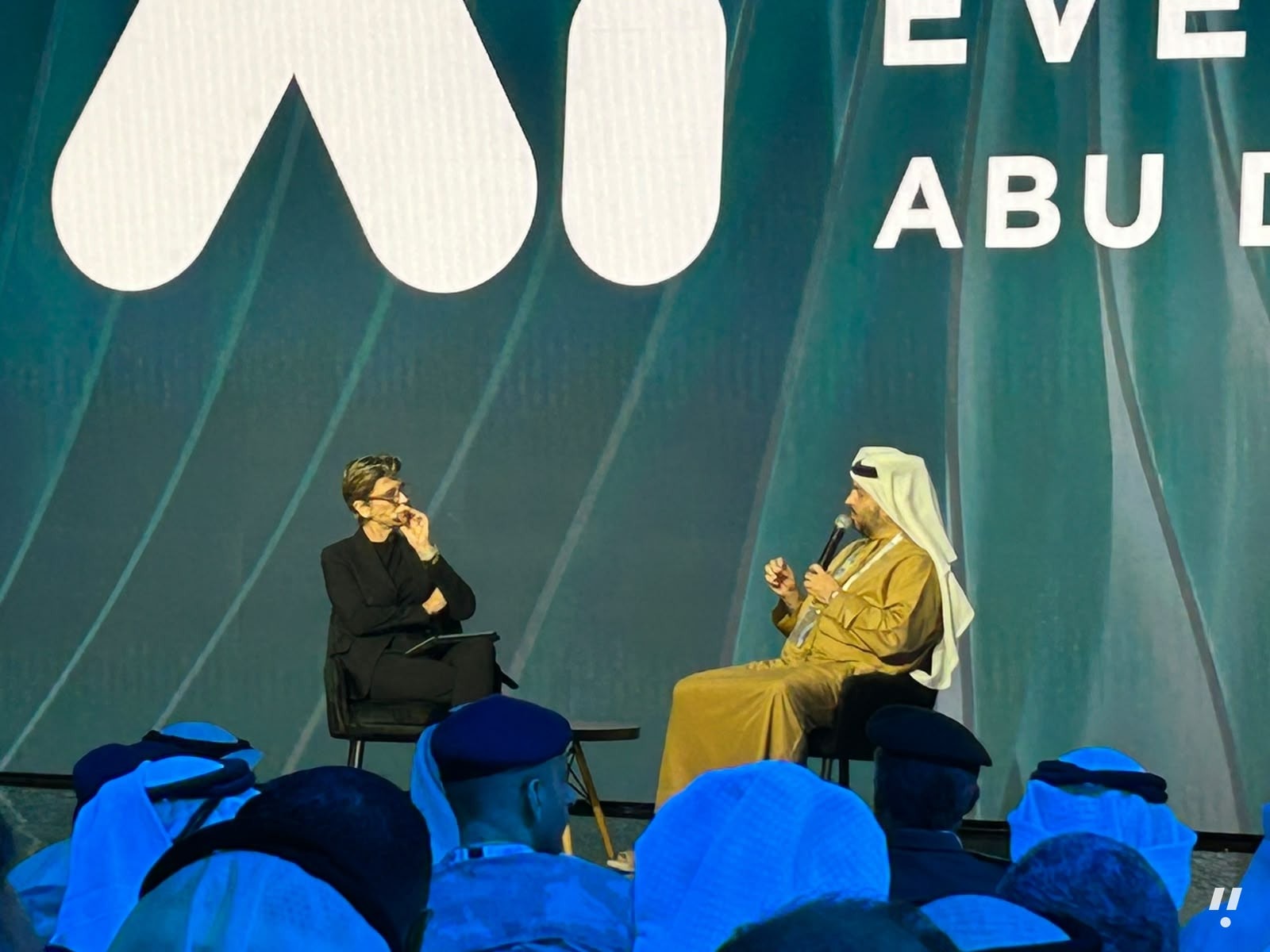
Faisal Al Bannai, an adviser to the UAE President and secretary general of the Advanced Technology Research Council, opened AI Everything Abu Dhabi 2026 with an argument that sovereignty over artificial intelligence has less to do with holding intellectual property than with steering where the technology goes next.
Speaking in a fireside chat titled "AI as a State Capability – A New Architecture of Sovereign AI", Al Bannai was asked by moderator Becky Anderson, a CNN anchor and managing editor of the network's Abu Dhabi bureau, what it means for a country to own its AI future instead of renting it. Anderson opened by recalling an earlier formulation of his: that sovereignty is mastery and continued evolution of the underlying technology, not possession of a finished product.
AI as a State Capability – A New Architecture of Sovereign AI
Al Bannai said owning the IP, or the economics that flow from it, is only part of the picture. The decisive question is who controls the destiny of the technology and who can change it. A state needs to understand what sits inside the system, alter it on its own, and evolve it on its own. Partners can help, he said, but a country that cannot test, modify and evolve the technology it depends on is not sovereign — a standard he applied well beyond AI.
He also rejected the framing that the UAE must choose between slowing advanced AI development and pressing ahead with stronger safeguards. Everyone is moving at full speed, he said. What is needed is deliberate thought about security measures and about the tests that frontier models, whether closed source or open source, should face.
The party building a model cannot also be the party signing off on it and asking to be trusted, he argued. Independent review and shared standards are required, even though they will be imperfect — waiting for a flawless model means waiting forever. Those reviews should identify where the risks lie and what should be tested against, and they should be revisited constantly. He described the whole exercise as iterative by nature.
The UAE's approach pairs adoption of the best closed models available with development of its own open-source models, a dual track he justified by saying nobody has a settled answer. The country takes what is best in the market, builds sovereign capacity alongside it, and puts circuit breakers and other practical measures in place, accepting that they will need fixing as circumstances shift.
Asked where Abu Dhabi and the UAE hold a genuine edge while the United States and China lead frontier development, Al Bannai pointed to speed of decision-making and pragmatism. He credited a regulator willing to grasp the risks and act quickly, clients willing to experiment with new use cases, and a practical outlook.
Size matters less than fit, he added. Frontier large models are impressive, but 70% to 80% of what enterprises and everyone else actually needs is not an extremely large model. They need small and medium models built for a specific job. The UAE is concentrating on very small, specialised models that serve several use cases, transport among them.
Its advantage, he said, will come from deploying practical applications that move a city forward rather than from a large model built for chit-chat.

