CEER Unveils EXOBOT, Saudi Arabia's First Electric Vehicles
The EXOBOT sedan and SUV are the first of seven models planned by the kingdom's national carmaker, with production targeted for late 2026.
Tariq Benali Tariq Benali covers business and corporate news across the UAE and MENA for Anecdoted, tracking the deals, leadership moves and regulatory shifts behind the region's companies. tariq@anecdoted.com
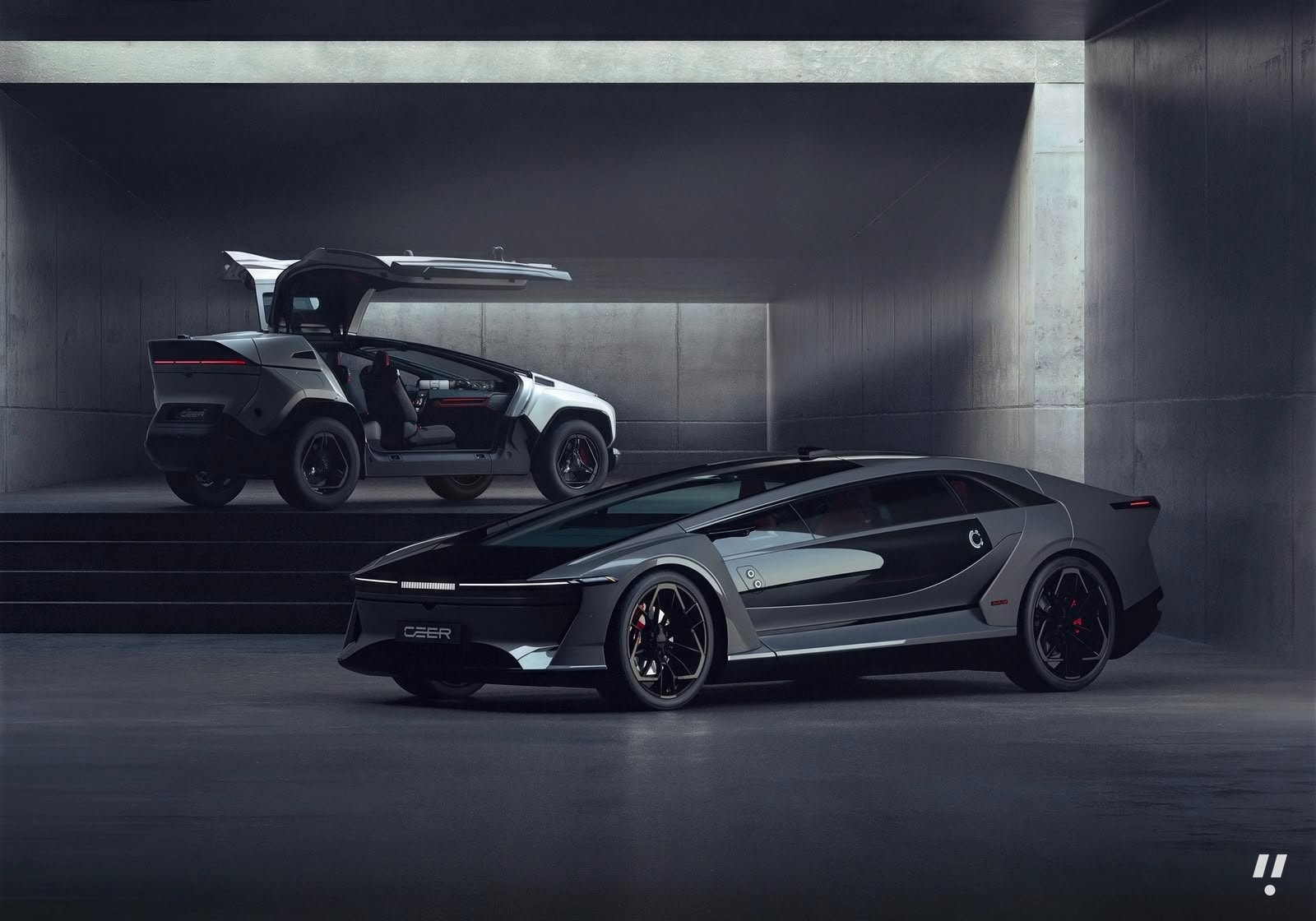
Saudi Arabia's national carmaker shows its first two models
Crown Prince Mohammed bin Salman has unveiled the EXOBOT, an electric sedan and an electric SUV built by CEER. They are the first vehicles to emerge from the kingdom's national automotive company. A statement released Monday said the two models were designed, engineered and manufactured inside Saudi Arabia, and that their styling takes cues from the country's landscape and culture.
CEER presents the sedan and SUV as the opening entries in a portfolio of seven vehicles to be launched over the next five years. Later models will cover the midsize and compact segments and will use differing propulsion options. Every vehicle in the plan is to be built at the CEER Manufacturing Complex in King Abdullah Economic City, a site the company and the Public Investment Fund call the biggest automotive plant in the Middle East.
Pricing, battery and range details withheld
The announcement did not disclose what the vehicles will cost, the size of their batteries or how far they will travel on a charge. Beyond the model count and the location of the factory, few technical details have been released. CEER has not said which of the seven models comes next, when deliveries to customers will begin, or how the brand will be positioned against imported electric cars in the Saudi market.
A domestic industry built through the sovereign fund
The launch belongs to a wider push by the Public Investment Fund to assemble an automotive ecosystem inside the country and to widen the economy beyond oil under Vision 2030. The fund set up CEER in 2022 as the first Saudi vehicle brand, structured as a joint venture with Foxconn, the Taiwanese electronics manufacturer. Under the original arrangement, CEER would license component technology from BMW, while Foxconn would develop the electrical architecture for the vehicles.
The fund projects that by 2034 the company will contribute $8 billion (SAR 30 billion) to Saudi Arabia's GDP and improve the country's trade balance by $21 billion (SAR 80 billion). It expects CEER to create as many as 30,000 direct and indirect jobs.
The crown prince framed the launch as a further step in the country's progress toward a sustainable industrial ecosystem, one in which the automotive sector drives growth by attracting investment, developing national talent and enlarging the private sector's role. In his account, the industry also moves the kingdom toward a leading position regionally and globally.
Manufacturing readiness
The factory, rather than the cars, has been CEER's public focus until now. In January 2026 the company described its partnership with Dürr, the German engineering group, on the complex's paint shop as a milestone in manufacturing readiness. It said vehicle production remained on track to begin in the fourth quarter of 2026, roughly four years after the brand was founded.

