Checkout.com's MENA Head: Saudi Payments Are Becoming Invisible
Remo Giovanni Abbondandolo argues that trust, local methods like Mada and AI-driven acceptance will decide the next phase of Saudi digital commerce.
Karim El-Sayed Karim El-Sayed covers company news, policy and regulation across the UAE and wider MENA for Anecdoted, with a focus on how new rules and licences reshape how startups operate. karim@anecdoted.com
Saudi Arabia's digital economy is expanding quickly, and the way people pay is changing with it. Consumers have grown used to fast, intuitive experiences online, and the payment itself is expected to sit inside the shopping journey rather than interrupt it.
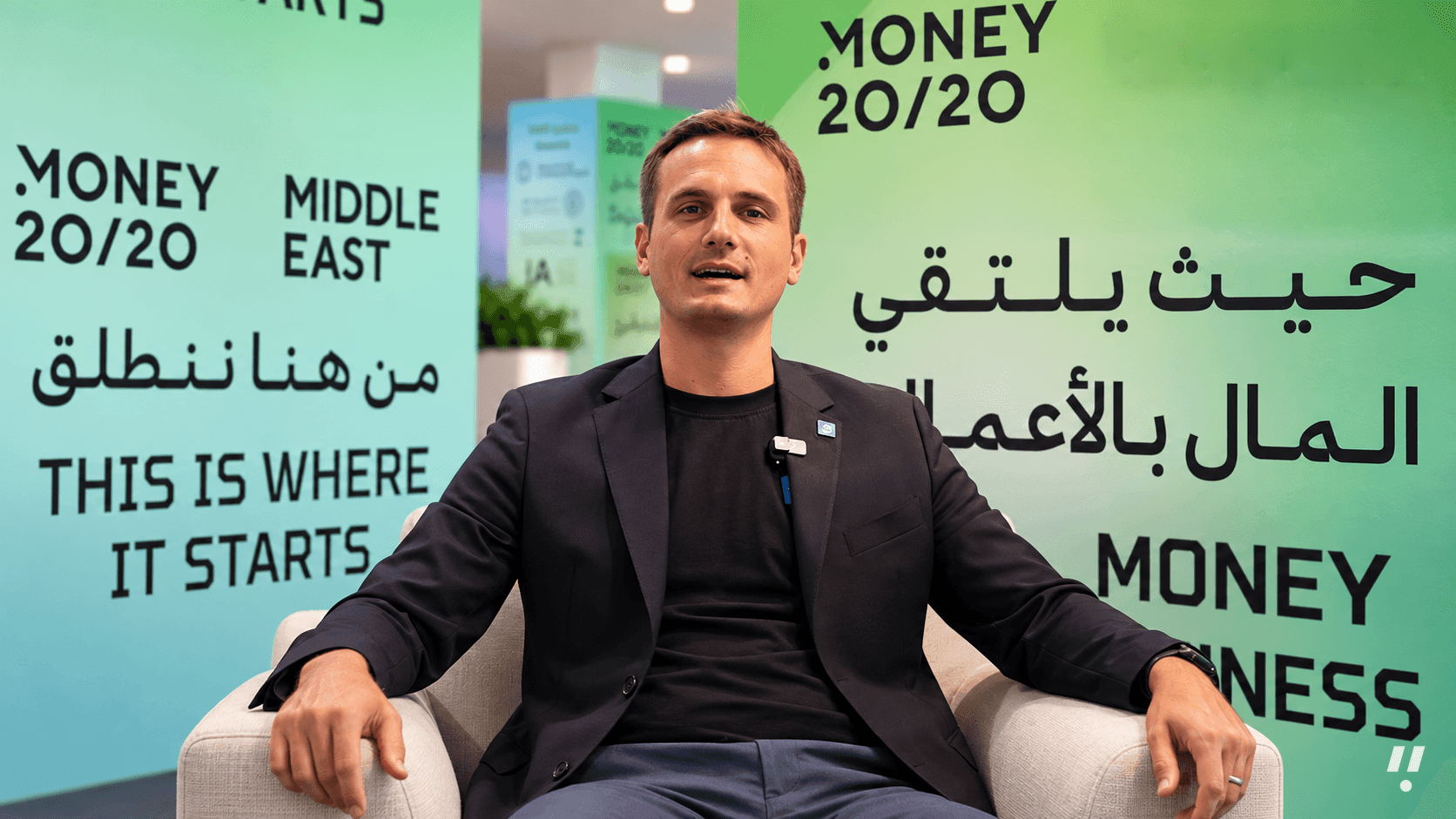
That was the case Remo Giovanni Abbondandolo, Checkout.com's general manager for MENA, made at Money20/20 Middle East. His view is that payments are heading toward invisibility: the moment of paying stops feeling like a separate action and folds into browsing, choosing and buying. Consumers notice it mainly when something goes wrong.
Convenience has a limit, and it is trust
A frictionless checkout is not enough on its own. As digital commerce grows, merchants carry a competing obligation — protecting sensitive financial information and giving shoppers reason to believe it is safe. Abbondandolo frames this as the balance every business in the Kingdom now has to strike: remove steps at the front of the transaction while hardening what sits behind it.
Trust, in that reading, sets the ceiling on how much convenience a merchant can actually deliver.
Local rails carry the traffic
Localisation shapes the ecosystem as much as design does. Mada, the Kingdom's domestic payment scheme, is the method many Saudi consumers reach for first. Supporting it lets businesses match existing habits instead of pushing customers toward unfamiliar options, which widens access to digital commerce and keeps transactions efficient for merchants chasing local buyers.
AI moves from optimisation to participation
Artificial intelligence is already working inside payment systems. Checkout.com's Intelligent Acceptance uses it to improve how transactions are processed, recover payments that would otherwise fail, and reduce friction at checkout — the unglamorous, behind-the-scenes work of pushing more legitimate purchases through.
The more visible change is happening on the consumer side. Checkout.com's research found that 57% of Saudi consumers already interact with agentic commerce while shopping online, a figure that points to how quickly AI-mediated buying has reached ordinary shoppers.
Agentic commerce describes a journey in which an AI assistant does more than recommend. It can search out products, compare the options, and carry out the transaction for the person it represents. The capability exists. Acceptance is the harder part. Consumers need confidence in how these systems decide, what they do with personal information, and how they handle money when a purchase is made on someone else's behalf.
None of that is settled by better models alone. It requires systems merchants can stand behind and shoppers can verify.
What the next phase rests on
Speed and convenience are now the floor rather than the selling point. Abbondandolo places three requirements next to them: intelligent technology, security, and local relevance — with consumer trust underneath all of it.
For Checkout.com, the objective is straightforward to state and harder to execute: make paying feel effortless while keeping the infrastructure behind each transaction reliable and tuned to what Saudi consumers expect next. The Kingdom's next round of payments innovation will be judged on that combination, not on speed alone.

