IMF Projects 4.8% GCC Contraction in 2026, Then 9.1% Growth in 2027
The fund expects the rebound to hinge on shipping and trade normalising in early 2027, with the region still trailing its prewar path by 2030.
Tariq Benali Tariq Benali covers business and corporate news across the UAE and MENA for Anecdoted, tracking the deals, leadership moves and regulatory shifts behind the region's companies. tariq@anecdoted.com
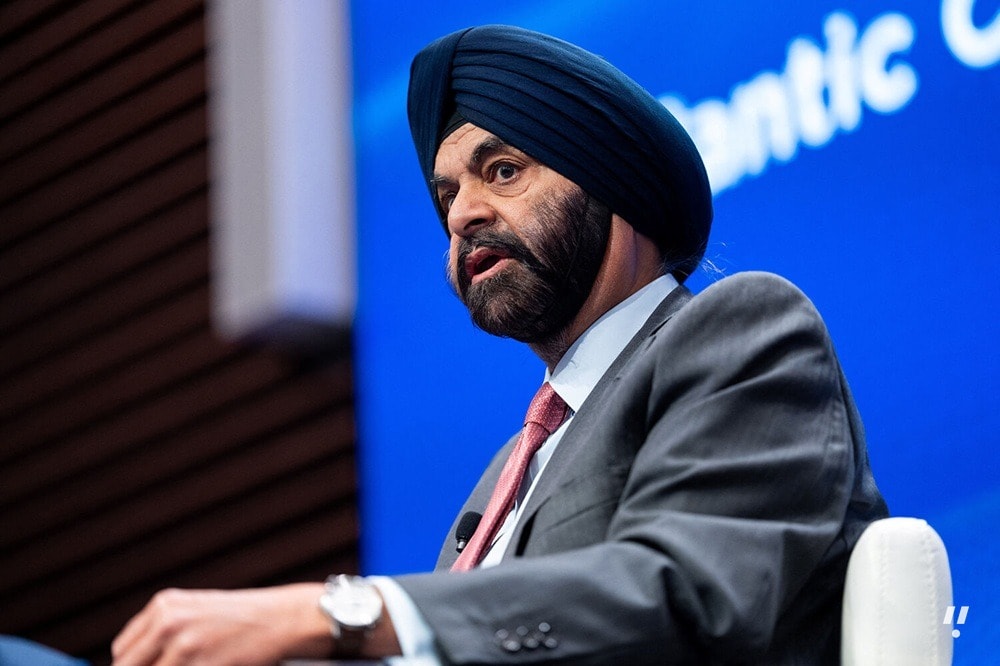
The International Monetary Fund expects the Gulf Cooperation Council's economies to shrink 4.8% in 2026, then expand 9.1% the following year. Jihad Azour, who directs the fund's Middle East and Central Asia Department, set out the projections at a Thursday press briefing held during the IMF and World Bank Group Annual Meetings in Bangkok.
“The war in the Middle East is imposing a highly uneven shock to the economies of the region,” Azour said. The World Bank had earlier this month put the 2026 contraction for the bloc at 4.3% on average.
Oil output dropped sharply across nearly all the directly affected exporters. Disruptions to shipping and refining pushed fuel prices higher. Prewar surpluses, production from non-Gulf suppliers, alternative transport routes, demand adjustment and heavy inventory drawdowns absorbed part of the impact, which proved more contained than the scale of the disruption first implied.
“These buffers bought time, but they are finite.”
Inventories are thinner now, spare capacity is tighter, and another disruption could force far larger price adjustments, Azour said. He described the episode as the biggest oil shock in at least five or six decades.
Three tiers of exposure
The fund sorts the affected Gulf producers by how well they can route around the Strait of Hormuz and how much fiscal room they hold. Kuwait, Qatar, Iraq and Iran rank as the hardest hit on both counts. Saudi Arabia and the UAE have alternative export channels and buffers that let them withstand the shock. Oman sits outside Hormuz and escaped the worst of it.
Higher crude prices will lend some support to the fiscal and external positions of exporters hit directly by the disruption. Prices should stay above the fund's April forecast, though they are expected to ease gradually.
What the 2027 rebound assumes
The return to growth rests on trade and shipping normalising in the first quarter of 2027, with exports settling back around the middle of that year. Qatar, where gas capacity suffered extensive destruction, has pulled its recovery timeline in to a year and a half from three years.
Fallout across several sectors is likely to persist, and reinforcing resilience will demand extra spending. The region's economy is projected to remain under its prewar trajectory in 2030.
A separate World Economic Outlook release on October 13 put the UAE's contraction at 3.9% in 2026, followed by 7.7% growth in 2027. For the Middle East, North Africa and Pakistan, growth slides from 3.3% in 2025 to -1.3% in 2026 before reaching 6.6% in 2027. Economies in the region that the conflict did not touch directly had their 2027 growth upgraded to 4.2%. Azour warned those countries against complacency: inflation risks could lift interest rates, above all for heavily indebted states that refinance through financial markets.
Policy and lending
Where inflationary pressures emerge, monetary policy should serve as the first line of defense, paired with prudent fiscal policy in countries with little room to spend. Azour advised against broad-based subsidies, favouring targeted, temporary, budget-neutral cash transfers to the worst-affected households while fiscal buffers are rebuilt.
He has seen no decline in regional assistance from GCC states, pointing to Saudi support for Pakistan, continuing support for Egypt and additional UAE support for Jordan. Azour met GCC officials in Bahrain last week alongside Managing Director Kristalina Georgieva; energy security, connectivity, joint projects and financial connectivity top the bloc's priorities.
On Egypt, Taline Koranchelian, a deputy director in the department, said the country has made progress restoring macroeconomic stability in a difficult external environment, though reducing the state's footprint in the economy has lagged other areas. The IMF has approved roughly $48 billion in financing for the Middle East, North Africa, Caucasus and Central Asia since 2020. Its full Regional Economic Outlook for the Middle East and Central Asia is due on October 22 in Dubai.

