Saudi FDI inflows climb 33.5% to $42.4bn as outbound investment nearly doubles
Inbound foreign investment rose to $42.4 billion in 2025, but outflows nearly doubled, leaving net FDI barely changed.
Tariq Benali Tariq Benali covers business and corporate news across the UAE and MENA for Anecdoted, tracking the deals, leadership moves and regulatory shifts behind the region's companies. tariq@anecdoted.com
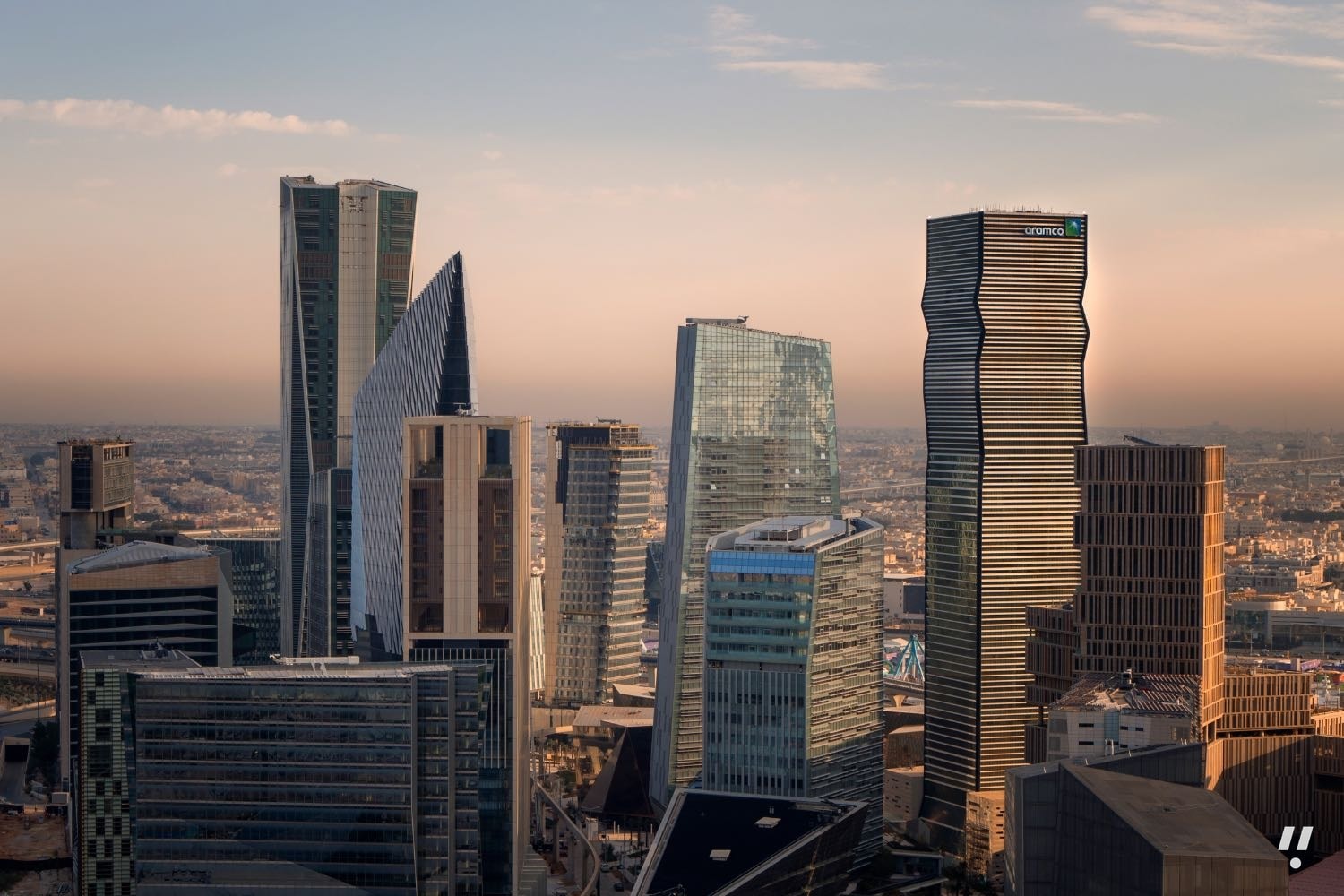
Foreign direct investment flowing into Saudi Arabia climbed 33.5% in 2025, with inbound capital totaling $42.4 billion, or SAR 159.1 billion, according to figures the General Authority for Statistics released on Thursday. Outbound investment by Saudi entities rose faster still, nearly doubling to $20.7 billion (SAR 77.7 billion) from $10.5 billion (SAR 39.2 billion) a year earlier, a 98.5% jump.
Because money moved out at roughly the pace it came in, the net gain was small. Net FDI stood at $21.7 billion (SAR 81.4 billion), 1.7% above 2024's $21.3 billion (SAR 80 billion). The accumulated stock of foreign investment in the country rose 8.3% to $282.3 billion by the end of the year.
Where inbound capital landed
Construction took the largest share of inflows, at $9.2 billion (SAR 34.5 billion), or 21.7% of the total. Manufacturing followed closely with $8.9 billion (SAR 33.4 billion), 21%. Administrative and support services ranked third at $6 billion (SAR 22.4 billion), 14.1%.
Manufacturing led on the way out. Saudi investors placed $6.7 billion (SAR 25.2 billion) into manufacturing abroad, 32.4% of all outflows. Construction came second at $3.9 billion (SAR 14.8 billion), 19%, and wholesale and retail trade, including motor-vehicle and motorcycle repair, third at roughly $2.9 billion (SAR 11 billion), 14.1%.
The UAE holds the biggest investment stock
The UAE accounted for the largest FDI stock in the kingdom at the close of 2025, worth $45.5 billion (SAR 170.7 billion). Luxembourg followed at $33.4 billion (SAR 125.3 billion), with the United States third at $9.5 billion.
Manufacturing also topped the stock by sector at $76.1 billion (SAR 285.4 billion), 27% of the total. Wholesale and retail trade and vehicle repair held $42.1 billion (SAR 157.7 billion), 14.9%, while financial and insurance activities accounted for $35.5 billion (SAR 133.1 billion), 12.6%.
Luxembourg booked the highest net inflows of any single country during the year, at $6.5 billion (SAR 24.4 billion). The UAE and Egypt each recorded $2.5 billion (SAR 9.4 billion), and Yemen $1.4 billion (SAR 5.2 billion). Luxembourg's standing reflects its role as an international financial and investment-routing hub rather than direct operating investment from companies based there.
Inflation holds below 2%
Consumer prices rose 1.9% year on year in September, a separate report showed. Housing, water, electricity, gas and other fuels drove much of the increase, up 3.6%, mainly on a 3.5% rise in actual housing rents. Food and beverage prices rose 1.4% and transport 2.3%. Personal care, social protection and other goods and services climbed 3.3%, while entertainment, sports and culture rose 2.5%, helped by a 4.5% increase in holiday-package prices. The index was unchanged from August. Education services rose 1.2% month on month, and housing and utilities, food and beverages and personal-care items each edged up 0.1%.
Oil infrastructure in the crosshairs
An administrative building at Aramco's Dhahran headquarters was hit on Tuesday, causing a limited fire, suspending flights and lifting oil prices. IMF managing director Kristalina Georgieva warned that attacks on Saudi Arabia can produce negative spillovers worldwide, since the kingdom sits at the centre of global oil supply and disruption there raises energy costs well beyond its borders.
Saudi output had already fallen through the year, from 10.9 million barrels per day in February to about 6.2 million bpd in August, according to International Energy Agency data. The kingdom worked around shipping disruption in the Strait of Hormuz largely by rerouting crude through the East–West Pipeline to the Red Sea. Before the pipeline was attacked on September 10 and 11, it carried roughly 4 million to 5 million bpd, about 4% to 5% of global supply. Aramco chief executive Amin Nasser said in a September interview that the company was studying a fourth and a fifth export route alongside its three primary ones, which include Hormuz.

