IMF Sees MENAP Economies Shrinking 1.3% in 2026 as Hormuz Closure Drags On
The Fund expects a 1.3% contraction this year before a 6.6% rebound in 2027, with regional inflation rising to 13.8%.
Tariq Benali Tariq Benali covers business and corporate news across the UAE and MENA for Anecdoted, tracking the deals, leadership moves and regulatory shifts behind the region's companies. tariq@anecdoted.com
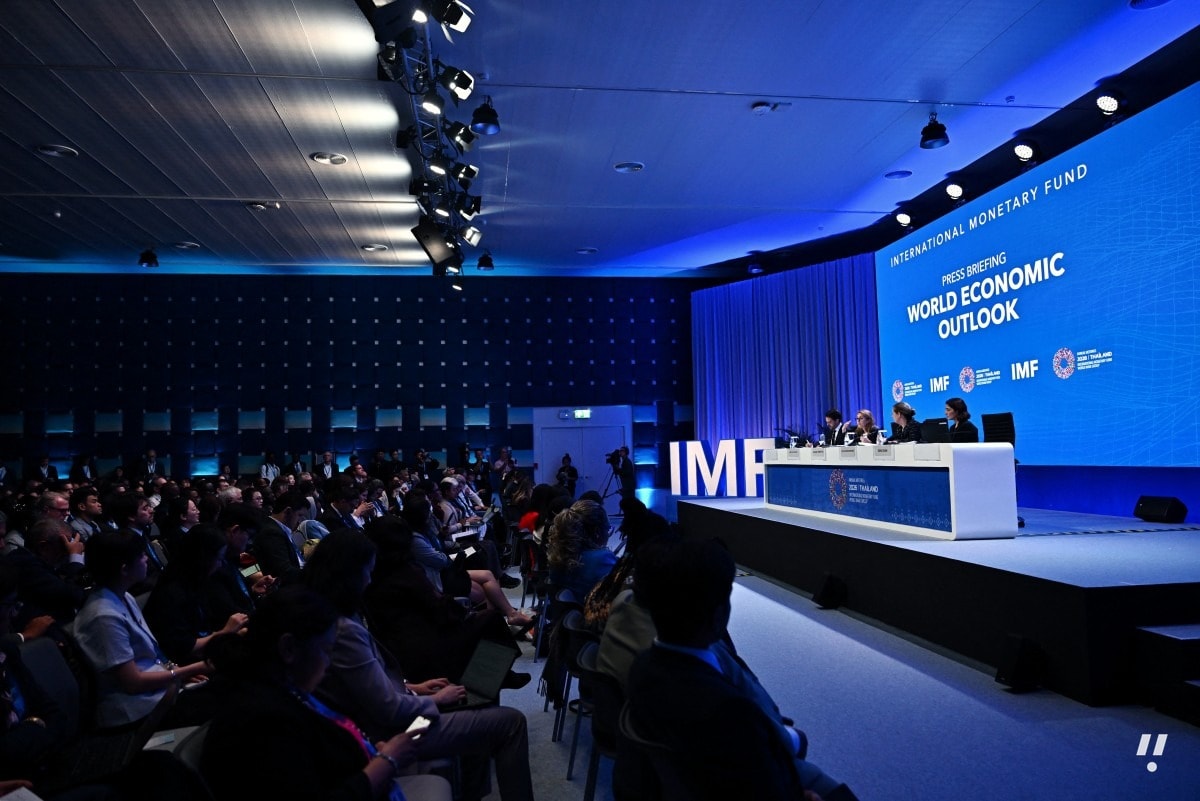
Finance ministers and central bank governors from the Middle East, North Africa, Afghanistan and Pakistan called for stronger economic resilience on Wednesday, as the region absorbs the fallout from the Iran war and the disruption of energy production, maritime transport and trade.
They met under IMF Managing Director Kristalina Georgieva, on the sidelines of the IMF and World Bank Annual Meetings in Bangkok, which run from October 12 to 18.
Contraction in 2026, rebound in 2027
The IMF has lifted its global growth forecast for 2026 to 3.1%, from 3% in its July update. The MENAP region is heading the opposite way. Its economy is expected to shrink 1.3% this year, after growing 3.3% in 2025, then expand 6.6% in 2027, according to the World Economic Outlook released on Tuesday.
Behind the downgrade is a changed assumption about the Strait of Hormuz. The Fund now expects a gradual reopening to start in March 2027, and does not see activity returning to prewar levels before October of that year.
Regional inflation is projected to reach 13.8% in 2026, up from 11.7% in 2025.
The damage is unevenly spread. Bahrain, Iraq, Kuwait and Qatar, the energy producers most exposed to interrupted production and transport, face double-digit contractions this year, followed by double-digit expansions in 2027 as output, exports and logistics recover. Saudi Arabia should fare better, helped by diversified export routes: a 3.3% contraction in 2026, then 7.9% growth in 2027. Commodity importers, Egypt among them, are expected to hold up relatively well despite costlier energy and food.
Fiscal buffers and diversification
Saudi Finance Minister Mohammed Al-Jadaan argued that the test of economic policy during a disruption is twofold: how much immediate damage it contains, and whether it serves longer-term ambitions and transformation. Coping with a drawn-out shock, he said, depends on how fiscal buffers are drawn down over time while enough capacity is kept back for future risks.
He listed diversification, energy and food security, and sturdier infrastructure and supply chains as the foundations of resilience. Artificial intelligence readiness, in his account, has stopped being a purely technical question and now sits inside the wider growth and resilience agenda.
His remarks followed the IMF's decision to extend his chairmanship of the International Monetary and Financial Committee by a year, to January 2028. Committee members and the IMF Executive Board backed the extension unanimously.
UAE forecast tops IMF estimate
Central Bank of the UAE governor Khaled Mohamed Balana credited strong financial buffers, low public debt and large sovereign assets, along with diversification and spending on human capital and technology, for the country's position. A central bank report released last week put UAE growth at 1.6% in 2026, accelerating to about 10% in 2027, a touch above the earlier 9.8% projection. Expanding non-oil activity, infrastructure investment and higher oil production capacity are expected to drive the rebound. That central bank figure sits above the IMF's October forecast of 7.7% for the UAE in 2027.
Gulf Cooperation Council Secretary-General Jasem Mohamed Albudaiwi said strong reserves, established banking systems and prudent policies have carried GCC states through recent shocks, despite turbulence in energy markets, trade and supply chains. He wants deeper integration between GCC members, continued diversification, and more spending on advanced industries, digital infrastructure, artificial intelligence and human capital.

