Jordan's GDP Growth Accelerates to 3% in Q2 on Manufacturing, Agriculture
Preliminary official data show output quickening from 2.8% a year earlier, with manufacturing supplying the single largest contribution to growth.
Tariq Benali Tariq Benali covers business and corporate news across the UAE and MENA for Anecdoted, tracking the deals, leadership moves and regulatory shifts behind the region's companies. tariq@anecdoted.com
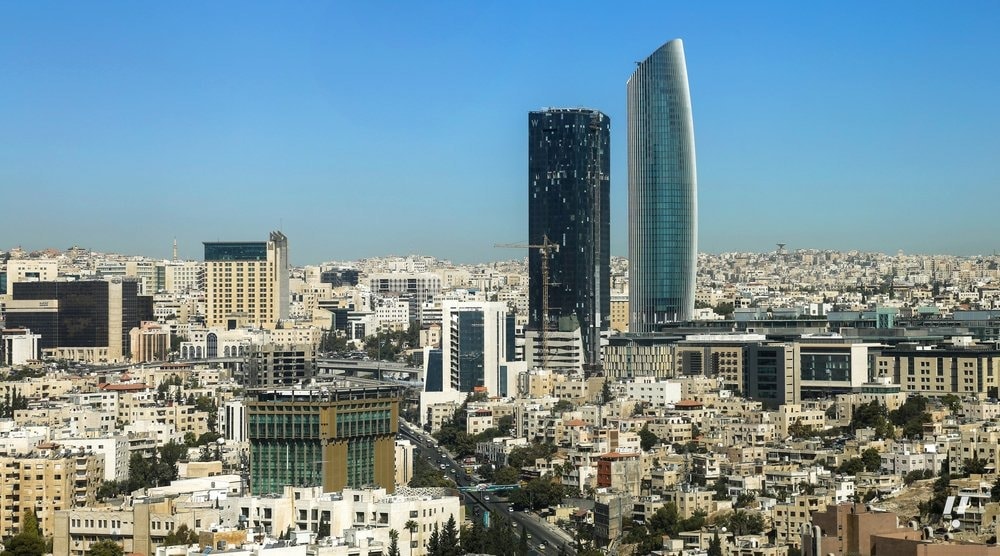
Jordan's real GDP grew 3% year on year in the second quarter of 2026, quickening from 2.8% in the same quarter of 2025. The figures are preliminary estimates from the Department of Statistics.
Manufacturing carried the most weight. The sector expanded 6.2% and added 1.04 percentage points to real GDP growth, the largest single contribution of any activity. It also accounts for 17.2% of real GDP, making it the biggest component of measured output.
Agriculture grew fastest, at 7.8%. Because the sector is smaller, its contribution to headline growth came to 0.34 percentage points. Electricity supply rose 5% and water supply 4.1%, while wholesale and retail trade added 0.25 percentage points.
The four largest sectors by share of real GDP are:
- Manufacturing: 17.2%
- Real estate activities: 12.2%
- Public administration and defense: 7.9%
- Wholesale and retail trade: 7.1%
Taken together, those activities account for 44.4% of real GDP, so the quarterly headline number still turns largely on industrial output and a handful of service sectors.
The second quarter built on 2.9% growth in the first quarter of 2026, itself an improvement on 2.7% in the first quarter of 2025. Agriculture grew 6.8% and manufacturing 5.3% in the first three months of the year, meaning both sectors accelerated in the second quarter.
Trade data for the first seven months of 2026 point in the same direction. National exports rose 4.6% to about $7.8 billion (JOD 5.5 billion). Re-exports climbed 67.2% to roughly $1.25 billion (JOD 886 million), lifting total exports to about $9.02 billion (JOD 6.395 billion), up 10.3%. Imports increased 2.4% to about $16.34 billion (JOD 11.585 billion). The trade deficit narrowed 6% to around $7.32 billion (JOD 5.190 billion), from $7.79 billion (JOD 5.521 billion) a year earlier.
The IMF's June forecast puts full-year 2026 growth at 2.7%, below the second-quarter reading, and 2027 growth at 3.1%. The fund cited Jordan's ability to withstand regional conflicts and pressure on tourism and energy markets. Its fifth review in June unlocked about $134 million under the Extended Fund Facility and $54 million under the Resilience and Sustainability Facility, after Jordan met all quantitative performance criteria and completed all structural benchmarks. Kenji Okamura, the IMF's Deputy Managing Director and Chair, said accelerating structural reforms is paramount to foster a more dynamic private sector and support stronger and more resilient growth.
In June the World Bank approved $700 million in financing aimed at private investment, access to finance, job creation, and the green and digital transition. It said Jordan had maintained macroeconomic stability despite regional pressures, and stressed the need to translate that stability into stronger investment and employment growth.
Second-quarter growth of 3% sits above the IMF's full-year projection, which means the pace would have to ease in the second half of the year for the annual figure to land near 2.7%. The re-export surge is the outlier in the trade numbers: its 67.2% rise ran more than fourteen times the 4.6% increase in national exports.

