Saudi Net FDI Inflows Fall 19.5% to $5.1 Billion in Q2 2026
Net inflows dropped 19.5% year on year as inbound investment weakened, while outflows edged higher, official figures show.
Tariq Benali Tariq Benali covers business and corporate news across the UAE and MENA for Anecdoted, tracking the deals, leadership moves and regulatory shifts behind the region's companies. tariq@anecdoted.com
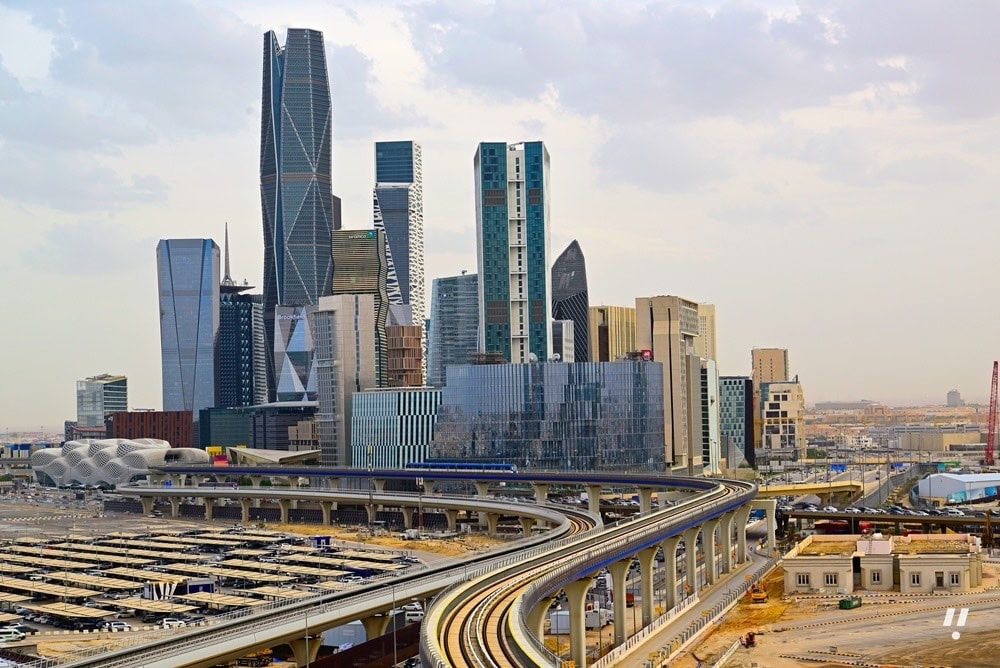
Saudi Arabia recorded $5.1 billion (SAR 19.1 billion) in net foreign direct investment during the second quarter of 2026, down 19.5% from the same quarter a year earlier, when net inflows stood at $6.3 billion (SAR 23.7 billion). The figure was also 15.8% lower than the $6.05 billion (SAR 22.7 billion) booked in the first three months of the year, according to the General Authority for Statistics.
Weaker investment entering the kingdom drove most of the decline. Gross FDI inflows fell 16.9% year on year to $5.9 billion (SAR 22.3 billion), compared with $7.14 billion (SAR 26.8 billion) in Q2 2025. Measured against the first quarter, inflows slid 18% from $7.22 billion (SAR 27.1 billion).
Outflows moved in the opposite direction, if only slightly. Saudi investors placed $852.1 million (SAR 3.2 billion) abroad in Q2 2026, up 2.7% from $825.4 million (SAR 3.1 billion) a year earlier, but 28.9% below the $1.17 billion (SAR 4.4 billion) sent overseas in Q1 2026.
The quarterly pullback sits against a stronger full-year picture. Net FDI inflows climbed 53% to $32.6 billion in 2025, and the kingdom ranked 13th among the world's largest recipients of foreign direct investment that year, based on UNCTAD data released in July. The cabinet described the 2025 numbers as a sign of growing investor confidence in Saudi economic reforms, citing competitiveness in energy, infrastructure, technology, advanced industries and logistics.
Regulatory changes aimed at lowering entry barriers
Pulling in foreign capital is a core part of Saudi Arabia's economic diversification strategy, and the policy stack supporting it has been rewritten. An updated Investment Law anchors the structural reforms. It guarantees foreign and domestic investors equal treatment, swaps a complex licensing regime for a streamlined registration process, and expands legal protections and dispute resolution options.
Regional headquarters incentives sit alongside those regulatory updates. The combined measures are intended to cut the friction of entering the Saudi market and to protect capital once it is committed.
Quarterly FDI readings are volatile by nature. A single large transaction can swing the national total, and a single quarter's decline does not by itself settle the direction of travel. What the Q2 2026 data does show is that gross inflows and net inflows fell in tandem while outflows held roughly flat, so the contraction came from money not arriving rather than money leaving. That distinction matters for a government whose stated aim is sustained acceleration in non-oil private sector investment.
Vision 2030 targets $100 billion in annual FDI. At $32.6 billion for 2025, the gap to that goal remains wide, and reaching it would require inbound flows to recover well beyond the levels recorded in either of the first two quarters of 2026.

