Joseph Hazel's Apex Health Expands From Qatar Base to Four-Country Platform
The Estithmar Holding subsidiary manages eight hospitals, aims to triple its footprint, and bets on local adaptation over a single expansion template.
Tariq Benali Tariq Benali covers business and corporate news across the UAE and MENA for Anecdoted, tracking the deals, leadership moves and regulatory shifts behind the region's companies. tariq@anecdoted.com
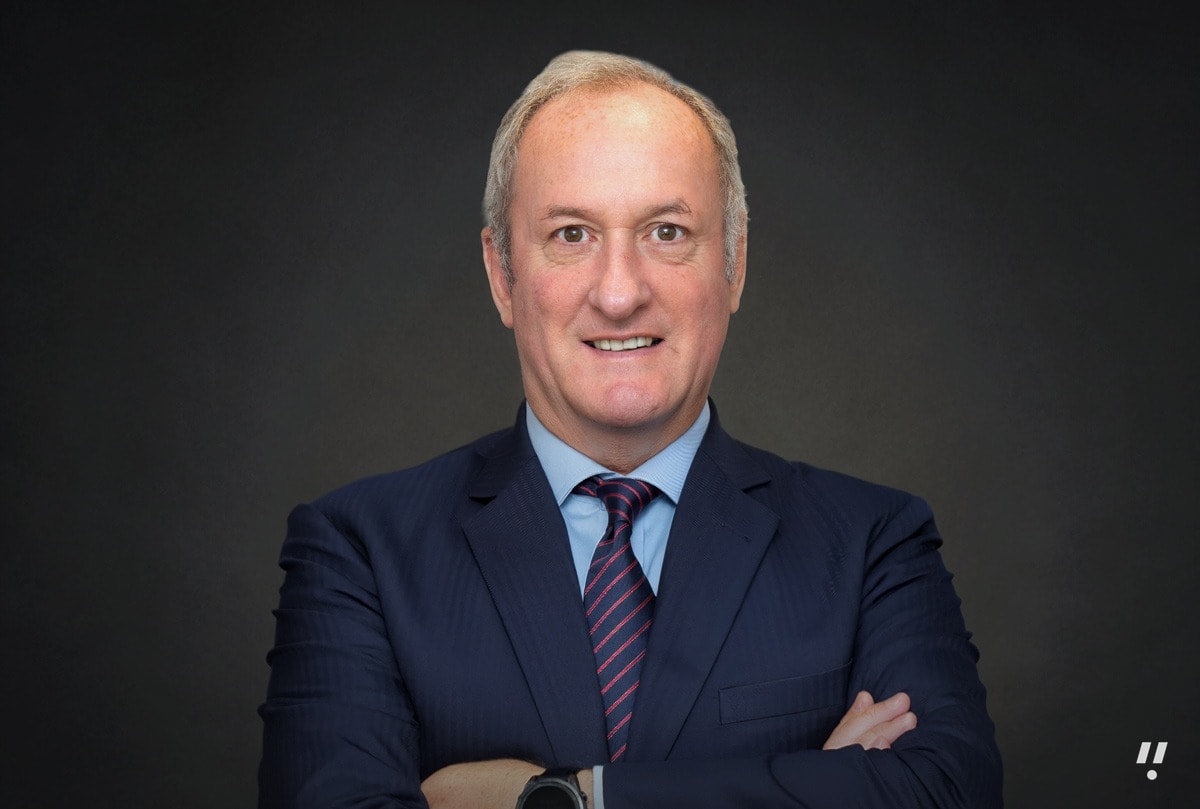
Apex Health has moved from running one hospital in Qatar to a platform covering four countries in a little more than three years. The healthcare arm of Qatar Stock Exchange-listed Estithmar Holding now intends to triple its hospital count, and it is doing so without a fixed template for each new market.
A model built on local priorities
The group pairs international clinical partners with public-private arrangements and operating structures shaped around what each country actually needs. Group CEO Joseph Hazel, who has led Apex since 2023, frames the starting point as a conversation rather than a rollout plan. The company asks what a country requires, then talks to regulators and government leaders about which structure will produce the most impact, he says.
Iraq is the clearest demonstration. Apex won a government tender to run two public teaching hospitals, each with more than 600 beds. According to the company, mortality across the critical care and emergency units of those two facilities fell by more than half within a year, an outcome it attributes to clinician training, AI-enabled tools, and standardized clinical pathways. Apex has since shifted from managing facilities there to owning one, with a $300 million, 400-bed hospital under construction in Baghdad.
Qatar as the proving ground
Hazel, 59, is British and has spent over three decades in healthcare leadership across Africa, Europe, the UK, and the Middle East, including close to seven years as COO of Mediclinic Middle East in Abu Dhabi. He also sits on the advisory board of the Arab Hospitals Federation.
Apex built its domestic position in Qatar through alliances with Cedars-Sinai of the US, South Korea's Asan Medical Center, and Germany's WMC. Healthcare services generated 35.1% of Estithmar's H1 2026 revenue, at $304.4 million. Hazel credits the Qatari operation with giving Apex the credibility to expand and the confidence of partners to follow it into new markets. Its Qatari portfolio includes The View Hospital, the Korean Medical Center, and the Military Medical City Hospital.
Where the group is going
Elsewhere, Apex has run Libya's Misrata Heart & Cardiovascular Center with the Libyan government for 15 years, and partnered with Algeria's National Investment Fund on the $300 million Algerian Qatari German Hospital, due to open in 2027. Hazel describes the through-line as a preference for markets that have been underserved, where new technology can help populations catch up.
The group positions itself as an operating partner that links governments, local providers, and international institutions rather than leaning on one clinical affiliation. It says it has delivered roughly 50 clinical training sessions in Iraq and Libya.
Technology sits inside that work. Apex runs an integrated electronic medical record linked to a patient app covering appointments, diagnoses, and records; in Qatar, the company says the app is actively used by about 33% of its addressable market. Hazel argues AI's main contribution is helping patients understand and trust their own care, not replacing a doctor's judgment.
Consistency gets harder as networks grow, since regulation, clinical practice and patient expectations differ by country. Apex works with the International Hospital Federation, the Arab Hospitals Federation, the IFC and Joint Commission International to bring recognized standards into each market.
Revenue reached $603.3 million in 2025 and topped $304.4 million in the first half of 2026. There are 13 projects in the pipeline across South Asia, the Middle East and Africa, and Medbridge, the group's procurement and supply business, is used to speed adoption of medical technology.
Hazel's own yardstick is narrower than the growth targets. He measures the business by patient outcomes and by what patients say about it.

