MENA Issuers Build Funding Optionality as Volatility Persists
Regional borrowers are spreading issuance across benchmarks, sukuk, multiple currencies and private placements instead of relying on one route.
Karim El-Sayed Karim El-Sayed covers company news, policy and regulation across the UAE and wider MENA for Anecdoted, with a focus on how new rules and licences reshape how startups operate. karim@anecdoted.com
Borrowers across the Middle East and North Africa are treating choice of funding route as a strategic asset rather than a fallback. In a market marked by geopolitical volatility, issuers have spread their borrowing across public benchmarks, sukuk, several currencies and private markets instead of depending on a single instrument.
The reopening of regional markets after disruption was not uniform. Public issuance windows remained selective, execution periods were compressed, and established funding routes were at times unavailable on terms issuers would accept. That gap gave the private placement market room to grow into a funding channel of real significance in the region rather than a residual option.
Private placements were used as deliberate financing instruments, not simply as substitutes when a public deal could not be done. Standard Chartered arranged more than US$10.0 billion equivalent of private placements for regional borrowers over the period since the conflict began, and ranked as the top bookrunner for that activity. Issuers also made greater use of Section 4(a)(2) structures.
Public benchmark bonds stayed at the center of regional funding strategies. Sukuk pricing in the region passed US$35 billion year-to-date and accounted for more than a quarter of all regional supply, with supply expected to increase in the coming months on strong demand. Sustainable-finance formats widened the pool of sophisticated institutional capital available to GCC issuers.
Non-dollar issuance made up about 13 per cent of regional supply this year, with roughly US$16 billion equivalent priced across a dozen currencies. Standard Chartered's non-dollar volumes more than quadrupled compared with the same period a year earlier.
Why the routes diverge
The relative appeal of each funding route rarely moves in step. Investor appetite, currency economics, maturities and structures can look very different at the same moment, which is why keeping several options open matters more than picking one in advance.
Continuous engagement with investors through volatile periods is what makes that optionality executable. Regular roadshows deepen how investors understand a credit. They also expose differences in conditions across investor communities in Asia, Europe, the Middle East and the United States.
A debt capital markets platform carries two jobs at once: advising issuers on when to come to market, and giving international investors context on the region. Standard Chartered points to end-to-end capabilities in structuring, engagement, distribution and execution, an approach that supported its number-one ranking in MENA G3 bond and sukuk league tables, more than 85 transactions led year-to-date, and recognition through several industry awards.
The practical lesson from the past period is that execution no longer requires waiting for uncertainty to clear. The issuers that fared best prepared early, kept their funding objectives clear, preserved flexibility across products and currencies, and stayed in front of investors throughout. Competitive advantage now comes from reading the market, shaping demand and executing while conditions are still unsettled.
Adjacent work by Standard Chartered makes a related point about where corporate finance is heading: a separate report found the UAE leading the world in planned investment in digital supply chain finance.
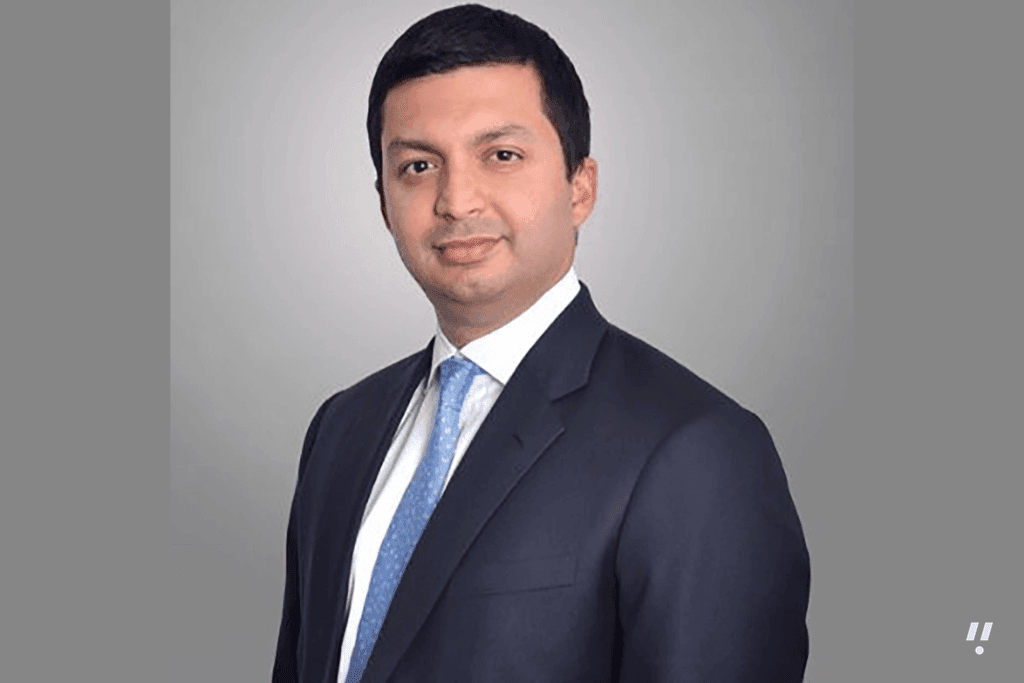
Salman Ansari is Global Head of Capital Markets at Standard Chartered. The article was published on Sep 14, 2026 in Entrepreneur Middle East, an international franchise of Entrepreneur Media. Opinions expressed are those of Entrepreneur contributors.

