Middle East Crude Exports Recover, but Longer Routes Add Strain
Regional crude flows edged past their pre-war pace in late September, propped up by extra supertankers, longer voyages and offshore transfers.
Tariq Benali Tariq Benali covers business and corporate news across the UAE and MENA for Anecdoted, tracking the deals, leadership moves and regulatory shifts behind the region's companies. tariq@anecdoted.com
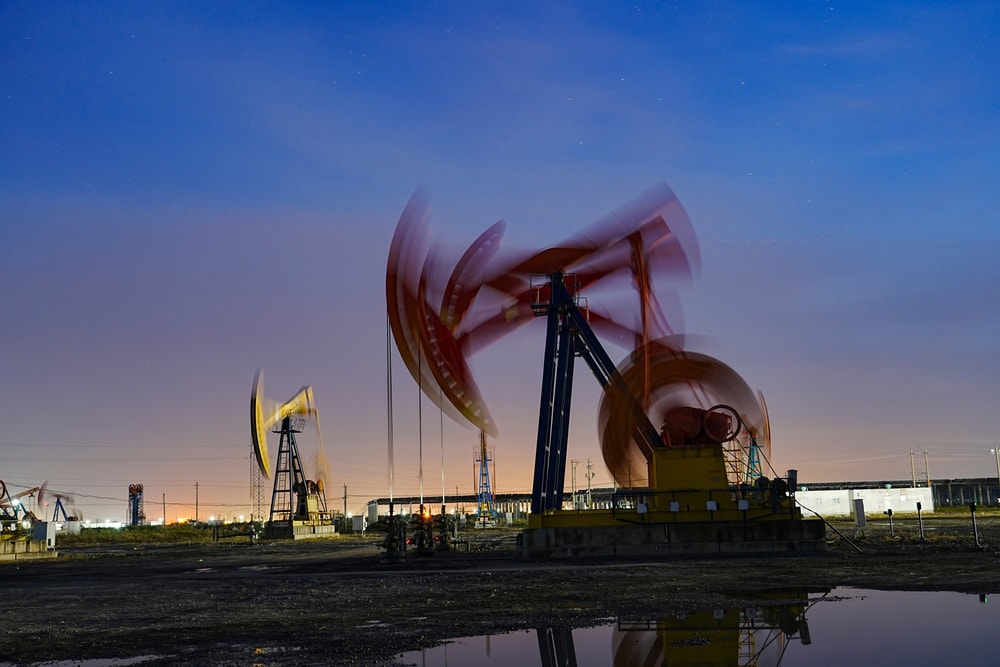
Crude shipments out of the Middle East ran ahead of their pre-war pace on four days in the last week of September. The recovery rests on longer voyages, more supertankers and a growing stack of ship-to-ship transfers.
Regional exports reached 19.5 million to 22.5 million barrels per day on September 24 and held that range from September 27 through 29, according to provisional Kpler tracking. The seven-day moving average reached 18.5 million bpd on October 1. Between March 2025 and February 2026, before the US-Israeli war with Iran began, shipments averaged about 18 million bpd.
The tally covers cargoes through the Strait of Hormuz and the Red Sea, loadings at regional terminals and ship-to-ship transfers in the Gulf of Oman. Ships that crossed the strait with automatic identification system transponders switched off are excluded, and the figures are a shipping-based estimate rather than a complete count of every barrel leaving the region.
Broader liquids flows — crude, oil products, chemicals and non-gas liquids — averaged 22.4 million bpd in the seven days to September 30. LNG cargoes leaving Hormuz in September reached their highest monthly level since February.
Saudi barrels shift back to the strait
Restored volumes do not signal restored normality. An attack damaged Saudi Arabia's East-West pipeline and halted exports from Yanbu, its Red Sea port, pushing Saudi crude toward the Gulf and Hormuz.
Saudi exports through the strait were expected to reach about 3.6 million bpd in September, against roughly 900,000 bpd in August — an increase of almost 3 million bpd. Kpler analyst Panagiotis Krontiras estimated the added volume would need 36 to 40 more very large crude carriers, each carrying about 2 million barrels. The daily time-charter rate for a carrier hauling Middle Eastern oil to China hit a record $1.3 million on September 21. Tanker availability is part of the supply equation now: pipeline or port disruptions can be offset by ships only if enough vessels are positioned correctly and can load, transfer and discharge without delay.
Offshore transfers at their limits
The Gulf of Oman has become the critical transfer zone for oil loaded inside Hormuz, and ship-to-ship operations there have reached their limits, largely because extra Saudi shipments landed on top of cargoes from Iraq, the UAE and other Gulf producers. Saudi Aramco sold more than 60 million barrels for transfer off Sohar, Oman, across September and the following month. The traffic created queues for tugboats, labour and other equipment.
Vortexa analysts said crude loaded onto VLCCs at ports west of Hormuz held near 6 million bpd from the end of August, equal to roughly three VLCC pairs starting transfers each day. Delays led some Chinese buyers to request alternative sites off western India and Malaysia, or to seek direct deliveries to refineries. That shift shows the disruption spreading beyond the Gulf's immediate geography.
The constraint is no longer only whether oil can leave the region, but whether the maritime network can move the volume efficiently. Extra transfers, longer routes and thin tanker supply strip out the slack that once let a single pipeline outage be absorbed elsewhere in the system, which raises the cost of every added delay for buyers in Asia.
What the strait carries
Before the war, about 125 large commercial vessels a day passed through Hormuz, including tankers, gas carriers, bulk carriers and container ships, and the strait accounted for roughly 20% of global daily crude and LNG supply. The International Energy Agency put average 2025 flows at 20 million bpd of crude and oil products, about 25% of global seaborne oil trade.
Crude alone was roughly 15 million bpd, nearly 34% of global crude trade, with about 5 million bpd of oil products. Around 80% of that oil was bound for Asia. Saudi Arabia and the UAE hold an estimated 3.5 million to 5.5 million bpd of pipeline capacity to divert crude to the Red Sea and Fujairah — enough to soften a partial disruption, not to replace the strait. The IEA said the logistics of rerouting large volumes have not been thoroughly tested, so nominal pipeline capacity is not guaranteed export capacity.
About 93% of Qatar's LNG exports and 96% of the UAE's transit Hormuz, together around 19% of global LNG trade, and neither has a practical alternative sea route. A prolonged closure would tighten global gas markets immediately.

