Octabiz Bundles Store, POS and Accounting on One Core as It Raises $1M Seed
Three founders in Muscat built a single-core business platform for shops that Shopify serves badly, and say migration now takes minutes.

Octabiz is headquartered in Muscat, Oman, and operates through a US company, Octasys LLC. Its three founders reached the same problem from separate directions. Ramin Alizadeh Rad, a co-founder, investor and business coach, had run a sporting goods retailer in Kentucky. Omid Pirdehi, co-founder and business lead, had spent years as a chief executive across different companies. Matthew Truth, co-founder and product lead, had worked on product teams for years and watched one pattern repeat.
“A small business runs on a pile of separate apps that don’t talk to each other,” Truth says. “A manager logs into five tools to get one thing done. Giving a staff member access costs another paid seat, and sharing your own password is a security risk. Every tool has its own learning curve, even for small tasks.”
A small business runs on a pile of separate apps that don’t talk to each other,
The pitch that came out of it: “One platform, one login, and software that adapts to the business instead of the other way round.” Pirdehi and Alizadeh Rad had lived the problem as operators, and the three of them built Octabiz around it.
The product bundles an online store, point of sale, inventory, invoicing, accounting and business email into a single system. Truth frames the case against the stack most small retailers assemble. A Shopify Basic plan runs US$39 a month, he notes. Point of sale for the counter adds US$89 a month per location, and a shop that keeps its own card processor hands over another 2% of every sale. Then come the inventory, invoicing and accounting apps. A September scan of 300 high-traffic Shopify stores turned up about 14 apps per store. “The store has become the cheap part, and most of the cost sits around it,” he says.
Octabiz aims at businesses the Shopify model serves badly. Its first US customers sell high-end handmade rugs, each one of a kind, each selling once after several store visits and a measurement, then returning for cleaning and repair over years. Software designed to move hundreds of units of a single SKU handles that pattern poorly, Truth argues.
One core behind the screens
The design decision he made as product lead was to build a dynamic system: a capability built once so it can be reused in many ways. Octabiz keeps one core holding a single record of everything that happens in the business. Screens, the AI chat, a voice assistant, automations and an app marketplace all work on that same core. An owner can tell it to refund the Tuesday order, or ask what yesterday's numbers were, without clicking through five screens. Conventional screens stay in place for staff who prefer them.
The company is raising a US$1 million seed round at a US$10 million valuation, with the money earmarked for expansion across the GCC and the US. Since August 2025 it has taken about US$150,000 from co-founder and investor Alizadeh Rad, along with roughly US$50,000 in credits from programs run by PostHog, a San Francisco-based product analytics platform, plus Sentry, an error-monitoring tool, and Firecrawl, an AI web-scraping tool.
Around 100 businesses are in the process of moving onto the platform, most of them as paying customers. Among them is Moayeri, an Omani retailer of saffron and specialty foods with five locations and a global online store. Its owner handles tasks such as location-by-location daily reports through the AI chat. Migration, long the sticking point in a sale, now finishes in under 30 minutes rather than 30 days, by Truth's account, which frees the team to train clients and grow faster.
Three founders, one product
Truth's read on AI is that it has absorbed much of the development work a tech startup once needed, without removing the need for people who know how to direct it and keep learning. “A product like Octabiz would normally take at least 20 senior developers plus several product managers and designers,” he says. “We’re three founders.”
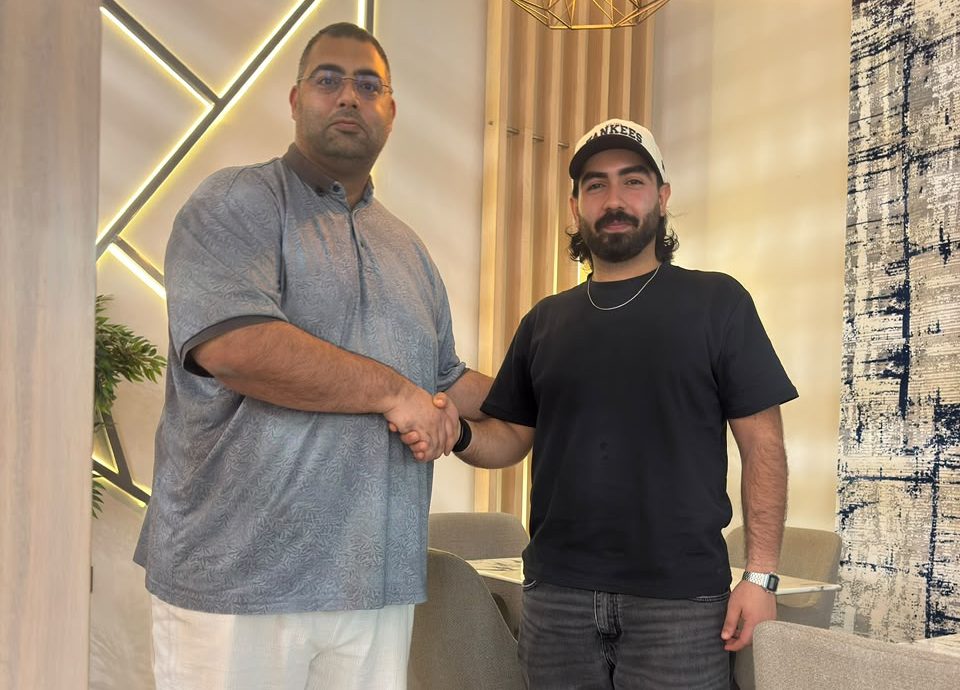
He is wary of leaning on models without domain knowledge behind them. “If you’re an expert in your field, use AI to refine your thoughts and keep doing the thinking yourself.”
The team runs most of its work through Claude and uses Higgsfield for graphic design. Customer research stayed central throughout. The initial focus was rug cleaning businesses, and watching how that customer worked pushed the team toward a platform that could be reshaped for other trades. “The lesson for me: keep listening to one customer closely, but design so the answer works for many,” Truth says.
Cheaper tooling did not make the build cheap. “Most of our money went into discovery, learning and, above all, unlearning things we thought were helping,” he says. “With limited capital and a small team, you can now ship a real product and win paying customers. Understanding your customers is still what costs the most.”
Why Muscat
Truth points to Oman's growth trajectory, with Oman Vision 2040 behind it, as the reason the company sits in Muscat. “When a place is growing, you can help it grow and grow along with it,” he says. Building for Gulf business culture from a distance does not work, in his view. “You can’t build for the Gulf culture from articles and books. You have to live here. How business gets done, the language and the relationships are things you learn by being in the room, which is exactly how Omid learned what Moayeri needed.”
The technical load is real. Arabic and right-to-left interfaces have to behave correctly, and tax and accounting rules diverge from US practice. Octabiz builds for both markets at once to deal with it: the US through Octasys, the GCC out of Muscat.
Comparing the two ecosystems, Truth sees a large, established US customer base already used to paying for software, set against a crowded field where the hard part is standing out. The GCC offers growth and an edge for companies that understand local requirements, but asks more of the product team: Arabic and right-to-left interfaces, plus local tax and accounting rules. His stated ambition does not change between them: “to make running a small business easier, whether the owner is in Muscat or in Kentucky.”
Three questions before starting anything
In his business classes, Truth asks students to answer three questions before they commit to a venture: what are your interests, what are your resources, and what are your skills and domains. Answering honestly takes self-knowledge, he says. So the work starts earlier than the business plan. Learn to live a life. Watch your own feelings and thoughts. Work out what you do not want to do, and identify your weak points so you know which gaps to hire for.
Talking to people is a skill in its own right. Most team arguments, in his telling, are not about the decision at hand but about someone defending an opinion as though it were a fact. Two books shaped how he handles that: David Bohm's On Dialogue and Marshall Rosenberg's Nonviolent Communication. His method is to state the real reason calmly and ask what the other person is seeing before defending his own position.
The seed round is open at a US$10 million valuation, with about 100 businesses in the queue to move onto the platform and a migration step that, by the company's own measure, now takes under half an hour.


