Sheikh Mohammed Reshapes ICD Board as Managing Director Steps Down
A decree by Dubai's ruler removes Mohammed Ibrahim Al Shaibani as ICD board member and managing director while keeping Sheikh Hamdan bin Mohammed as chairman.
Tariq Benali Tariq Benali covers business and corporate news across the UAE and MENA for Anecdoted, tracking the deals, leadership moves and regulatory shifts behind the region's companies. tariq@anecdoted.com
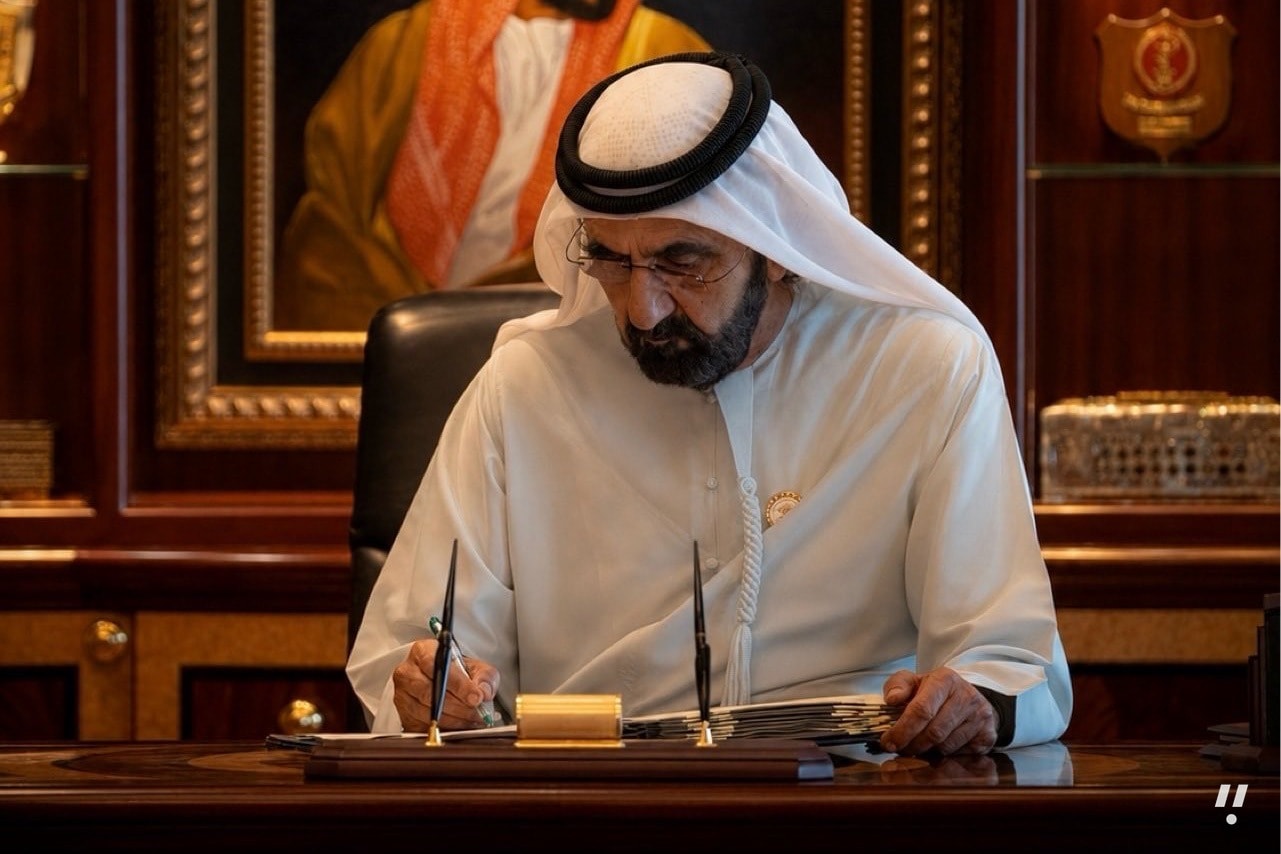
Sheikh Mohammed bin Rashid Al Maktoum, vice president and prime minister of the UAE and ruler of Dubai, has issued a decree reshaping the board of the Investment Corporation of Dubai, the holding company wholly owned by the Dubai government.
The decree ends the board service of Mohammed Ibrahim Al Shaibani, who held two posts at the institution: board member and managing director. He leaves both.
Who stays, who leaves
Sheikh Hamdan bin Mohammed, crown prince of Dubai, continues as chairman. Sheikh Maktoum bin Mohammed, first deputy ruler of Dubai, remains vice chairman.
The rest of the board is made up of Sheikh Ahmed bin Saeed, Mohamed Al Hussaini, Reem Al Hashimy, Sultan Al Mansoori, Abdulrahman Al Saleh and Helal Almarri.
Continuity at the top is intact. The change falls on the managing director's post and the board seat attached to it.
The decree takes effect on the date it was issued and will appear in Dubai's Official Gazette.
For Al Shaibani, the ICD exit follows an earlier resignation as chairman and board member of Dubai Islamic Bank, closing a tenure of nearly 18 years there. He cited personal reasons.
What ICD owns and where it leans
ICD was established in 2006 to consolidate the government's commercial companies and investments and manage them as one portfolio.
Its mandate covers financial and strategic oversight of the companies it holds, alongside the pursuit of long-term, risk-adjusted returns across sectors and geographies. The arrangement places an institution above operating businesses rather than a passive set of stakes.
The portfolio's weight sits in the industries that carry Dubai's economy. As of December 31, 2025, transportation accounted for 28% of investments, hospitality and leisure 17%, real estate and construction 16% and banking and financial services 15%. Retail and other holdings accounted for 14%, industrial investments 7% and oil and gas 3%.
Oil and gas is the smallest slice of the seven, which puts the centre of gravity in transport, tourism, property and finance.
The balance sheet behind the board
ICD reported total assets of $457.4 billion, or AED 1.7 trillion, at the end of 2025. Revenue reached $97.8 billion, or AED 359 billion, and annual profit stood at $20 billion, or AED 73.4 billion.
Seats on this board are not ceremonial. ICD's holdings include some of Dubai's best-known companies, which means the directors weigh in on capital allocation, portfolio performance and where the institution invests next.
That reach extends past a conventional sovereign investment portfolio into sectors central to the emirate's economic activity. With the crown prince as chairman and the first deputy ruler as his deputy, the reshuffle is otherwise limited to one director's exit.

