Six Middle East Startups Land on the 2026 Fintech 100
Four UAE and two Saudi companies made the list, spanning proptech, embedded SME lending, stablecoin settlement and core banking software.

Six companies from the Middle East appear on the 2026 Fintech 100, a selection of the world's leading private fintech firms. Four are based in the UAE and two in Saudi Arabia. Between them they cover real estate investment, financial services for small businesses, and digital assets.
The geographic split puts the UAE third on the list with four entries. Saudi Arabia ties for fifth with two, a position it shares with Australia, Brazil, India and Mexico. Both countries have been building reputations as fintech centres capable of producing startups that compete outside the region, and the 2026 selection reflects that.
What the selection measured
Firms were chosen on deal activity, industry partnerships, investor strength, hiring momentum, commercial traction and growth potential. The six Middle East companies named all expanded over the past year, whether through partnerships, backing from established investors or large funding rounds, and each is positioned for further progress in the period ahead.
Huspy: mortgages at scale
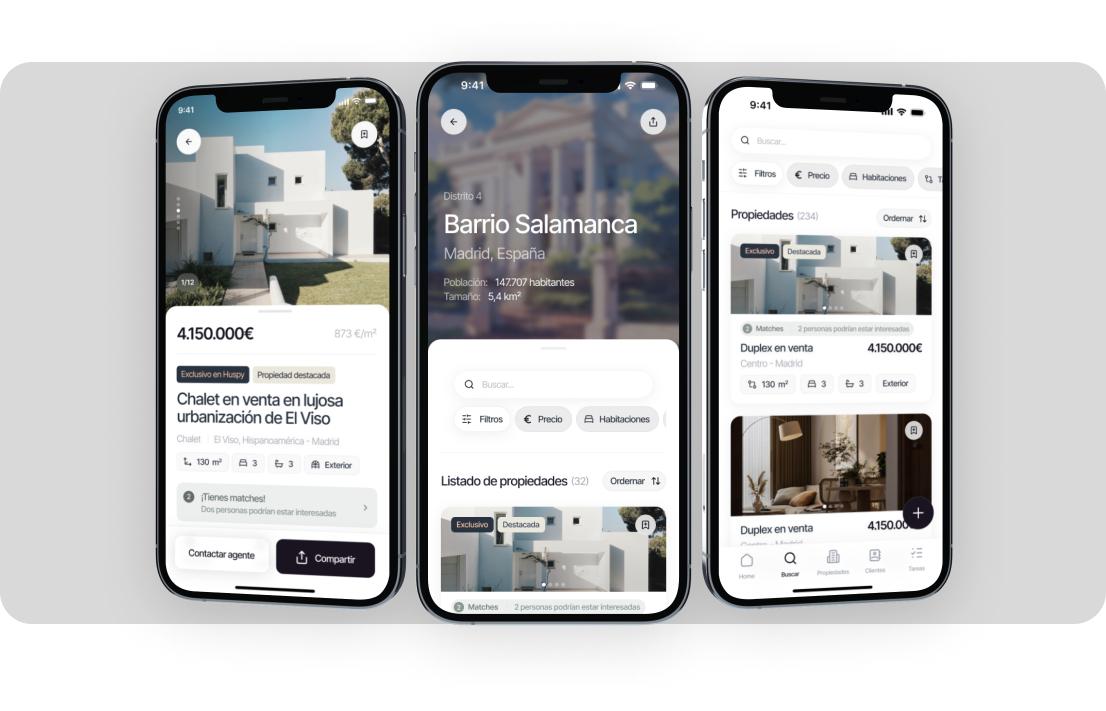
Huspy was founded in 2020 and is headquartered in Dubai. It digitises home buying, selling, renting and mortgages, operating both as an online property platform and as a mortgage broker. Users search listings, compare and apply for home loans, and reach real estate and mortgage agents through the platform.
The company now operates in 15 cities across four markets: the UAE, Saudi Arabia, Spain and Italy. It has been in Spain since 2022 and entered Italy in 2026. In its home market it handles roughly 25% of residential mortgages and facilitates transactions worth about US$1 billion a month, a figure that is growing quickly.
Over 2026 and 2027 the company plans to concentrate on developing the Italian market, add further European and MENA markets, and deepen its position in Spain, the UAE and Saudi Arabia. Its long-term ambition is to build an AI-native real estate super app for Europe, the Middle East and Africa. The model keeps real estate agents and credit advisors at the centre of the transaction rather than routing around them. Huspy has raised about US$200 million to date, including a US$59 million Series B in July 2025.
Stake: fractional ownership of rental property
Stake launched in 2021 and is headquartered in Dubai. It runs a digital platform for investing in rental property in the UAE and Saudi Arabia, offering fractional ownership of income-generating residential and commercial buildings. Individuals can begin with as little as AED 500, about US$150.
Stake manages each investment from acquisition through to exit and pays investor income directly into a Stake wallet. In the UAE, investors pool funds to hold shares in a curated portfolio of Dubai residential properties and earn from rental income and property value appreciation, with fractional stakes available in prime buildings. In Saudi Arabia, the platform gives access to real estate funds, both income-focused and development vehicles, managed by Tier-1 fund managers with set durations and access to projects that are otherwise closed to individual investors. Saudi investors earn rental dividends, capital appreciation or both.
The company claims more than 2 million real estate investors on the platform, AED 93.3 million (US$25.4 million) in rental income paid to date, and over 600 properties funded. It also reports AED 239.7 million (US$65.3 million) traded during exit windows across 45 fully exited properties.
Stake closed a US$31 million Series B in February 2026, bringing total funding to US$58 million. It said the money would speed growth in the UAE and Saudi Arabia and fund product work in real estate tokenisation and digital ownership through StakeOne, an all-in-one platform that lets users buy, manage, lease and sell entire properties in Dubai from a mobile app.
CredibleX: lending inside other people's software
CredibleX was founded in 2023 and is headquartered in Abu Dhabi. It is an embedded finance lender that lets ecosystem partners offer working capital to small and medium businesses inside their own platforms and workflows. The infrastructure is API-enabled and white-labelled, so marketplaces, platforms and service providers can put financing in front of customers at the point of need.

Its products include revenue-based financing, invoice discounting and payables financing. The wider mission is to support SME growth, and the company also runs CredibleX Marketplace, a digital platform connecting small businesses with services such as SaaS tools, cloud software and business insurance.
CredibleX raised a US$15 million Series A in May 2026. The capital is earmarked for growth across both the lending and non-lending sides of the business, for strengthening the embedded finance infrastructure, scaling the lending marketplace, widening partner distribution and improving its technology and data capabilities.
Zoth: stablecoin settlement for businesses
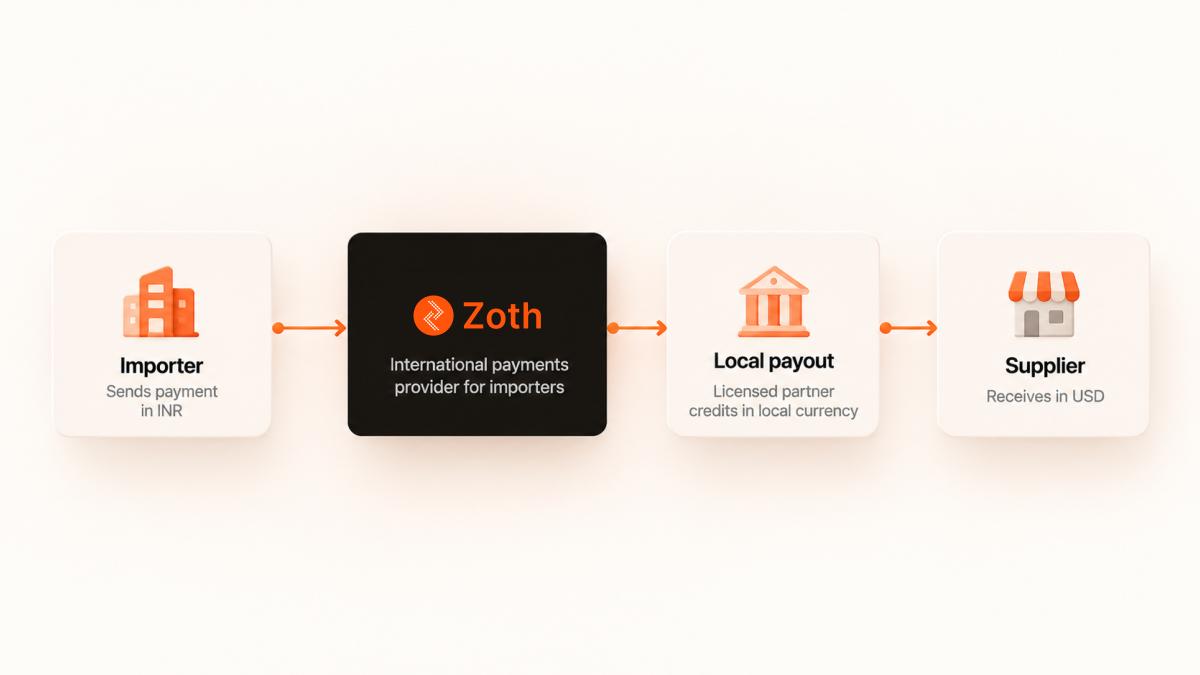
Zoth was founded in 2023 and is headquartered in Dubai. It builds regulated stablecoin infrastructure for moving money and settling cross-border business payments. Its zPayments platform is stablecoin-native and serves businesses that pay out in local currency across the Middle East and Southeast Asia, with US dollar coverage reaching more than 170 countries and additional reach into North America, the UK, Europe and Australia.
Payouts are delivered in local currency at a single fixed rate, and compliance is handled in-house. zPayments processes US$40 million a month and has handled more than US$500 million cumulatively. Zoth completed an undisclosed strategic round in February 2026 to advance its privacy-first stablecoin neobank ecosystem.
HALA: business management and embedded finance
HALA was founded in 2017 and is headquartered in Riyadh. Its platform is built to simplify how businesses are run: customers can see sales as they happen, accept and send payments, track expenses and obtain financing. Embedded financial products include business accounts, card issuance, payment and transfer services, point-of-sale tools, expense cards and business financing running from SAR 12,000 to SAR 2 million, or about US$3,200 to US$531,000.
The company claims more than 150,000 SMEs, corporates and freelancers, over 20 billion transactions processed and more than US$8 billion in annual transactions. HALA raised US$157 million in a Series B in September 2025, a round that valued the business at US$900 million according to TPG, one of the lead investors. The proceeds were intended to strengthen its position in Saudi Arabia, add embedded financial services and lending products for MSMEs and freelancers, and extend its regional reach.
Stitch: replacing core banking systems
Stitch was founded in 2022 and is based in Riyadh. It sells fintech infrastructure: a cloud-native, API-driven operating system for banks, lenders and financial institutions that handles core banking, lending, card issuance, ledgers and payments. The pitch is replacement of fragmented legacy systems with modern infrastructure that can support AI-driven change.
The company operates across the GCC, parts of Africa including Egypt and Kenya, and Southeast Asia. Its customers include Raya Financing, the lending arm of Hyundai and Peugeot, along with LuLu Exchange, Noqodi and Foodics. More than US$5 billion was transacted on the platform in the last six months, and customer numbers grew tenfold in 2025 while revenue grew 20 times over the same period.
Stitch raised a US$25 million Series A in May 2026, taking total funding to US$35 million. The money is directed at product development, deeper coverage across the GCC and the wider MENA region, and expansion of its global go-to-market operations.
The shape of the Middle East contingent is worth noting. Only one of the six, Huspy, is a consumer-facing brand in the ordinary sense, and even that sits on a brokerage and advisory model. The rest sell infrastructure: credit embedded in someone else's checkout, settlement rails for businesses paying across borders, core systems for lenders, fractional property vehicles for retail investors. That mix points to where regional fintech has moved — away from standalone apps competing for downloads and toward the plumbing that banks, marketplaces and small businesses rent. It also explains the funding pattern. Four of the six disclosed rounds in this group landed in February or May 2026, and three were Series A or B cheques in the tens of millions, the size of round that rewards demonstrated transaction volume rather than user ambition.
Stitch's tenfold customer growth against 20-fold revenue growth in a single year is the sharpest illustration of the model: once a financial institution moves onto new infrastructure, the contract expands faster than the client count does.


