UAE and Lebanon Sign Agreement to Establish Joint Business Council
The two federations signed the deal at the UAE-Lebanon Business Forum in Beirut, alongside four additional MOUs covering several economic areas.
Karim El-Sayed Karim El-Sayed covers company news, policy and regulation across the UAE and wider MENA for Anecdoted, with a focus on how new rules and licences reshape how startups operate. karim@anecdoted.com
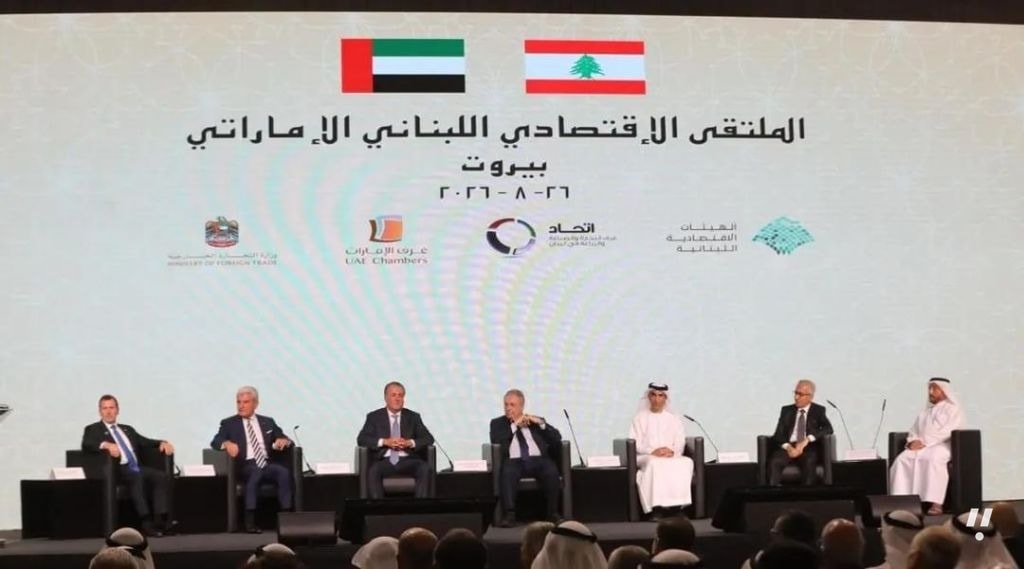
The UAE and Lebanon have signed an agreement to establish the UAE-Lebanon Joint Business Council. The deal was concluded at the UAE-Lebanon Business Forum in Beirut, between the Federation of UAE Chambers of Commerce and Industry and the Federation of the Chambers of Commerce, Industry and Agriculture in Lebanon, known as FCCIAL. Both are umbrella organisations for their countries' chambers, which means the council's reach extends across each market's business community rather than a single city or emirate.
The council is designed as an institutional platform, not a symbolic body. Member businesses in both countries will use it to exchange market information — a regular flow of detail on conditions, rules and openings that individual firms would otherwise have to assemble through their own contacts. The council is also meant to help companies identify trade and investment opportunities and to support the development of partnerships and joint ventures between the two sides.
Abdallah Sultan Al Owais signed for the UAE. Al Owais is vice chairman of the Federation of UAE Chambers of Commerce and Industry and chairman of the Sharjah Chamber of Commerce and Industry, a dual mandate that gives the Sharjah chamber a leading voice in the federation's international work. Mohamed Choucair, who signed for the Lebanese side, chairs FCCIAL.
The forum brought together government and business representatives from both countries, a sign of how seriously each side takes the commercial relationship. The agenda covered bilateral trade and investment, market access, and the scope for private-sector cooperation — the practical terms that determine whether companies actually do business across the border.
The joint council agreement was not the only outcome. Four other memoranda of understanding, covering several economic areas, were signed during the forum. The breadth of those deals points to a bilateral agenda that extends beyond the council itself.
The UAE delegation had a distinctly Sharjah character. Waleed AbdelRahman BuKhatir, second vice chairman of SCCI, was among the attendees, as were Mohammad Ahmed Amin Al Awadi, director-general of SCCI, and Abdul Aziz Al Shamsi, assistant director-general for communication and business sector. Al Owais's dual role as federation vice chairman and SCCI chairman ties the two institutions together.
The arrangement formalises what has long been a relationship run heavily on personal connections. A standing council gives Lebanese firms a documented point of entry to one of the Gulf's major trading hubs, and it gives Emirati companies a structured way to reach Lebanese partners. That matters most for smaller businesses, which rarely command the networks that large firms take for granted. The council's real test will not be the signing ceremony. It will be whether the market information it circulates and the introductions it facilitates actually convert into ventures that generate revenue and employment on both sides.

