UAE Raises Clean Energy Target to 35% as Solar, Storage Economics Shift
The UAE now aims for 35% clean power by 2030-31, driven by cheaper renewables, longer-duration batteries, and grid upgrades.
Tariq Benali Tariq Benali covers business and corporate news across the UAE and MENA for Anecdoted, tracking the deals, leadership moves and regulatory shifts behind the region's companies. tariq@anecdoted.com
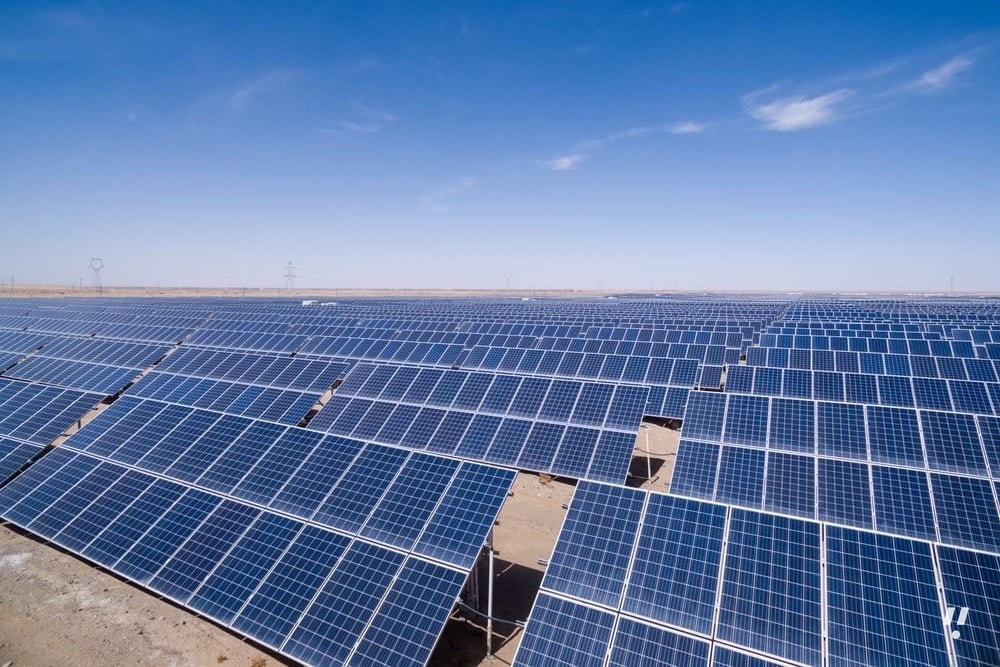
The UAE has raised its clean energy target to 35% of installed power capacity by 2030-31. Energy and Infrastructure Minister Suhail bin Mohammed Al Mazrouei announced the revision on the opening day of Middle East Energy 2026 in Dubai.
Clean energy in this context covers both nuclear and renewables. The target is not a static number. The government keeps revisiting its energy strategy as technology improves and renewable costs keep falling.
What the New Target Demands
Hitting 35% will take more than ambition. New projects must come online, competition in power generation needs to widen, and private investors will take a bigger role. The minister said the UAE's move decades ago to privatize parts of the electricity sector helped cut costs, sharpen competition, and tighten governance. That legacy is one reason the country now has some of the lowest electricity prices in the world.
The UAE is also expanding generation capacity, energy storage, and its electricity networks. New power plants are being developed. The grid is being upgraded to cut transmission losses, improve efficiency, and push electricity costs down further.
Storage Changes the Math
Batteries are shifting what renewable power can do. Storage that once held electricity for two or three hours can now hold it for up to 24 hours at competitive prices. That changes the economics of solar and wind, which no longer need to be used the moment they are generated.
Solar power can now deliver round-the-clock electricity. It is approaching conventional baseload sources like natural gas and nuclear power, while keeping pricing that competes with them. And unlike those sources, solar generation emits no carbon dioxide directly during operation.
Private Capital and International Reach
The UAE keeps its power-generation market open to private investors. That openness has attracted competition and capital. It has also allowed national champions to grow beyond domestic borders. Al Mazrouei pointed to Masdar, Etihad, and other UAE-based companies that now compete for projects and deliver energy investments internationally.
Beyond its own grid, the UAE plans to strengthen electricity interconnections between countries, improve transmission networks, and expand cleaner generation across the region.
Middle East Energy 2026 runs through Thursday at the Dubai World Trade Center, with 1,500 exhibitors from 70 countries. The event highlights technologies intended to lower energy costs and improve efficiency. The Ministry of Energy and Infrastructure is presenting its strategies and regulatory framework at the show.
The 35% goal is an update, not a finish line. Cheaper storage and falling solar prices have made higher ambition plausible. The next question is whether grid connections and private investment can move fast enough to keep pace with what the technology now allows.

