UAE Ranks Sixth Globally for Cyber Exposure, Microsoft Report Finds
Microsoft's 2026 Digital Defense Report puts the UAE sixth worldwide and second in the Middle East and Africa for cyber activity affecting its customers.
Nadia Mansour Nadia Mansour covers fintech across the UAE and MENA for Anecdoted -- digital banking, payments licences and the startups building around them. nadia@anecdoted.com
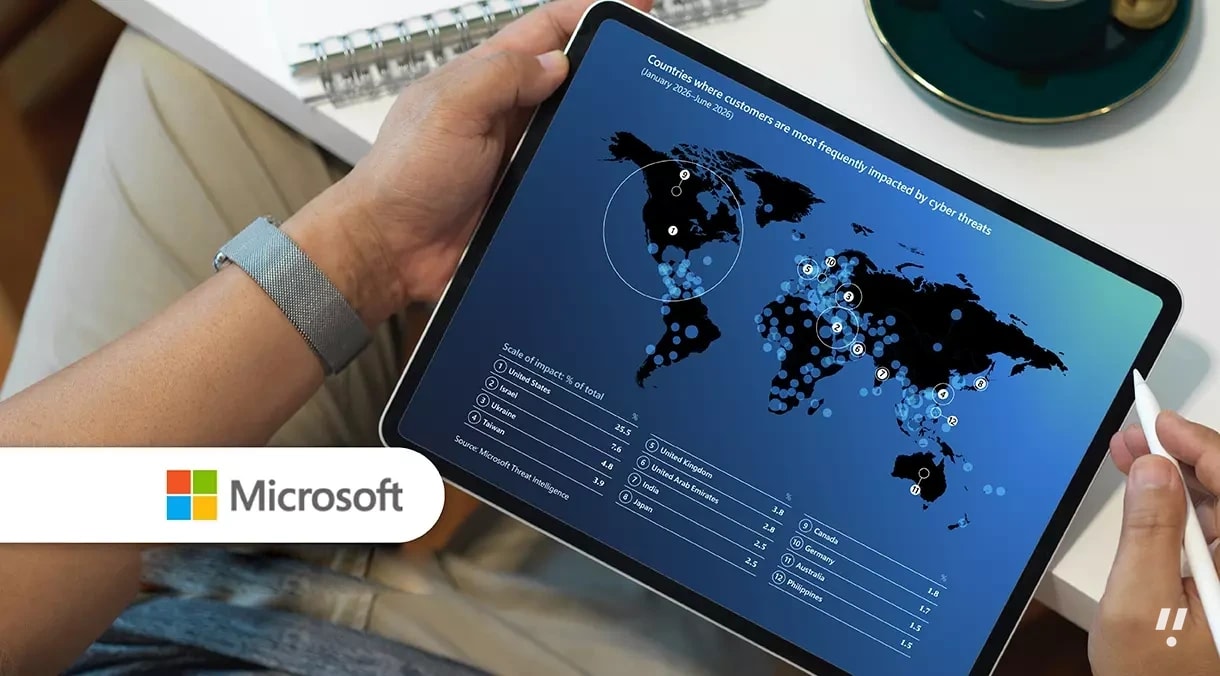
The United Arab Emirates was the sixth most affected market in the world for cyber activity targeting Microsoft customers during the first half of 2026, according to the company's 2026 Digital Defense Report. Within the Middle East and Africa, the country placed second.
The findings rest on a large telemetry base. Microsoft says the report draws on more than 165 trillion security signals collected every day.
Three shifts shaping the threat landscape
The report describes three changes now defining how attacks and defences work.
The first is AI. Attackers are applying it to run operations faster and across a wider set of targets than manual methods allow. Defenders are using the same class of tools to find, investigate and shut down threats sooner. The technology is not tilting the contest in one direction; it is compressing the time available on both sides.
The second is identity. Credentials remain the main path attackers take to get inside an environment. A stolen or guessed login still does more work for an intruder than a software exploit.
The third is spillover. Security incidents increasingly harm organisations that were never the intended target, spreading damage through suppliers, partners and shared infrastructure.
Government deployment planned
Microsoft, the UAE Cyber Security Council and Core42 intend to roll out MDASH across UAE government entities. MDASH is Microsoft's AI-driven security capability, built to help security teams surface vulnerabilities, rank risk by priority and react to threats faster. The deployment is structured to meet sovereign security and privacy requirements.
Yazan Khasawneh, Director of Cyber Security at Microsoft UAE, said the country is entering a phase where AI is becoming part of how government and business operate. Security, he said, cannot be bolted on as a separate layer once that transformation is under way.
What Microsoft advises
The report's guidance for organisations centres on three areas: protecting identities, shortening response times and building resilience.
- Strengthen authentication and reduce dependence on passwords.
- Test incident-response plans on a regular schedule rather than leaving them untested.
- Put systems in place that keep critical operations running through a disruption.
New AI systems add data, identities and access points that have to be secured, which means the surface an organisation must defend grows with every deployment.
The ranking matters beyond the numbers. A market that sits high on a list of frequently targeted countries is usually one where digital adoption has outpaced the controls around it — and where government services, financial systems and corporate networks are deeply interconnected. That combination raises the cost of a single breach, because intrusion at one point can travel. The planned rollout of AI-assisted defence across government entities is a bet that the same technology driving the pace of attacks can be turned toward identifying weaknesses before they are used.

