BlackRock's Ben Powell: Higher Volatility Demands More Active Portfolios
Higher financing costs, geopolitical fragmentation and wider asset dispersion are pushing investors to be more selective, BlackRock's Middle East strategy head said in Dubai.
Karim El-Sayed Karim El-Sayed covers company news, policy and regulation across the UAE and wider MENA for Anecdoted, with a focus on how new rules and licences reshape how startups operate. karim@anecdoted.com
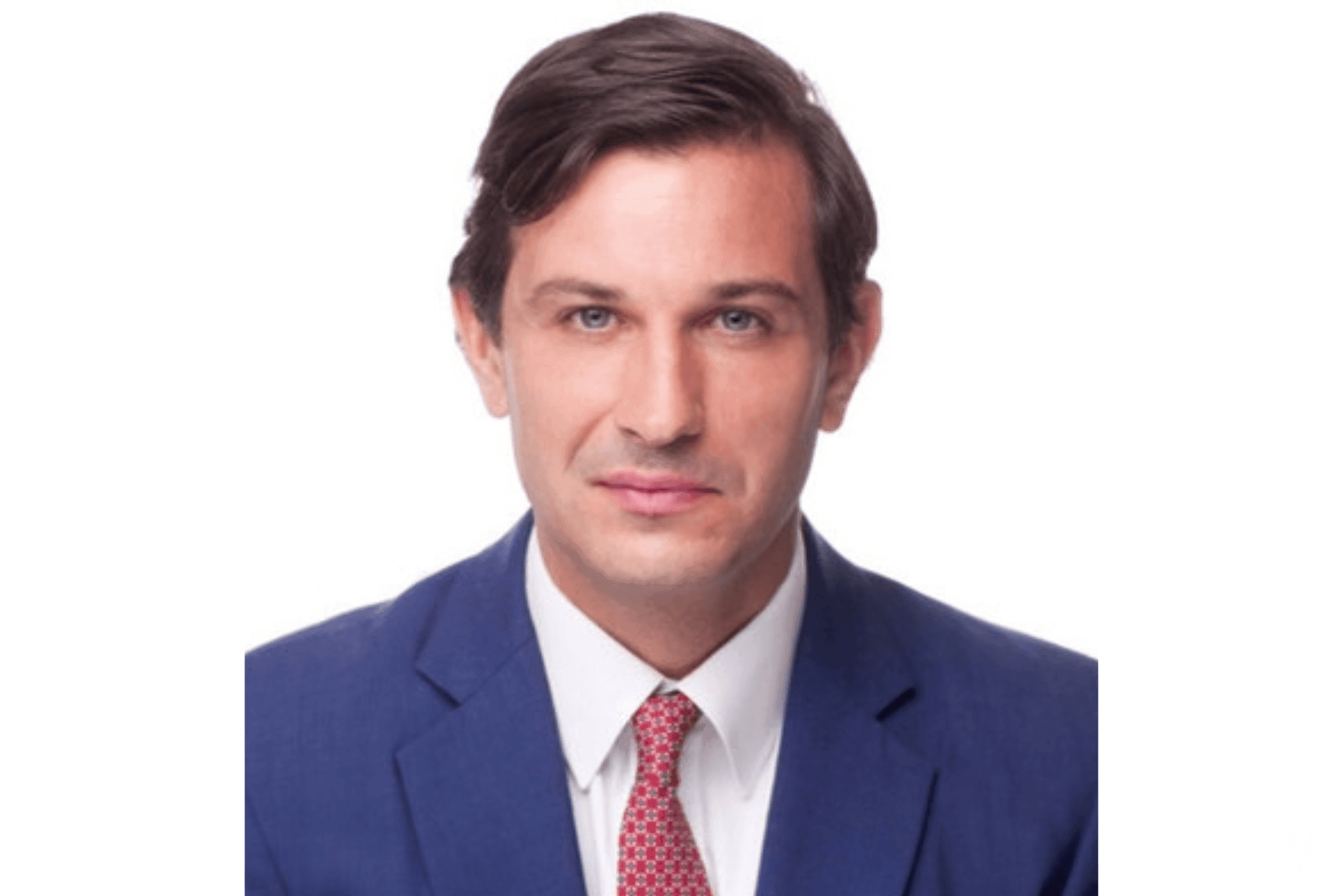
BlackRock's Ben Powell, who leads investment strategy for the Middle East and Asia-Pacific at the BlackRock Investment Institute, used a media roundtable in Dubai to describe a shift in the investing landscape. The event coincided with the release of BlackRock's Market Evolution: The Middle East report. Powell's assessment: low volatility, cheap capital and simple portfolio strategies are giving way to higher financing costs, geopolitical fragmentation and wider dispersion between assets. That combination leaves investors with little choice but to adjust, he said, and the adjustment calls for a more active approach.
That selectivity is already reshaping how institutions allocate. Powell said investors have been moving in this direction for several years. They are doing more with less, concentrating capital in a smaller number of larger managers. They are also examining performance more closely and assessing risk at a more granular level. The process takes longer, and the data collected from managers has become more important.
Powell organizes the changing environment around five structural forces: demographic divergence, geopolitical fragmentation, the transition to a low-carbon economy, the future of finance and artificial intelligence. Three of them, in his view, point to structurally higher inflation.
Demographics is one. China's workforce, after adding hundreds of millions of workers to the global labor force, is now shrinking. Similar trends are appearing elsewhere. Powell's conclusion is that this is inflationary.
Geopolitical fragmentation adds another layer of cost. Powell described a deliberate choice of inefficiency for political and geopolitical reasons. The semiconductor supply chain is the clearest example: economically lean and efficient, but now seen as risky from a geopolitical standpoint. The response will be multiple supply chains and greater resilience, which will be more expensive.
The energy transition brings its own investment demands. Artificial intelligence, meanwhile, is not simply an evolution in Powell's view. He called it a hinge moment in human history.
Those forces draw attention to specific areas. Defense is on the list, Powell said, as countries and companies seek greater self-reliance, and cyber defense now sits alongside physical defense. Energy is increasingly about optionality and independence. AI, as part of the economy's backbone, is becoming more central. Powell cautioned that BlackRock wants to be thoughtful about where in the AI stack it invests as relative valuations shift. But AI, defense and energy all have a place on the list.
BlackRock's Middle East research indicates that regional investors are already responding by broadening their allocations across private markets. In public equities, the US remains central to global portfolios. Powell put it plainly: the future is still invented and monetized disproportionately in the US. For exposure to some of the world's most exciting companies, America is hard to avoid, whatever an investor's political views.
Fixed income tells a different story. Powell recalled a 40-year bond bull market in which owning the US 10-year Treasury, with hindsight, did everything: it paid reasonable income and provided diversification. Both benefits are now less obvious. US Treasuries remain an extremely important asset and will keep playing a role in global portfolios, but at the margin investors are diversifying the fixed-income portion into private credit and emerging-market bonds.
The practical result is a broader toolkit and more active choices about where risk is worth taking, particularly in the AI stack as valuations move and in the private credit and emerging-market debt that are absorbing a growing share of fixed-income allocations.

