Standard Chartered Sees Oman GDP Growing 3.5% in 2026 and 2027
The bank lifted its fiscal and current-account surplus forecasts for both years, pointing to non-oil activity and hydrocarbon output.
Karim El-Sayed Karim El-Sayed covers company news, policy and regulation across the UAE and wider MENA for Anecdoted, with a focus on how new rules and licences reshape how startups operate. karim@anecdoted.com
Standard Chartered expects Oman's gross domestic product to grow 3.5% in 2026, and 3.5% again in 2027. Continued non-oil activity and a positive contribution from hydrocarbon production underpin both years.
Inside the non-oil economy, the bank identifies logistics, manufacturing and steady public investment tied to Oman Vision 2040 as the main sources of support.
Fiscal and external balances strengthen
The bank raised its fiscal surplus projection for Oman to 4.6% of GDP in 2026 and 3.6% in 2027. Its earlier forecasts were far lower, at 0.5% and 1%.
Public debt is expected to fall to about 33% of GDP by the end of 2026, then to roughly 31% by the end of 2027.
Current-account surplus estimates were revised upward as well, to 5% of GDP for 2026 and 3.4% for 2027, against earlier figures of 1% and 1.5%.
A stronger starting point
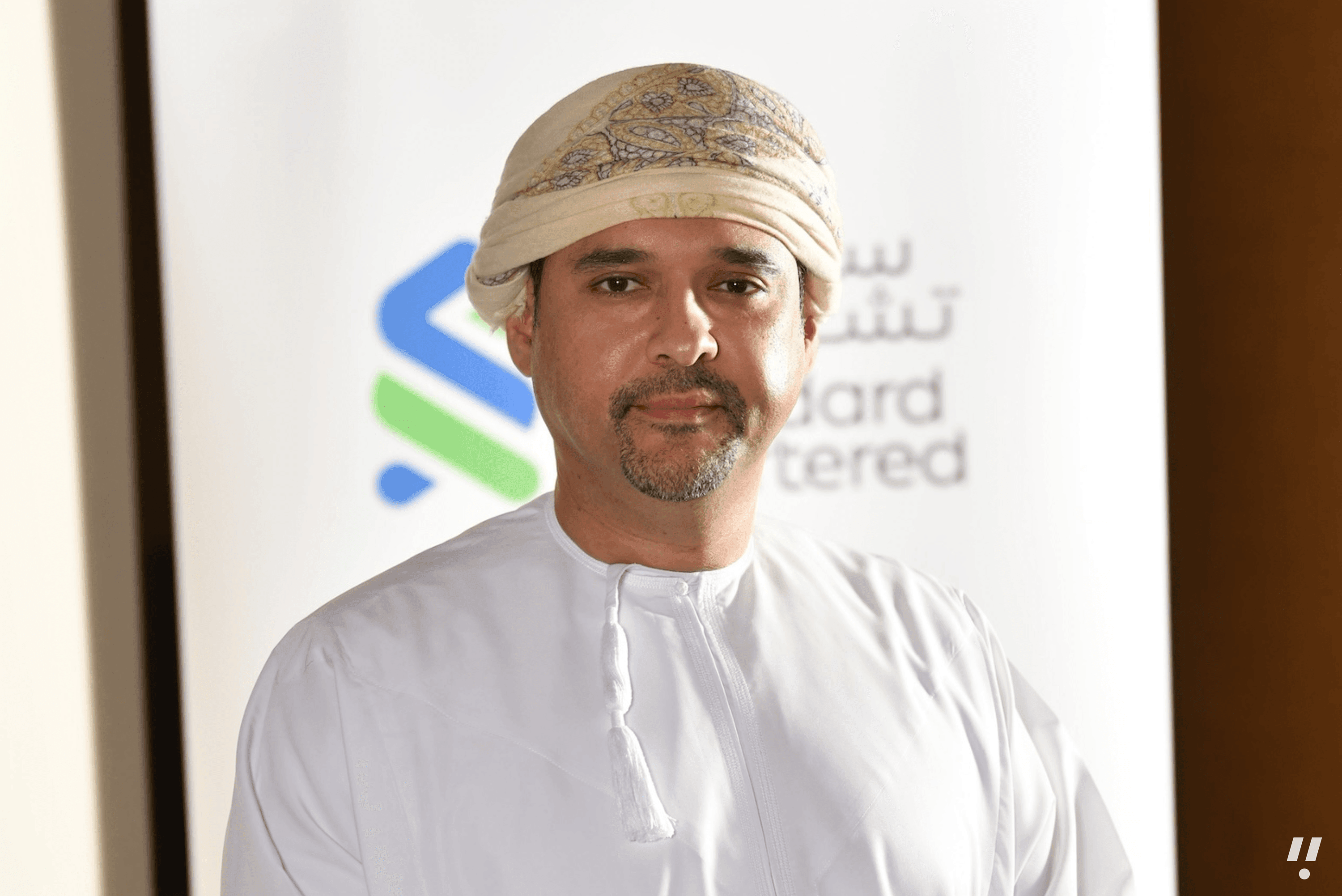
Hussain Al Yafai, chief executive officer and head of coverage at Standard Chartered Oman, said the country is entering its next development phase from a stronger economic position. Sustained non-oil growth, alongside improving fiscal and external balances, gives a firmer foundation for investment in diversification sectors, he said. The opportunity he described is to convert resilience into broader and more durable growth as Oman advances Vision 2040.
Supply chains and connectivity
Standard Chartered expects Oman's ports, industrial zones and logistics infrastructure to attract investment as international companies reassess their supply chains and trade routes. Investment activity is expected to increase in logistics, manufacturing, re-export operations and energy-related infrastructure.
Al Yafai said the country's advantage is increasingly defined by connectivity and resilience as companies rethink where goods move and how. He called Oman's ports, industrial zones and logistics infrastructure a strong platform for capturing more trade and investment and for strengthening links with regional and global markets. That, he said, can support non-oil economic expansion and reinforce the country's standing as a destination for long-term investment.
Continued spending on logistics, manufacturing and energy-related infrastructure, combined with non-oil growth, is expected to support Oman's diversification effort.
The size of the revisions is the striking part. A fiscal surplus nearer 4.6% of GDP, rather than the 0.5% previously pencilled in, changes the arithmetic behind Vision 2040: a wider surplus and a falling debt ratio mean more of the programme's industrial and logistics spending can be met from domestic revenue instead of new borrowing. A lower debt load also gives the government more room to absorb swings in oil prices without cutting capital spending. Whether non-oil activity expands fast enough to carry the economy once hydrocarbon output levels off remains the open question the projections leave unresolved.

