BRDG House's Wissam Breidy on Reputation, Purpose and 'Return on Intention'
The former television host turned brand consultant says trust opens doors, but value is what closes deals.
Karim El-Sayed Karim El-Sayed covers company news, policy and regulation across the UAE and wider MENA for Anecdoted, with a focus on how new rules and licences reshape how startups operate. karim@anecdoted.com
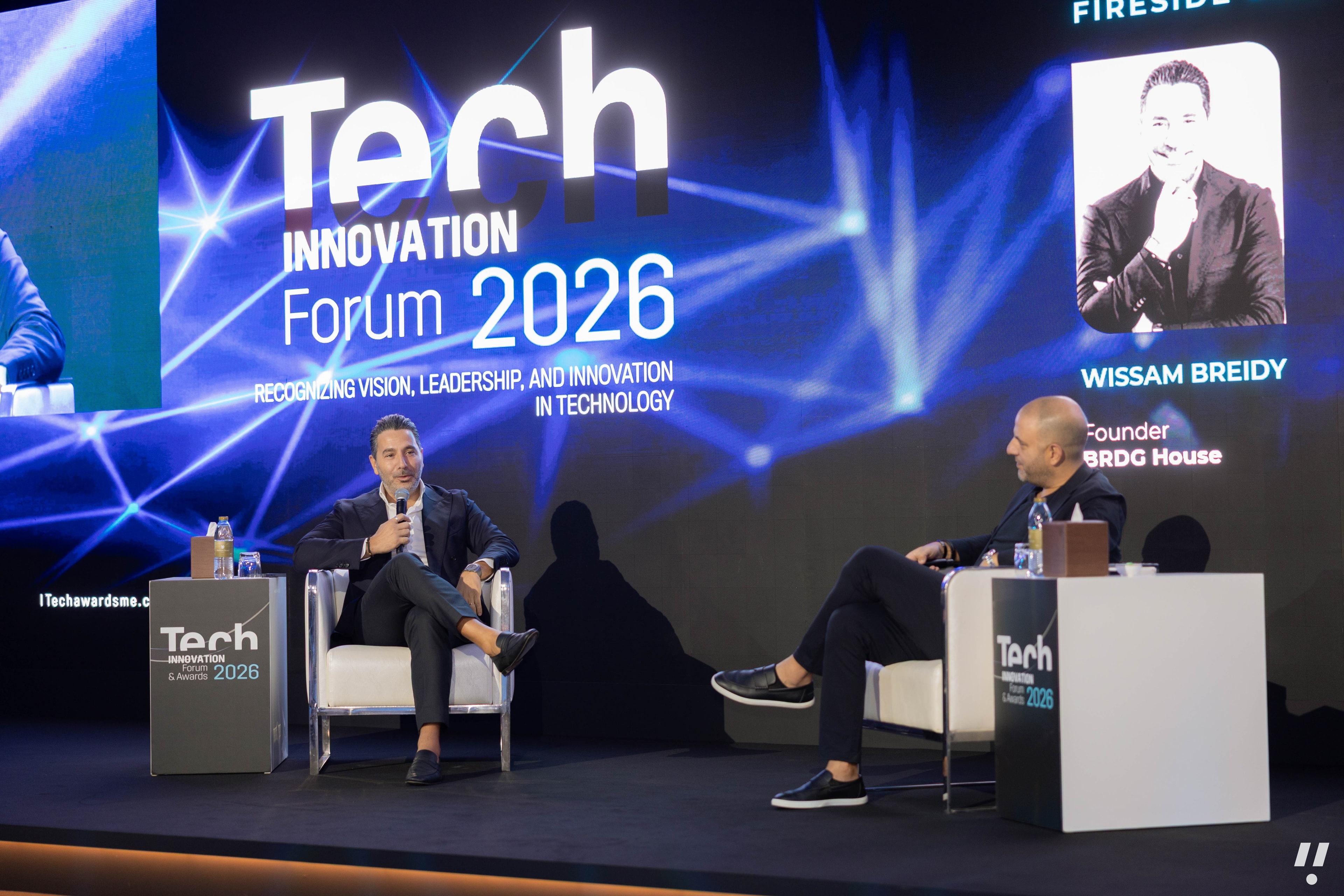
A 2026 technology innovation forum in the region opened with a fireside conversation between Wissam Breidy, founder and chief executive of BRDG House, and George Hojeige, group CEO of Virtugroup and Virtuzone. The subject was Breidy's move from television presenting to entrepreneurship and brand consulting, and what the two worlds share.
His start was unlikely. At 17, still in high school, he joined Studio El Fan, the Lebanese talent show that has produced singers, presenters, actors, directors and models. He entered intending to compete as a model. An acting coach and close friend told him his real strength lay in hosting instead. Once he was on air, he said, he was simply himself, and he did not take himself too seriously. Until then, his ambition had been to become a pilot.
He went on to join a radio station, where a three-hour morning show taught him to talk and connect with listeners over long stretches. He stayed two or three years. That experience, he said, gave him the skills for his first television programme.
Fame and business credibility are separate things, he argued. Being a public figure produced introductions and opportunities because people trusted his reputation and were willing to listen, but no deal was ever closed on that basis. Every real opportunity was assessed on the value it delivered.
Business ownership ran alongside the media work. Breidy set up Rymful, a restaurant chain that now operates as a franchise in Abu Dhabi, Dubai, Egypt and Iraq, and he built a communications practice helping brands shift from a purely profit-driven posture to a purpose-driven one.
He had travelled to Dubai regularly since 2006 and relocated there permanently with his family in 2019, as Lebanon's crisis deepened. He moved the food and beverage business and registered its intellectual property in the UAE so the brand could grow from there, while keeping its Lebanese character and spirit.
His first major mark on the city's business scene came as CEO of HRE Development, which grew out of a construction company into a purpose-led property developer. Real estate, he noted, works on projects in much the same way television does: build, launch, take feedback from people, then move to the next one. He arrived at HRE on a branding assignment for a new development, and conversations with its chairman surfaced a shared view that business should create value beyond financial returns.
The developer was holding AED6 billion in inventory and needed to establish trust quickly. Rather than spend millions of dirhams on billboards along Sheikh Zayed Road, Breidy proposed investing in a mission instead. The company contributed AED30 million to Dubai Cares for education of children and young people in developing countries, and later partnered with the Fazza International Championships for People of Determination 2025. The branding centred on the idea of "a building with purpose", so that buyers would feel part of their investment went towards children's education. Media coverage followed, and brokers gained a story to tell clients — enough to break the ice, though not a substitute for closing a sale. Breidy says the positioning was achieved in a month, where traditional branding and marketing might have taken three years and hundreds of millions of dirhams.
He now draws on that experience in a forthcoming book, The New ROI, developed from ideas he had posted on social media and LinkedIn. He recasts the acronym as "return on intention", arguing that intention is what creates value behind a transaction, even a US$100 million one. With AI tools such as ChatGPT and Claude able to supply a structure or a strategy, the differentiator is execution and the intent behind it. Traditional returns still fund cash flow and growth, he said, but a company without a soul will not survive.

