Dubai positions itself as a coordination hub for the global digital economy
The city's value increasingly lies in connecting distributed teams, capital and markets rather than concentrating them in one place.
Anecdoted Desk Anecdoted Desk covers rolling funding rounds and startup news across the UAE and MENA -- the wire for deals as they're announced. team@anecdoted.com
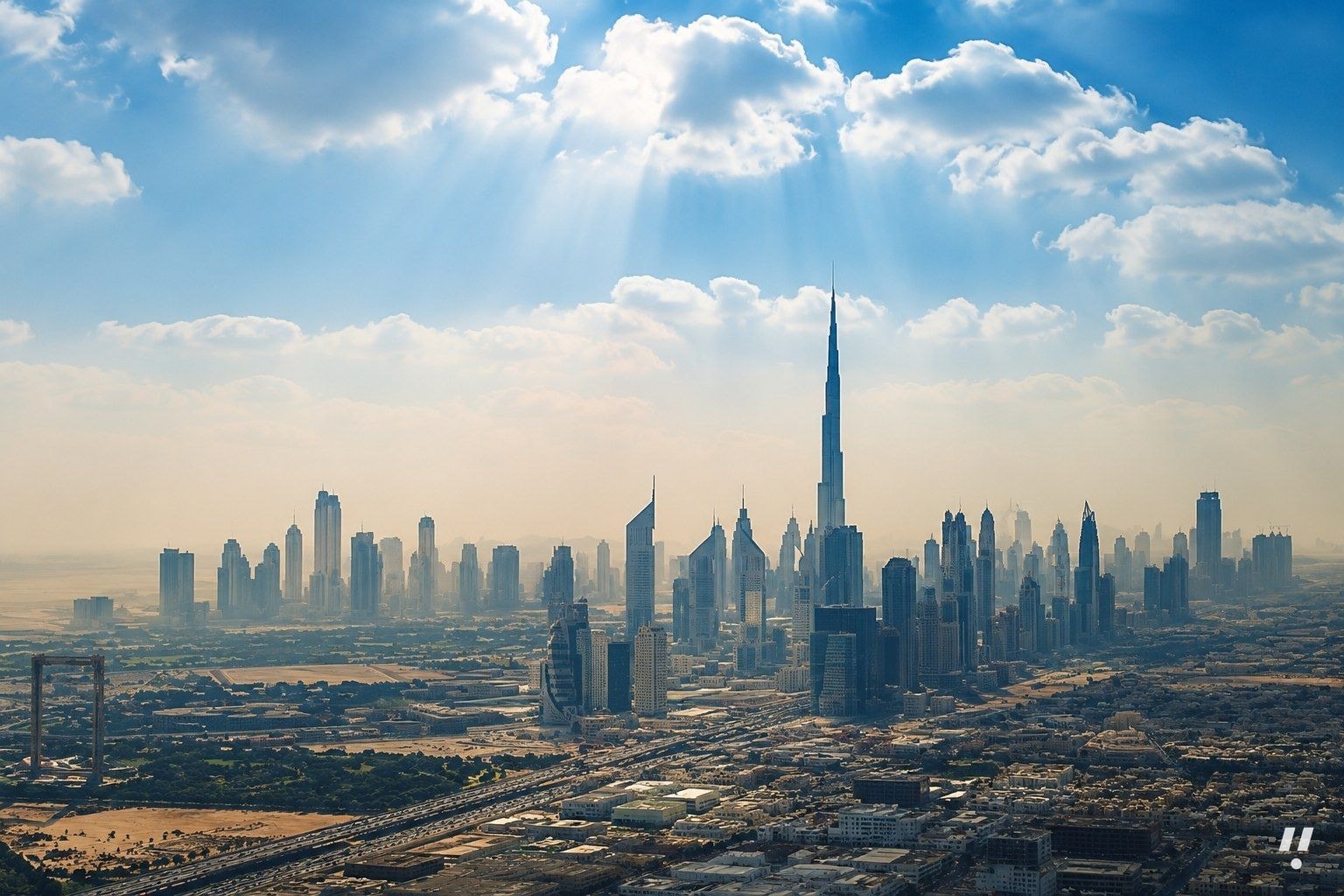
Geography still matters in the digital economy, though differently. Twenty years ago, an internet company seeking credibility and capital looked to Silicon Valley. Today a company can be built anywhere; what varies is how easily a place allows cross-border operations.
Dubai has become one such place. Founders coordinate banking, legal structures, teams and partnerships from the city while the business runs across markets. A decade ago, San Francisco, London or Singapore were the usual defaults. Dubai is not for every company: costs are high, specialist talent can be scarce, and single-market businesses may do better elsewhere. For distributed companies, it works as a coordination point.
The author's experience reflects that. He built digital fashion and music companies in the UAE and now runs a Dubai-based business operating across markets. Startup Genome's 2026 Global Startup Ecosystem Report values Dubai's startup ecosystem at $30 billion and ranks it second in MENA, the Gulf's highest-ranked ecosystem. Growth does not mean the city replaces other markets; its strength is connecting companies to them.
Time zones help: Asia early, Europe through the day, the Americas later. In-person meetings still matter, and Dubai International Airport served 217 destinations in 99 countries by the end of June 2026. An accessible meeting point can matter as much as an office.
Dubai acts as a bridge. A company can build audiences in Latin America, work with partners in Europe, serve US customers and coordinate it all from one place. As global growth spreads beyond Western hubs, opportunities in Asia, the Middle East, Africa and Latin America become easier to reach. Cultural concentration matters too: music, fashion, sport and entertainment brands gather in Dubai, creating partnership, distribution and audience development opportunities.
The creator economy follows the same pattern. A TikTok report developed with Redseer Strategy Consultants estimated that TikTok-enabled small and medium-sized businesses contributed AED 1.1 billion to the UAE economy and supported more than 7,000 jobs. That is only a slice of the creator economy, but it shows digital distribution becoming business activity. Creators who become entrepreneurs need banking, licensing, tax support and professional services while keeping audiences abroad. Creators HQ, launched in Dubai in 2025, grew out of the AED 150 million Content Creators Support Fund established under the directives of Sheikh Mohammed bin Rashid Al Maktoum. It provides support with company setup, registration, relocation, funding and investor access. Creator-led businesses are increasingly treated like other digital companies.
For MENA founders, headquarters no longer has to sit where operations sit. A founder can hire engineering talent in Egypt, build commercial relationships in Saudi Arabia, raise capital in the UAE and sell into Europe, Asia or the US without moving to London or Silicon Valley. Different ecosystems contribute different capabilities: Dubai as a coordination hub, Saudi Arabia with its large economy and capital base, Egypt with technical and creative talent. The aim is not another Silicon Valley but complementary ecosystems.
The question shifts from “Where should I move?” to “Where should each part of the company live?” Headquarters, product development, talent, fundraising and market entry do not need to be in one place. Dubai's advantage is to sit in the centre of those connections, for MENA companies expanding outward and international companies moving in. If more IP, management expertise, capital and jobs stay in the region, MENA becomes a source of globally competitive digital businesses.
Where should each part of the company live?
Dubai's strongest proposition is coordination, not self-sufficiency. It brings infrastructure, capital, services, talent and global access into proximity, reducing friction without removing it. Global ambition no longer has to mean leaving. Cities that ease cross-border connections will gain, and Dubai is positioning itself as one of them.

