Mubadala Tops Gulf Sovereign Funds With $26.2B as Region Deploys $102B
Mubadala led MENA sovereign investors in the first nine months of 2026, while regional funds committed $102 billion across 245 deals.
Tariq Benali Tariq Benali covers business and corporate news across the UAE and MENA for Anecdoted, tracking the deals, leadership moves and regulatory shifts behind the region's companies. tariq@anecdoted.com
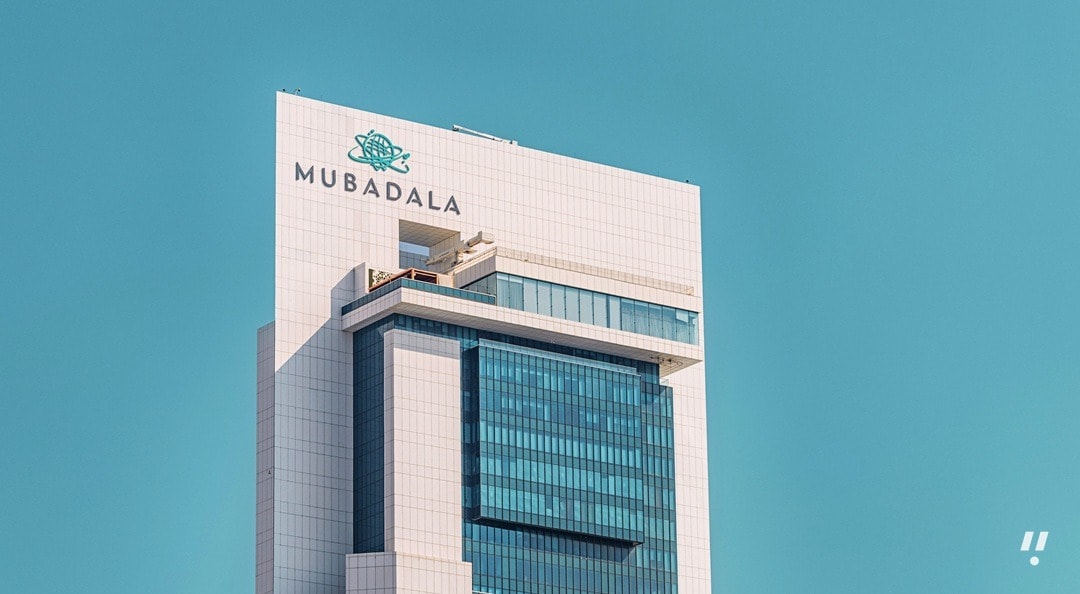
Mubadala Investment put $26.2 billion to work in the first nine months of 2026, more than any other sovereign wealth fund in the Middle East and North Africa. The total includes capital committed by its subsidiaries Abu Dhabi Investment Council, Mubadala Capital and MGX.
That was almost twice the $14 billion deployed by Saudi Arabia's Public Investment Fund. Abu Dhabi Investment Authority followed at $12.2 billion, ahead of L'IMAD at $10.8 billion and Qatar Investment Authority at $10.3 billion, according to the Global SWF 2026 MENA Playbook.
Across the region, state investors committed $102 billion in 245 transactions through September, equal to 39% of all sovereign fund dealmaking worldwide. The figure sits below the levels recorded from 2023 through 2025. It is still a substantial volume of activity in a stretch defined by geopolitical and economic uncertainty.
Where the capital landed
Mubadala's subsidiaries took part in some of the year's largest technology financings, among them multi-billion-dollar rounds for OpenAI, Anthropic and Databricks. Technology and artificial intelligence absorbed roughly 30% of the value MENA sovereign funds invested in the first nine months. Infrastructure took 22%, financial services 14%.
Capital moving both ways
Vijay Valecha, chief investment officer at Century Financial, describes the Gulf's position in global capital markets as an increasingly two-way flow. Sovereign funds place money overseas while the UAE and Saudi Arabia pull foreign investment into their own markets.
Gulf SWFs committed approximately $53.9 billion across 108 deals in the first half of 2026.
Close to half of that capital went to the United States, with technology, AI, infrastructure and private markets among the leading themes. Abu Dhabi's investors, Mubadala and ADIA included, are raising their exposure to private equity, semiconductors and data-center infrastructure, Valecha said. PIF is broadening its reach in technology, infrastructure and advanced manufacturing.
Fiscal pressure and balance sheets
MENA sovereign wealth funds held $6.1 trillion in assets as of September, a figure projected to reach $8.8 trillion by 2030, per Global SWF.
The Iran war could still change how Gulf funds deploy. Kuwait recorded a $23.1 billion budget deficit through March 31 and Qatar a $5.8 billion deficit through June 30, pressures that could prompt withdrawals from Kuwait Investment Authority and, for Qatar Investment Authority, a first government drawdown. PIF has slowed the pace of its overseas deals while holding fewer, higher-conviction international positions.
Foreign institutions move in
Temasek intends to open offices in Riyadh and Abu Dhabi in the first half of 2027, evidence of widening institutional interest in the region. The investor has already co-invested alongside Gulf funds including Mubadala, QIA, KIA, MGX and L'IMAD, Valecha said.
Family offices and private investors are following a similar pattern. Valecha says geopolitical uncertainty has made some Gulf investors more selective about overseas allocations while they deepen their focus on domestic private markets, technology and infrastructure above all.
The scale of sovereign deployment so far indicates the Iran war has not halted Gulf investment. Where the balance settles among overseas dealmaking, domestic investment and government funding needs depends on how the economic fallout from the conflict develops.

