Oman's New Financial Centre To Register Companies This Year Ahead Of 2027 Licensing
IFC Oman will take company registrations before the end of 2026 and open for full licensing in 2027, betting on a corridor role rather than head-on competition with Dubai and Abu Dhabi.
Tariq Benali Tariq Benali covers business and corporate news across the UAE and MENA for Anecdoted, tracking the deals, leadership moves and regulatory shifts behind the region's companies. tariq@anecdoted.com
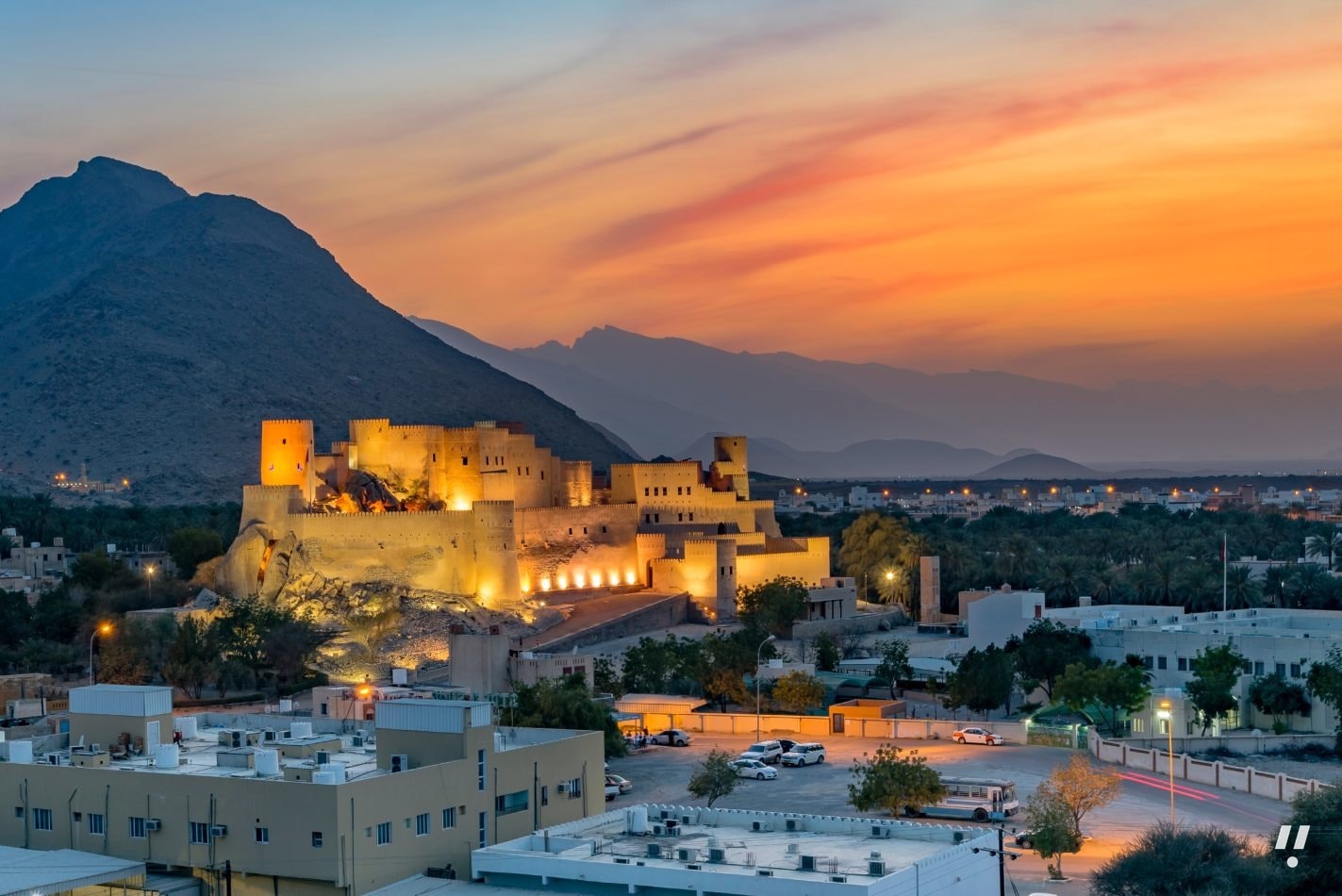
Oman's International Financial Centre will begin registering companies later this year, with full licensing to follow in 2027. The common-law jurisdiction is being built around a bridge role: handling capital that travels among the Gulf, South Asia and East Africa, rather than trying to pull business away from the region's largest hubs.
Infrastructure and timetable
Mahmood Al Aweini, chairman of the IFC Oman Authority, the body that will register firms, said after a board meeting on October 8 that the center's legal, regulatory and digital foundations are falling into place as it approaches launch. A package of laws covering business registration and licensing, financial services regulation and independent dispute resolution is due shortly, which would give the authority the basis to adopt its first regulations and rules. The digital registry, which will accept applications online, is about to move into testing.
IFC Oman was admitted to the World Alliance of International Financial Centres at the alliance's annual meeting in Busan, South Korea, in September. Its outreach has taken in Hong Kong's Belt and Road Summit and Astana Finance Days in Kazakhstan. A delegation is holding meetings in Bangkok this week alongside the IMF and World Bank annual meetings, with more planned in London later this month. The center describes that map as a reflection of the east-west link it wants to become.
The corridor case
Oman's argument rests less on confronting the Dubai International Financial Centre and Abu Dhabi Global Market directly than on serving as a conduit for capital crossing between regions. Three structural factors underpin it: geography, since Oman sits at the entrance to the Indian Ocean; diplomacy, built on long-standing commercial ties across the region; and a stronger macroeconomic base.
In June, the IMF said Oman's economy had held up during the regional conflict, helped by the position of its major ports outside the Strait of Hormuz bottleneck and by continued prudent policy.
Economic backdrop
Public debt fell from 68% of GDP in 2020 to 34.7% at the end of 2025. IMF staff project growth of 3.7% and a fiscal surplus equal to 4.5% of GDP in 2026. Oman holds investment-grade ratings from all three major agencies; S&P Global Ratings affirmed its BBB- rating in September and raised its 2026 growth forecast for the sultanate to 3.5% from 1.6%. National Centre for Statistics and Information data show the economy grew 5.1% year on year in the second quarter of 2026, with petroleum activities up 14.7% and non-petroleum activities up 0.7%.
Foreign direct investment stock reached $83.7 billion (OMR 32.2 billion) at the end of the first quarter of 2026, up 8.7% year on year. Oil and gas exploration accounts for $67.3 billion (OMR 25.9 billion) of that total. A financial services platform could widen the investor base and complement the 11th Five-Year Plan, which runs from 2026 to 2030 and aims to deepen domestic capital markets.
Incumbents and hurdles
Late entrants face rivals with deep talent pools, courts that have been tested and established client bases, and tax incentives are easy to match. DIFC's active registered companies rose 30% year on year to 10,018 at the end of the first half of 2026, the first time the Dubai hub has passed 10,000. ADGM's workforce reached 49,027 professionals at the end of the half, up 34% year on year, the Abu Dhabi Media Office said in September. IFC Oman will need to establish regulatory credibility quickly, secure anchor institutions and develop specialist talent while its corridor focus sets it apart.
Legal structure
Royal Decree 8/2026, issued on January 12, created IFC Oman with an authority, a regulator and a dispute resolution authority with its own courts; the founding law places it in Madinat Al Irfan in Muscat. It is an independent jurisdiction grounded in English common law. The Council of Ministers approved the center a week earlier, on January 5. Sultan Haitham bin Tarik appointed its board in June. Sayyid Theyazin bin Haitham Al Said, deputy prime minister for economic affairs, chairs it, and the minister of finance, the president of the Oman Investment Authority and the governor of the Central Bank of Oman sit on it.
Firms licensed by the center can market, make offers and advise onshore under its rules, while activity conducted outside it normally falls under Omani law. Eligible activities can receive tax exemptions of up to 50 years.

