Qatar's Amir Sets Out $60.7B Project Pipeline as First-Half Revenue Falls 42%
Sheikh Tamim bin Hamad Al Thani told the Shura Council the state would use the recovery as a springboard for diversification, with spending down 14%.
Tariq Benali Tariq Benali covers business and corporate news across the UAE and MENA for Anecdoted, tracking the deals, leadership moves and regulatory shifts behind the region's companies. tariq@anecdoted.com
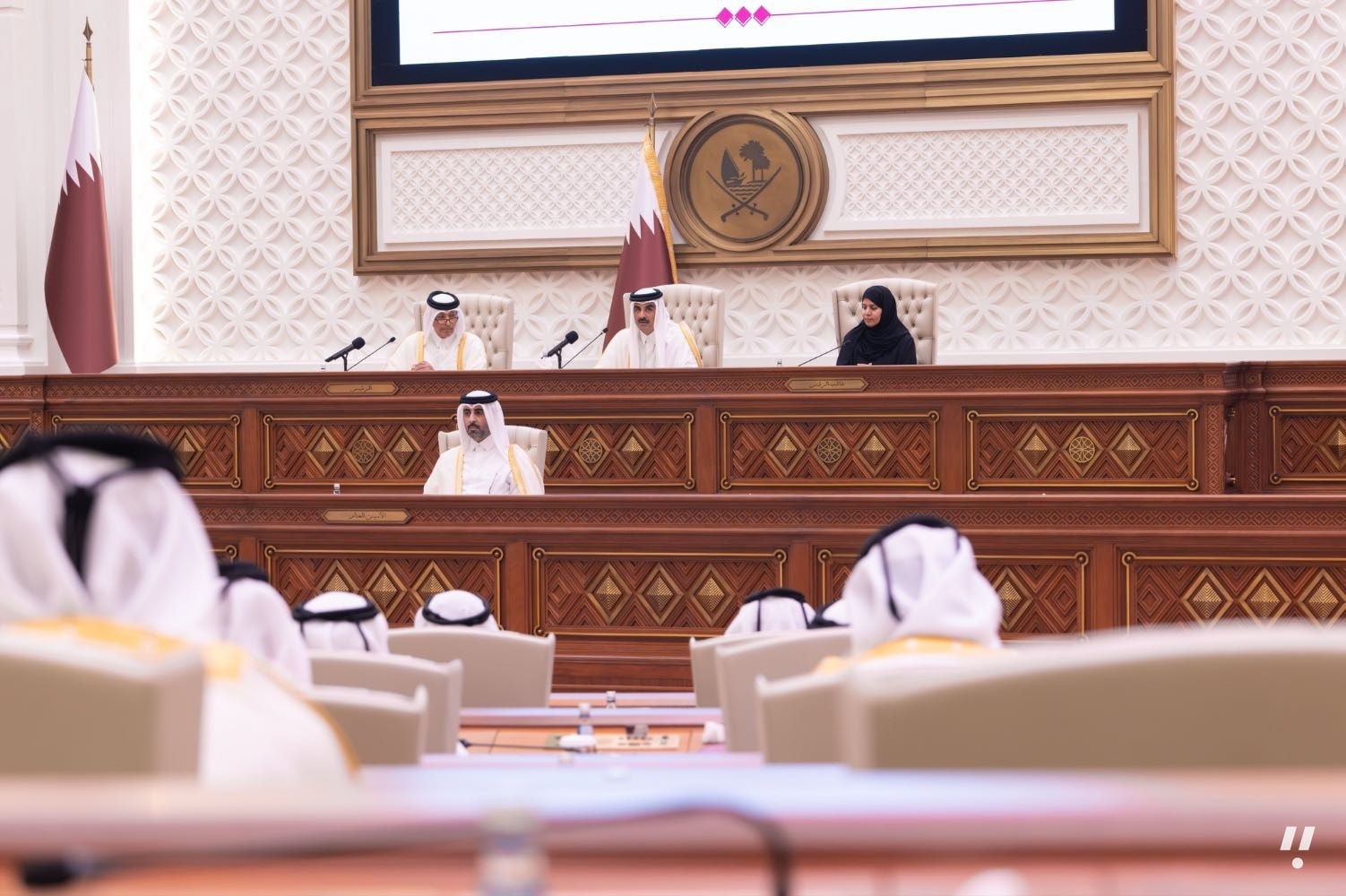
Qatar is carrying a portfolio of projects and investment opportunities worth about $60.7 billion (QAR 221 billion) across the next five years, Amir Sheikh Tamim bin Hamad Al Thani said on Tuesday, in a speech that also set the decline in public revenue during the first half of the year at 42%.
He was addressing the opening of the 55th annual session of the Shura Council, Qatar's legislative body, at its headquarters in Doha.
Infrastructure and private investment
The pipeline takes in infrastructure work such as public-private partnerships, alongside private-sector money in real estate and hospitality, the Amir said.
Sheikh Tamim said the objective was not to restore conditions that existed before the crisis but to treat the recovery as a springboard for faster economic diversification and stronger national capabilities.
The crisis, he said, confirmed the direction of the Third National Development Strategy, the development plan that runs to 2030. Reforms that sharpen competitiveness in ordinary conditions are the same ones that build resilience when conditions turn, he added.
He asked the Council to back this phase with legislation that widens the private sector's role and makes the investment environment more attractive.
Revenue and spending
Sheikh Tamim described the hit to public finances as expected: total revenue dropped 42% in the first half, while public expenditure was cut 14%.
Services considered essential and development priorities were protected from the reductions, he said, because the state chose to keep its economic momentum going.
Measures taken before the crisis — building reserves, trimming public debt, preparing budgets around conservative oil price assumptions and growing non-oil revenue — have let Qatar absorb the shock so far, according to the Amir. Keeping that approach in place will require continued fiscal discipline, more efficient public spending, and judging programs by what they actually deliver for society and the economy.
Finance Ministry figures put the state budget deficit at $5.8 billion (QAR 21.2 billion) in the second quarter of 2026, following a $2.8 billion (QAR 10.3 billion) deficit in the first quarter, when revenue fell 23.5% year on year.
An economy that entered the crisis from strength
Sheikh Tamim said Qatar faced the crisis from a position of strength, having posted real growth of 2.9% in 2025 with average annual inflation of 0.5% and a current account surplus. The country kept its high sovereign credit ratings, and its stock of foreign direct investment continued to increase.
The damage was concentrated in the energy sector, while non-hydrocarbon sectors kept expanding and reached roughly 80% of real GDP, he said. In the first quarter of 2026 the economy contracted 7% year on year: hydrocarbon GDP fell 25.8% while non-hydrocarbon GDP rose 3.5%.
LNG exports
Qatar accounts for about one-fifth of the world's LNG trade, and the Amir said any interruption is felt quickly in markets and by consumers everywhere. The closure of the Strait of Hormuz, together with direct damage to some energy facilities at Ras Laffan Industrial City, cut off a significant share of the country's exports.
LNG production at Ras Laffan and Mesaieed was halted on March 2, and force majeure on shipments was declared two days later, after missile attacks on production infrastructure.
Work on the North Field expansion is on track to raise LNG production capacity, Sheikh Tamim said. Golden Pass, the Texas LNG export project QatarEnergy owns with ExxonMobil, has also advanced substantially.
QatarEnergy is continuing to grow its investments and international partnerships, along with petrochemical industries, solar projects and efforts on water security, he said.

