Sherif Beshara Leads American Hospital Dubai's Parent With an Operator's Playbook
A lawyer and governance specialist by training, Beshara argues that hospital performance depends on scheduling, follow-up and systems working as one.
Karim El-Sayed Karim El-Sayed covers company news, policy and regulation across the UAE and wider MENA for Anecdoted, with a focus on how new rules and licences reshape how startups operate. karim@anecdoted.com
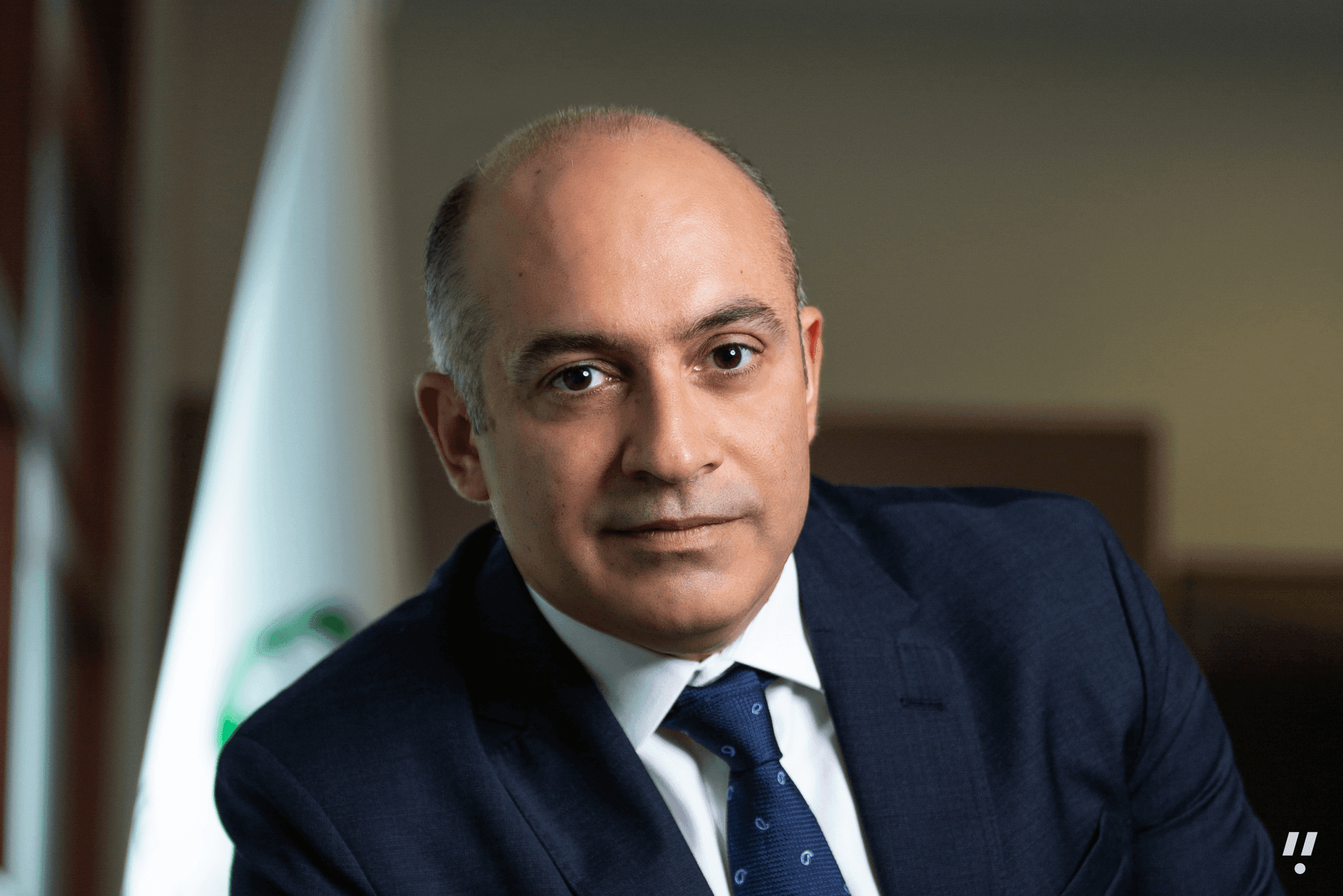
Sherif Beshara is group chief executive officer of Mohamed & Obaid Al Mulla Group of Companies, the parent of American Hospital Dubai. He arrived in the role from outside clinical medicine, with a background in governance, risk and organisational management, and a career that has run from legal counsel to chairman and group CEO. He holds an Executive MBA from Georgetown University and a master's degree in international law.
That background shows in how he describes hospital management. Operational excellence, in his account, is not a question of cutting costs or lifting productivity figures. A hospital has to function as an interconnected system that carries a patient through the whole journey, with clinical and operational performance moving together. He points to the weak links that patients actually feel: a delayed appointment or a slow investigation can undo the value of an accurate specialist diagnosis.
The hospital has tested that idea at the level of a single department. A gastroenterology improvement programme went after insurance delays, scheduling inefficiencies and gaps in patient follow-up. Endoscopy turnaround time fell by several minutes, and patient satisfaction improved.
Beshara's group has built out specialist depth alongside those operational fixes. American Hospital Dubai runs Centres of Excellence in oncology, cardiology, orthopaedics, diabetes management and robotic surgery, and it is a member of the Mayo Clinic Care Network.
Partnerships and training have expanded in parallel:
- An artificial intelligence research centre launched with Cerner in 2020.
- A robotic surgical training hub launched in 2021 with Robotic Surgical Systems and CMR Surgical.
- The American Hospital Academic Institute had trained more than 500 healthcare professionals by September 2025.
- Academic affiliations include the University of Sharjah, Mohammed Bin Rashid University of Medicine and Health Sciences and Gulf Medical University.
- A memorandum of understanding with Baylor College of Medicine supports a proposed medical college in Dubai.
The group has also looked outward. It has opened representative offices in Nigeria and Kenya, and the AHD Global Initiative has promoted Dubai's healthcare capabilities in London, Paris, Amsterdam, Frankfurt, Zurich, Milan and Barcelona. Taken together, the training pipeline and the overseas offices describe a bet that the emirate can hold on to patients who once travelled abroad for complex care. Beshara's argument is that clinical trust is what makes that ambition credible.
On technology, he sets the terms narrowly. Adoption should follow demonstrated benefit and suit the individual patient. The physician, not the digital system, carries primary responsibility for clinical decisions. Artificial intelligence, in his view, earns its place by helping clinicians interpret information, spot patterns and cope with rising clinical complexity, and earlier detection is valuable because it opens the door to more effective treatment and better long-term outcomes. Technology delivers only when it is woven into clinical expertise, coordinated care and operational efficiency built around the patient.
He applies the same test to growth. Lasting expansion, he says, comes from building capability that endures and produces durable gains in patient care, backed by advanced diagnostics, transparent communication, coordinated follow-up, continuity of care and strict clinical standards.

