Simon Squibb on Risk, Trust and Helping 10 Million People Build Businesses
The entrepreneur and investor behind HelpBnk argues founders lose more by avoiding risk than they do by failing.
Karim El-Sayed Karim El-Sayed covers company news, policy and regulation across the UAE and wider MENA for Anecdoted, with a focus on how new rules and licences reshape how startups operate. karim@anecdoted.com
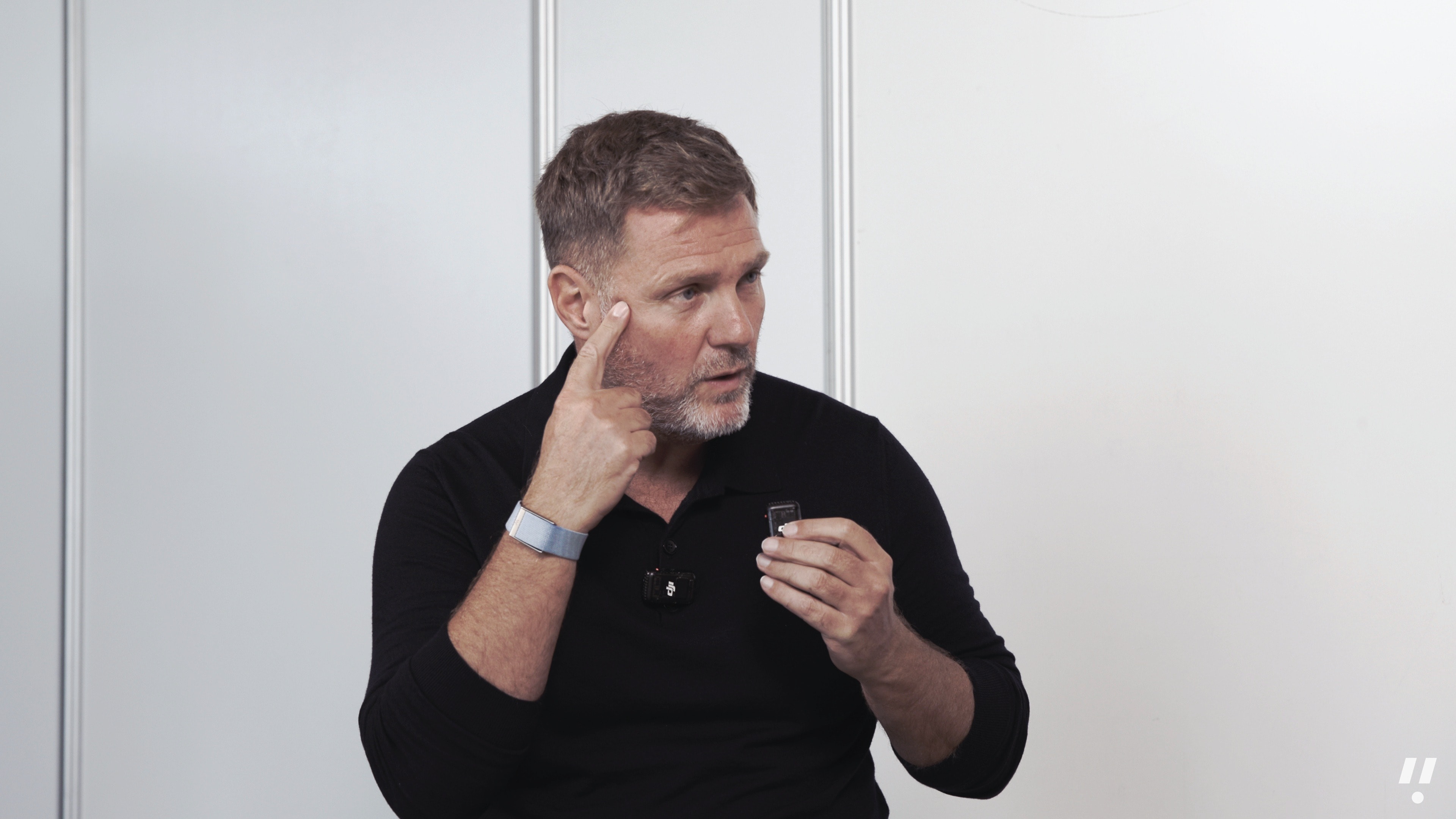
Simon Squibb is rarely introduced without the question. On streets and in videos he asks strangers what they dream of doing, and the habit has drawn more than 27 million followers to his accounts.
The answer he gives about his own life is simpler than the format suggests. Helping someone else, he says, now satisfies him more than helping himself. He links part of that shift to becoming a father, and to noticing that his nine-year-old son copies what he does rather than what he is told. Inspiring young people, he argues, means visibly doing something useful.
From a messy garden to 28 companies
Squibb's start was early and unplanned. His father died when he was 15, and he needed income. He knocked on the door of a house with an overgrown garden and offered to tidy it for 200 pounds a month. The owner agreed. He treats that exchange as proof that an idea held in one person's head can be made real, and he has repeated the exercise since: 28 companies built, more than 80 startups backed, and, in 2015, the sale of a Hong Kong business to PwC.
In 2023 he launched HelpBnk, a London-headquartered platform that offers free mentorship, resources, community support and access to accelerators and funding. Its stated goal is to help 10 million people start businesses. The accompanying #GiveWithoutTake movement runs largely through the street interviews.
Commit, community, change
On the opening day of the Sharjah Investment Forum 2026, Squibb told a packed hall that the self-made founder is a fiction. Nobody builds alone, he said, and if everyone in the room helped one person, the effect would be considerable.
His account of motivation is less sunny than his delivery. Purpose, he says, tends to be hidden inside personal pain, and founders solving a problem that genuinely bothers them seldom stop. Bad luck, in his framing, is still luck, and the people who do well are the ones who need the outcome rather than merely wanting it.
"Every day, I take a risk, and if I don't, my chances of succeeding drop. I think you fail if you don't take risks."
Asked about artificial intelligence, he turns the question back on the interviewer: why not just ask a machine? His own answer is that tools matter and people should learn them rather than fear them, but that AI has no backstory while humans do, and backstories are what make a person worth backing.
Personal branding, he says, follows the same logic. It begins with colleagues, customers and industry peers rather than with the public, and he points out that he spent two decades building that trust before asking strangers for theirs. Inventing a character does not last. Being yourself does.
When to launch
He rejects a single rule. Pharmaceuticals, where lives are at stake, demand caution. His coffee brand, Dream Brew, took eighteen months because the product was not right sooner. The first version of HelpBnk's software, by contrast, was close to unusable, and he shipped it anyway, then improved it on customer feedback.
For founders in the UAE, where roughly 250,000 companies were registered in 2025 and the total stood near 1.4 million by year end according to the Ministry of Economy and Tourism, his advice is blunt: take more risks. Losing money, he notes, is survivable, and the lessons stay with you regardless. Avoiding risk, he argues, costs knowledge instead.
The story he keeps returning to is the door he knocked on as a teenager, and what followed. The chairs in the room, the stage, the microphone, he told the audience, all existed in someone's head before anyone built them.

