UAE Banks End 2025 With $1.4 Trillion in Assets as Bad Loans Ease
Profit hit $24.7 billion and non-performing loans fell to 3.3%, but Gulf lenders now face Hormuz disruption and slower growth.
Tariq Benali Tariq Benali covers business and corporate news across the UAE and MENA for Anecdoted, tracking the deals, leadership moves and regulatory shifts behind the region's companies. tariq@anecdoted.com
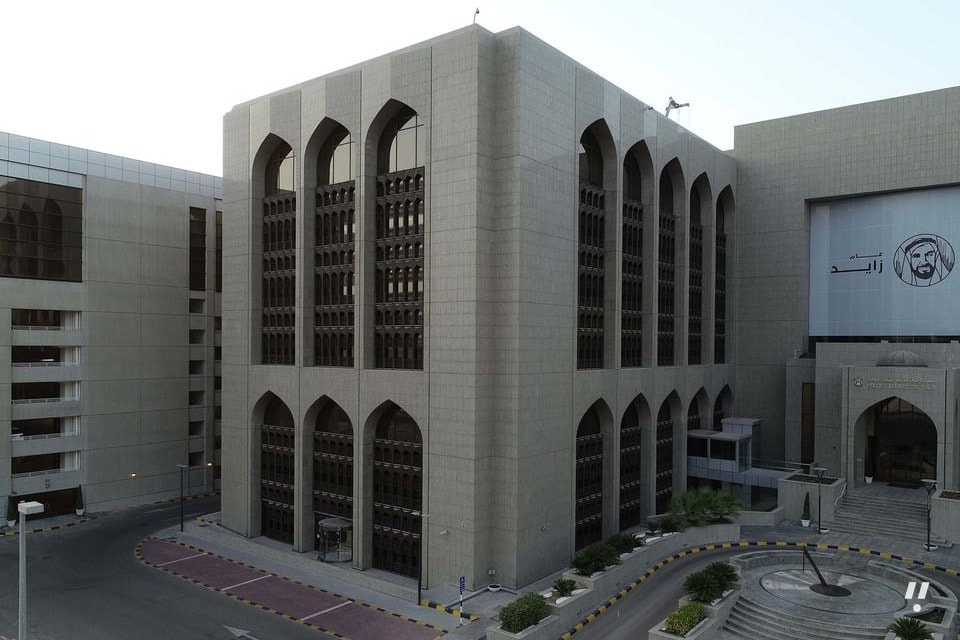
UAE banks finished 2025 with aggregate assets of $1.4 trillion (AED 5.3 trillion), a 17.1% gain from a year earlier. Industry profit reached $24.7 billion (AED 90.8 billion), up 11.7%, while the share of non-performing loans dropped to 3.3%, the lowest since 2020, from 4.7% in 2024.
Credit growth was almost as strong. Total loans rose 17.8%, led by domestic retail and private corporate borrowing, the central bank's financial stability report shows. The sector's capital adequacy ratio ended the year at 17%, comfortably above the minimum. The central bank's stress tests also showed that under a severe shock, the average common equity tier 1 ratio would fall from 14.1% to a low of 11.1% — still above the regulatory floor. Governor Khaled Mohamed Balama said the regulator would keep tightening supervisory and prudential frameworks to ensure the system is ready for future shocks.
These figures capture a banking system in good shape, but the region's economy has since deteriorated. The Strait of Hormuz closure after the Iran war began on Feb 28 hit Gulf states much harder than the 2025 results suggest. The World Bank now projects Gulf GDP growth of only 1.3% in 2026, down 3.1 percentage points from its January estimate and far below the 4.5% expansion in 2025. For the UAE, growth expectations have been cut from 5% to 2.4%. Qatar and Kuwait face sharper slowdowns because of lost hydrocarbon revenue. Saudi Arabia is comparatively resilient at 3.1% projected growth, helped by the East-West pipeline's ability to reroute oil exports, but that forecast was trimmed from 4.3%.
Gulf banks are feeling the strain from multiple directions. S&P wrote in June that slower lending, constrained capital market access, wider credit spreads, and doubts about the durability of deposit growth are all pressuring the sector. Yet the largest lenders still expect profit growth in 2026. Al Rajhi Banking and Investment Corp is forecast to post a 13.6% rise in profit for the year, with further gains in 2027 and 2028. Saudi National Bank, Qatar National Bank, and Abu Dhabi Commercial Bank are also projected to see full-year increases. Emirates NBD and First Abu Dhabi Bank are expected to post low single-digit declines for 2026, though both would remain above 2024 profit levels. For 2027, S&P projects profit growth of 7% to 18% across all six banks.
Net interest income — the main engine of Gulf bank earnings — should still beat 2025 levels this year. Forecasts place aggregate net interest income at the six largest Gulf banks at $47.6 billion in 2026, rising to $51.4 billion in 2027 and $55.35 billion in 2028, compared with $42.8 billion in 2025. That outlook rests on renewed hawkishness from the US Federal Reserve, which matters because Gulf currencies are pegged to the dollar and local central banks move in step with the Fed. Uncertainty around the interim US-Iran peace deal has left inflation expectations elevated and rate policy hard to predict.
%22%3E%3Crect%20x%3D%22-10%22%20y%3D%224%22%20width%3D%22120%22%20height%3D%221%22%20fill%3D%22%2300ff89%22%20opacity%3D%220.9%22%2F%3E%3C%2Fg%3E%3Ccircle%20cx%3D%22106%22%20cy%3D%2285%22%20r%3D%224.230769230769231%22%20fill%3D%22%2300ff89%22%20opacity%3D%220.75%22%2F%3E%3C%2Fsvg%3E)
