Alain Bejjani on What Makes a Founder Investable, and Why AI Rewrites the Rules
The former Majid Al Futtaim chief executive argues capital is losing ground to talent as AI reshapes business models.
Karim El-Sayed Karim El-Sayed covers company news, policy and regulation across the UAE and wider MENA for Anecdoted, with a focus on how new rules and licences reshape how startups operate. karim@anecdoted.com
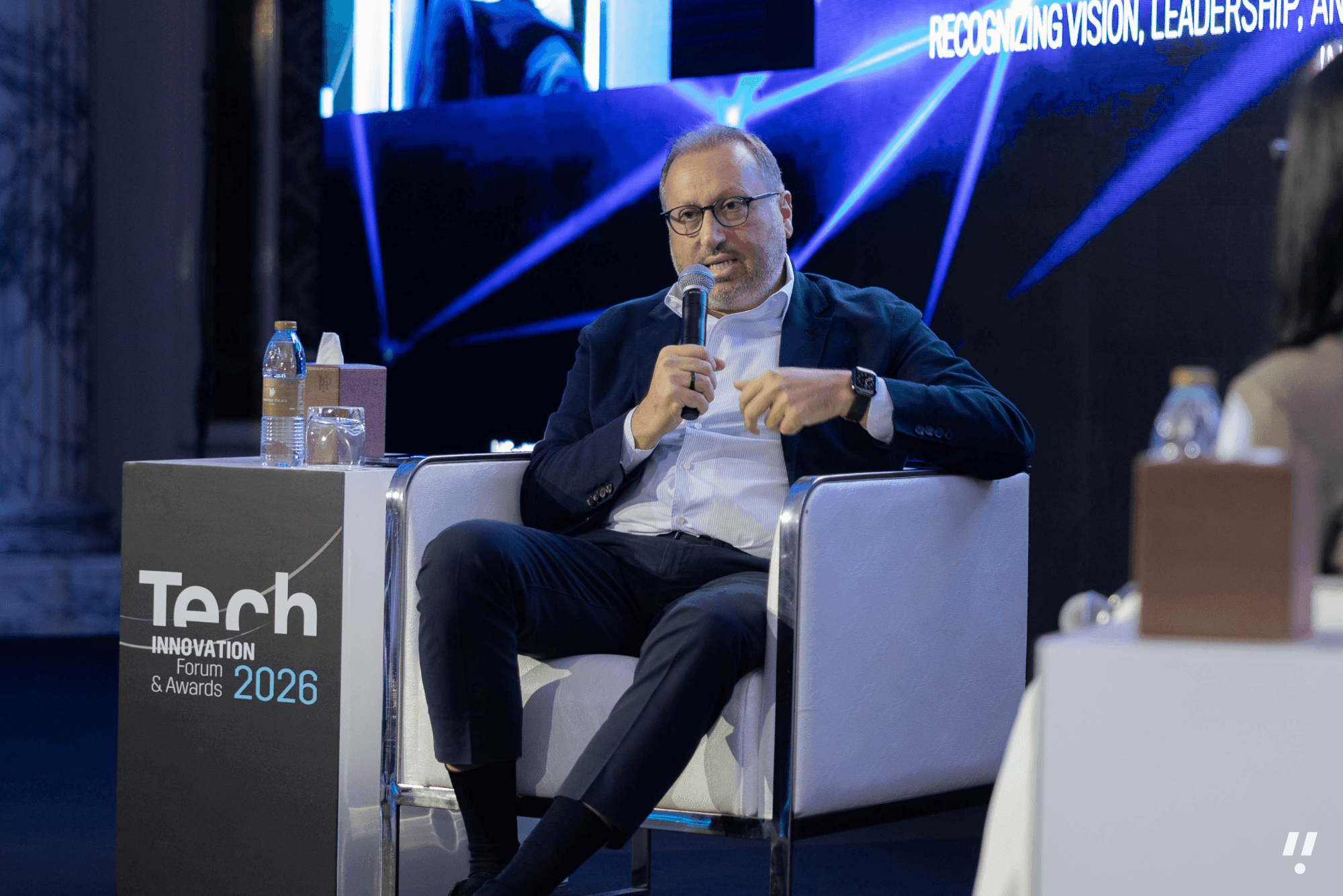
Alain Bejjani spent more than two decades leading businesses across the Middle East, North Africa and South Asia, first as a lawyer and economic development official, later as chief executive of Majid Al Futtaim. He started in law and business advisory in 1999, then ran Lebanon's Investment Development Authority as Executive Vice Chairman from 2000 to 2005, promoting the country as an investment destination and its exports abroad. He now sits on the Atlantic Council's International Board.
The IDAL stint, as he tells it, was the most formative stretch of his career. He worked closely with Prime Minister Rafic Hariri, who was later assassinated, and says the job taught him most about human nature — how far people will go, in either direction. He left at 32.
Dubai came next, and not by design. The 2006 war in Lebanon pushed him there. Majid Al Futtaim was already among his legal clients; a friend introduced him to the group's founder over dinner in Beirut, and the founder called the following morning asking him to join. Bejjani said no at first. He eventually accepted and stayed 17 years, moving from legal into business development and corporate development before becoming CEO in 2015. The mentor who shaped him most, he says, was the founder himself, whom he worked with daily from 2008 until his death at the end of 2021.
During his tenure the group became a US$15 billion enterprise operating in 17 countries. Bejjani oversaw a rebrand that fixed a purpose — creating great moments for everyone, every day — around a business he describes as a name rather than a brand. As CEO he pushed integration across malls, Carrefour, cinemas, fashion, home retail and financial services, arguing the company was no longer in real estate, retail and entertainment but in 'the business of the customer.' Data and technology, he says, let the group tailor experiences to individuals instead of personas. He also introduced sustainable finance, including the region's first 1.2 billion sukuk, or green bond.
Transformation, he argues, works only behind a clear vision that employees can repeat — and leaders who visibly follow it. People watch what you do, not what you say.
His book, NEXT: Leading Through the New Realities, sets out four challenges for leaders: continual change, artificial intelligence, talent and sustainability. Leading others is hard. Leading yourself is harder, because people excuse their own failures first.
Bejjani also invests on Shark Tank Lebanon, which he joined to back the country's founders. Its reach has outgrown the deals struck on camera: several founders who left without an offer later raised money from people who had seen their businesses on the show.
What separates a founder who impresses from one worth backing? Bejjani frames it as a sale of the investment, not the company. A founder has to show why capital should go to them rather than anywhere else, and has to demonstrate the leadership to turn a vision into reality. He also looks for alignment — an understanding that an investor joins the business rather than takes it over — plus execution, adaptability as markets shift mid-build, and a curious, learning mindset. Entrepreneurship, he says, is a learning journey, and every leader stays a work in progress.
On AI he is blunt. He calls it the first non-biological intelligence on Earth, a new kind of intelligence sharing human habitat — arguably still under control, though the boundary is being tested and its creators have voiced concern about where it leads. Nobody wants to slow down, he notes, because the prevailing view is that whoever wins AI wins. The consequences reach the nation-state, the structure of society and how companies are run.
That feeds his second worry: whether today's business models survive. A model AI can absorb could see its valuation fall sharply. A company worth a billion dollars, or a million, may not exist in three years, five years or six months. AI also competes with people for their jobs and crowds out talent.
Where capital once decided outcomes, Bejjani argues talent now does — a shift he calls talentism, set against capitalism. Humans cannot match AI on raw intelligence alone. What they can offer is judgment: better calls, better trade-offs.

