DIEZ Non-Oil Trade Rises 17% to $67B as Cargo Volumes Slip
Re-exports climbed 22% for the Dubai zone operator, while physical tonnage fell to 270,000 metric tons amid disruption to global shipping.
Tariq Benali Tariq Benali covers business and corporate news across the UAE and MENA for Anecdoted, tracking the deals, leadership moves and regulatory shifts behind the region's companies. tariq@anecdoted.com
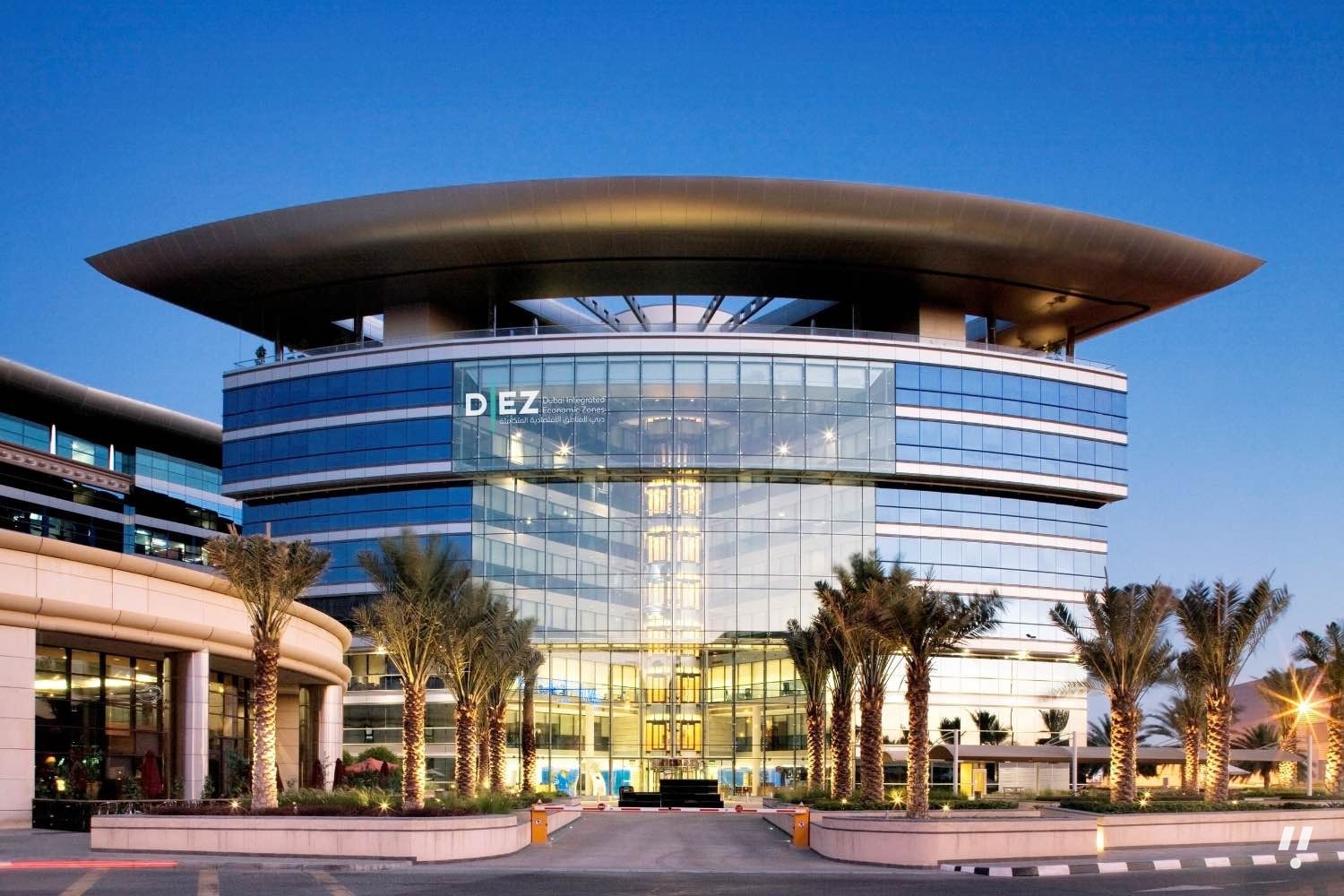
Non-oil trade through the Dubai Integrated Economic Zones Authority reached $66.97 billion (AED 246 billion) in the first half of 2026, 17% more than the same six months a year earlier. The authority's slice of Dubai's total non-oil foreign trade widened to roughly 16%, from 15.4%.
Re-exports did most of the work, climbing 22% to $29.6 billion (AED 108.8 billion). Imports rose 14% to $36.7 billion (AED 134.8 billion). Direct exports were the smallest leg at $653 million (AED 2.4 billion).
The balance between those flows matters. When re-exports outpace imports, a larger share of what enters the zones leaves again for another market, which is the pattern of a distribution point rather than an end destination.
Tonnage moved the other way. Cargo across the authority's three zones fell to 270,000 metric tons from 298,000 in the first half of 2025, a decline of about a tenth, as disruption to global shipping routes and supply chains held back physical volumes. Value and volume parted company: fewer tons, worth more.
Two categories carry the book
Electrical machinery, appliances and equipment supplied close to 66% of trade, the largest category across the zones. Precious stones, metals and jewelry contributed 30% and grew 18% year on year. Put together, the two groups came to about 96% of the total.
That is a heavy concentration. The second-largest category expanded at a faster clip than the headline number, which put more of the half-year gain into metals and stones than into machinery.
China keeps the top slot
China was again the biggest trading partner, at $19 billion (AED 69.8 billion) and a 28.4% share. Saudi Arabia came second with $7.2 billion (AED 26.5 billion), or 10.8%. India took third at $4.8 billion (AED 17.6 billion), 7.2% of the total, and Vietnam fourth at $3.6 billion (AED 13.2 billion), 5.4%.
Those four markets together made up 51.8% of the half-year total, with Asian and Gulf destinations taking the bulk of the flow.
Supply chains and the D33 target
Sheikh Hamdan bin Mohammed bin Rashid Al Maktoum, Crown Prince of Dubai and Chairman of the Executive Council, said holding supply chains together and adapting to geopolitical and economic shifts had become more important to trade competitiveness.
The result marks a sixth consecutive year of record trade figures for the authority, which released the data on Sunday.
It also sits inside the Dubai Economic Agenda, D33, the emirate's plan to widen economic activity and strengthen its standing as a trade and investment hub. For the zones, the task now is to keep value rising while tonnage recovers.
Nearly all of the authority's trade sits in two product families, so a swing in either would show up quickly in the headline. The second half will test whether the value gain holds without the volume behind it.

