Dubai Housing Body Launches Incubator Aimed at 50 Emirati Engineering Firms
The Mohammed Bin Rashid Housing Establishment and three partners will run a three-month programme that moves UAE nationals from training to company formation.
Karim El-Sayed Karim El-Sayed covers company news, policy and regulation across the UAE and wider MENA for Anecdoted, with a focus on how new rules and licences reshape how startups operate. karim@anecdoted.com
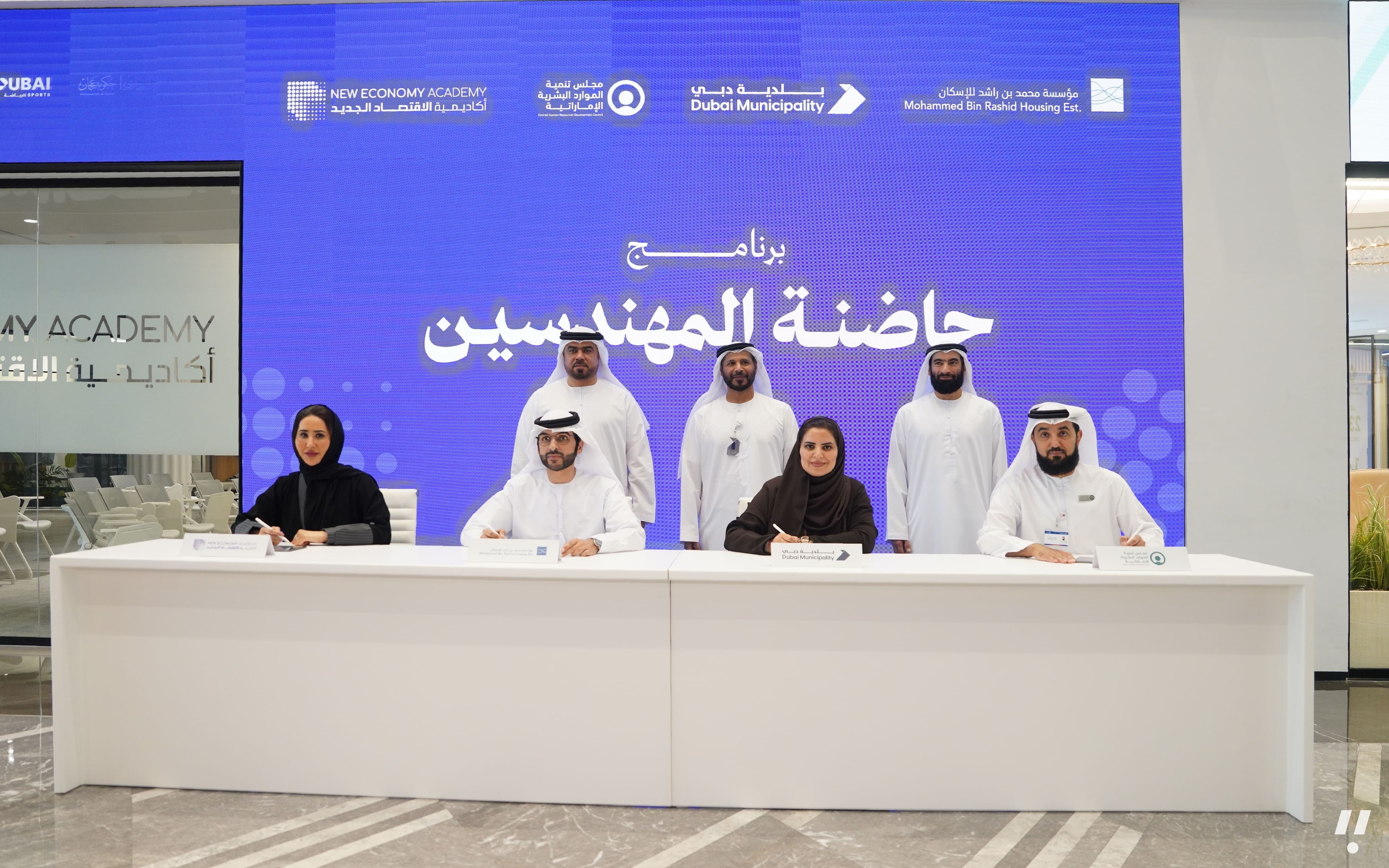
The Mohammed Bin Rashid Housing Establishment wants more Emirati-owned companies working inside Dubai's housing sector, and it has recruited three partners to help produce them. Dubai Municipality, the Emirati Human Resources Development Council in Dubai and the New Economy Academy are joining the establishment in a programme called the Engineers Incubator.
The target is 50 companies, all owned by UAE nationals, all in contracting and engineering consultancy. The programme runs for three months.
Six stages, one path
Participants enter at recruitment and are expected to leave with a business. The structure runs through six stages:
- Recruitment
- Qualification
- Practical application
- Establishment
- Empowerment
- Sustainability
Instruction sits at the front of that sequence, but it is not the endpoint. Participants are meant to move from training into live engineering projects, then into forming companies of their own.
What participants come out with
The programme combines professional development, specialized training and hands-on experience gained through engineering projects. By the end, the intent is that a participant can open an engineering consultancy office, a contracting business or a maintenance company — three separate routes into the housing sector.
The organisations behind it want two things at once: a larger share of housing work carried out by Emirati-owned firms, and better execution on the projects themselves. Practical training is the mechanism they are using to pursue both.
Sustainability is written into the last of the six stages, and it is not decoration. The measure of success is a company that keeps trading and can expand, not a registration filed once and abandoned.
Why the pairing matters
Dubai's housing pipeline needs contractors, consultants and maintenance providers. Firms that can win that work keep the capability, and the revenue, inside the emirate. Training schemes that end at certification leave that gap open, because a qualified engineer and a functioning company are different things. The incubator's bet is that attaching instruction to real project work closes part of the distance.
The initiative is also framed as a contribution to Dubai's wider economic plans, including the Dubai Economic Agenda and the Dubai 2040 Urban Master Plan. Alongside that, it is intended to generate additional entrepreneurship and employment opportunities for UAE nationals, and to strengthen national talent in construction and engineering.
Nothing in the design is unusual on its own. What the partners are testing is the handoff — whether a three-month cycle that starts with recruitment ends with Emirati-owned firms still operating long after the programme closes.

