Dubai Islamic Bank Chairman Mohammad Alshaibani Resigns for Personal Reasons
The resignation took effect on September 20, and the lender named no successor or timetable for an appointment.
Tariq Benali Tariq Benali covers business and corporate news across the UAE and MENA for Anecdoted, tracking the deals, leadership moves and regulatory shifts behind the region's companies. tariq@anecdoted.com
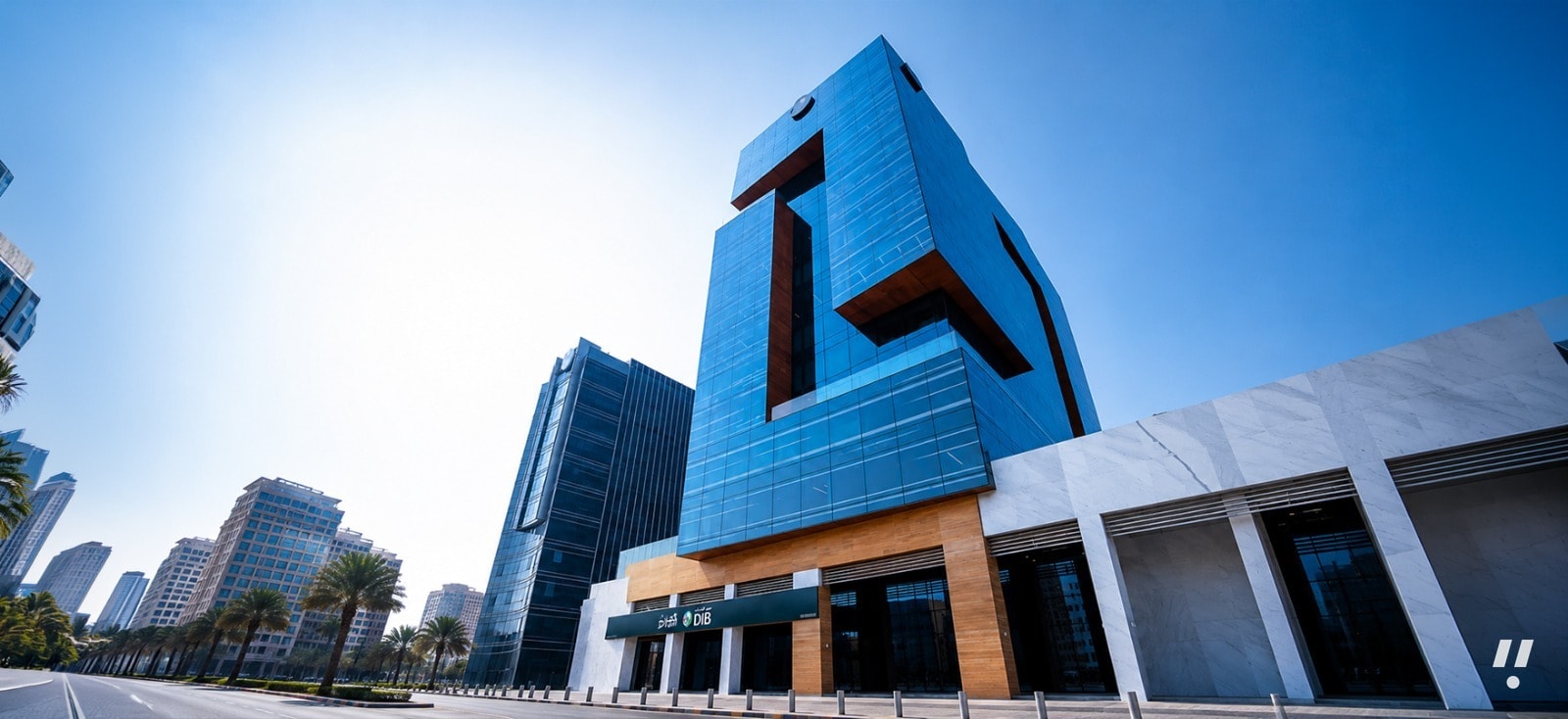
Mohammad Alshaibani has left his post as chairman and board member of Dubai Islamic Bank. The resignation took effect on September 20 and was attributed to personal reasons, the bank said in a filing with the Dubai Financial Market.
The board recorded its appreciation for Alshaibani's leadership and for what it described as his contribution to the bank's growth, and wished him continued success.
No replacement was named. The filing carried no timetable for choosing one either. Dubai Islamic Bank said the board will take every step required under applicable regulatory rules, and that additional disclosures will be issued in due course.
What the bank is working with
Founded in 1975, Dubai Islamic Bank is the largest Islamic lender in the United Arab Emirates. Its shares trade in Dubai, and it holds the 30th position on a 2026 ranking of the 100 most valuable companies.
The first half of 2026 brought a mixed set of numbers. Net profit attributable to shareholders fell 0.7% year on year to roughly $964.2 million. Profit before income tax, by contrast, rose 0.5%. Net revenue grew 6.6% to about $1.83 billion.
Net profit margin narrowed to 2.4% from 2.7%, pressure the bank linked to funding costs that have stayed high across the banking sector. Impairment charges rose nearly 91% to $132.1 million, against $69.2 million in the same period of 2025. Asset quality improved even so: the non-performing financing ratio dropped 30 basis points year-to-date to 2.4%.
The two halves of that picture sit awkwardly together. Revenue is expanding faster than the bottom line, and the gap is being absorbed by the cost of funding and by provisions that nearly doubled. A board without a permanent chair inherits that arithmetic while it also runs a search. For shareholders, the immediate consequence is a waiting period: the filing commits the bank to further announcements but fixes no date, leaving the pace of the transition to the board itself.
The institution is not in an unusual position on the governance front. Gulf lenders reshuffle boards regularly, and a personal-reasons exit rarely signals a shift in strategy. What is unusual here is the silence around the sequence — no acting chairman was identified, and the remaining directors gave no sense of whether the appointment is a matter of weeks or longer.
Anyone tracking the bank will be watching for the next filing from the Dubai Financial Market, where the successor and the remaining regulatory steps will have to be set out.

