Richard Fitzgerald on Building Augustus Media, Lovin' and Smashi
The Augustus Media founder traced his path from social media agencies to a regional digital publisher spanning more than 30 cities.
Karim El-Sayed Karim El-Sayed covers company news, policy and regulation across the UAE and wider MENA for Anecdoted, with a focus on how new rules and licences reshape how startups operate. karim@anecdoted.com
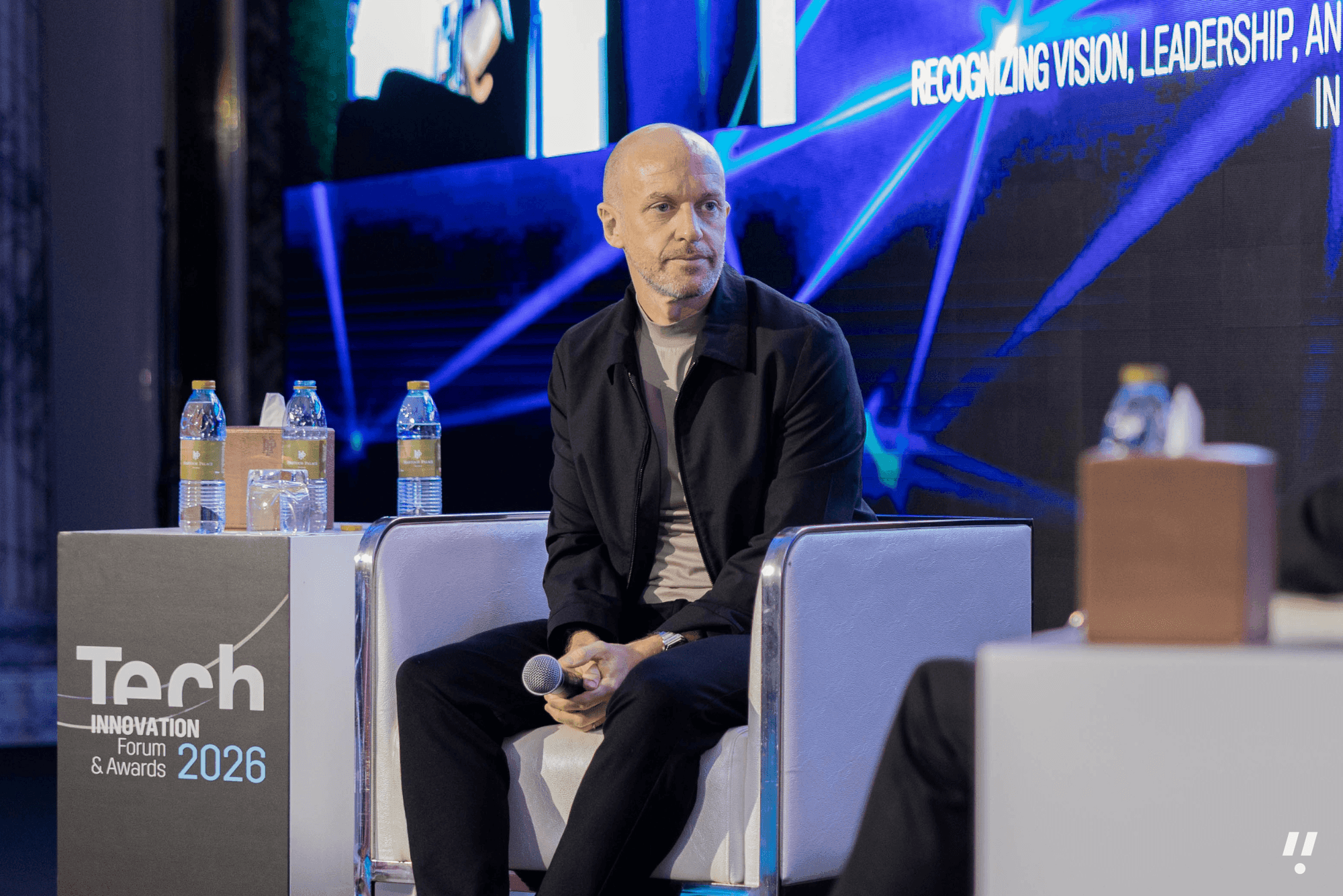
Richard Fitzgerald has spent two decades in media and advertising, and the company he founded in Dubai now runs more than 30 Lovin' city editions, 12 verticals across Smashi and ODEUM, offices in over 30 cities and a staff of more than 140 people. He set out that trajectory in a fireside conversation with Wissam Younane, co-founder and CEO of BNC Media Group, at the Tech Innovation Forum 2026.
From agencies to Augustus
Fitzgerald's career began in 2006 and moved through agencies in Ireland, England and the UAE, including a period inside WPP. He built the regional social media department at Mindshare MENA and later served as managing director of a creative technology startup. He arrived in Dubai in 2012, working on social media and community management across the region, and describes that stretch as the blueprint for what came next.
Augustus Media launched in 2015, at a moment when BuzzFeed looked like the future of publishing. That promise did not hold, Fitzgerald said, but he judged parts of the model adaptable to local audiences, and Lovin Dubai and locally relevant branded content proved him right.
Buying back the franchise
Lovin' began as a franchise. The arrangement gave him a name readers recognized and a content management system he did not have to build. "When you're building a media company, you need to build an audience before you can sell," he said. Five years in, the economics turned against the structure: royalties and the limits of a brand that was not established internationally. Augustus bought out the franchise in 2020 and took ownership of the intellectual property.
When you're building a media company, you need to build an audience before you can sell,
Smashi followed, set up around 2019 and 2020 as the deliberate opposite of Lovin'. Where Lovin' sells escapism, Smashi speaks to people building businesses and working second jobs.
The company was never heavily funded. A $20,000 franchise fee, $40,000 from Fitzgerald and his brother, and $120,000 from two other investors came to $160,000, the only outside money the business has taken. It turned profitable in 2017 and has stayed there, aside from the pandemic year, when dividends were skipped.
Studios, sports and streaming
Coming out of the pandemic, Augustus took a 12,000-square-foot studio in Dubai Production City at a fit-out cost of roughly AED4 million to AED5 million, funded partly by Beehive debt financing. Teams moved in during January 2022. Fitzgerald ties that physical concentration of young creatives to the growth since, alongside UAE economic conditions and regional expansion.
Streaming is now the front line. Smashi has split into Smashi Business and Smashi Sports, and the company has invested in connected TV and subscriptions. Fitzgerald's reasoning is blunt: audiences would not pay for an Arabic business show, but they will pay for local sport. Augustus has signed with UEFA for 750 games this season and uses AI cameras across many leagues. Live sport, he argues, resembles the fast-turnaround output Lovin Dubai teams already produced far more than a Netflix-style originals slate would.
Advertising money is shifting too. Connected TV and retail media are moving from curiosity to line item, the way social media did years ago. Lovin Dubai TV now sits on Samsung TV Plus and LG Channels, distributed through television operating systems rather than satellites, with a Lovin app carrying content from about 30 cities and roughly 70 English and Arabic podcasts.
Egypt, Saudi Arabia and what comes next
Owning the IP let Augustus expand faster: launch on social, then open offices and secure licences once traction appears. Egypt is the standout. The company entered in 2021 around technology and Arabic business content, launched Lovin Cairo in 2022, and has since hired about 50 people there. Fitzgerald is especially bullish on the North Coast, pointing to 300 to 400 kilometres of Mediterranean coastline behind Lovin Sahel. Market selection weighs smartphone penetration, social media use and population, and he believes the local-news model can work even where economics are harder, citing Lovin Beirut, Lovin Amman and Lovin Damascus.
Saudi Arabia is the long game, with about 25 staff across two offices, roughly 22 of them Saudi nationals, a Saudi managing director and a Saudi head of content. Fitzgerald is glad he ignored advice to take a local partner: Augustus holds 100% of the business and, he says, is the only foreign company with a government-media licence there.
He wants more independent regional media companies at scale, and names subscription revenue as the priority for making that ambition durable. The best deal in the company's history, he said, was buying the assets of the newspaper 7DAYS in 2017 and having Facebook merge its roughly 600,000 followers into Augustus's pages. Looking ahead, he predicts fully AI-powered media companies will start generating advertising revenue in 2027. Asked where Lovin' should push next, he named Kuwait, where advertisers are already showing interest.

