Ghaia and Chicago Global Press AI Governance Case at Money20/20 Middle East
The two firms demonstrated the Parallax platform in Riyadh and used two panels to argue that explainability must keep pace with AI adoption in finance.
Karim El-Sayed Karim El-Sayed covers company news, policy and regulation across the UAE and wider MENA for Anecdoted, with a focus on how new rules and licences reshape how startups operate. karim@anecdoted.com
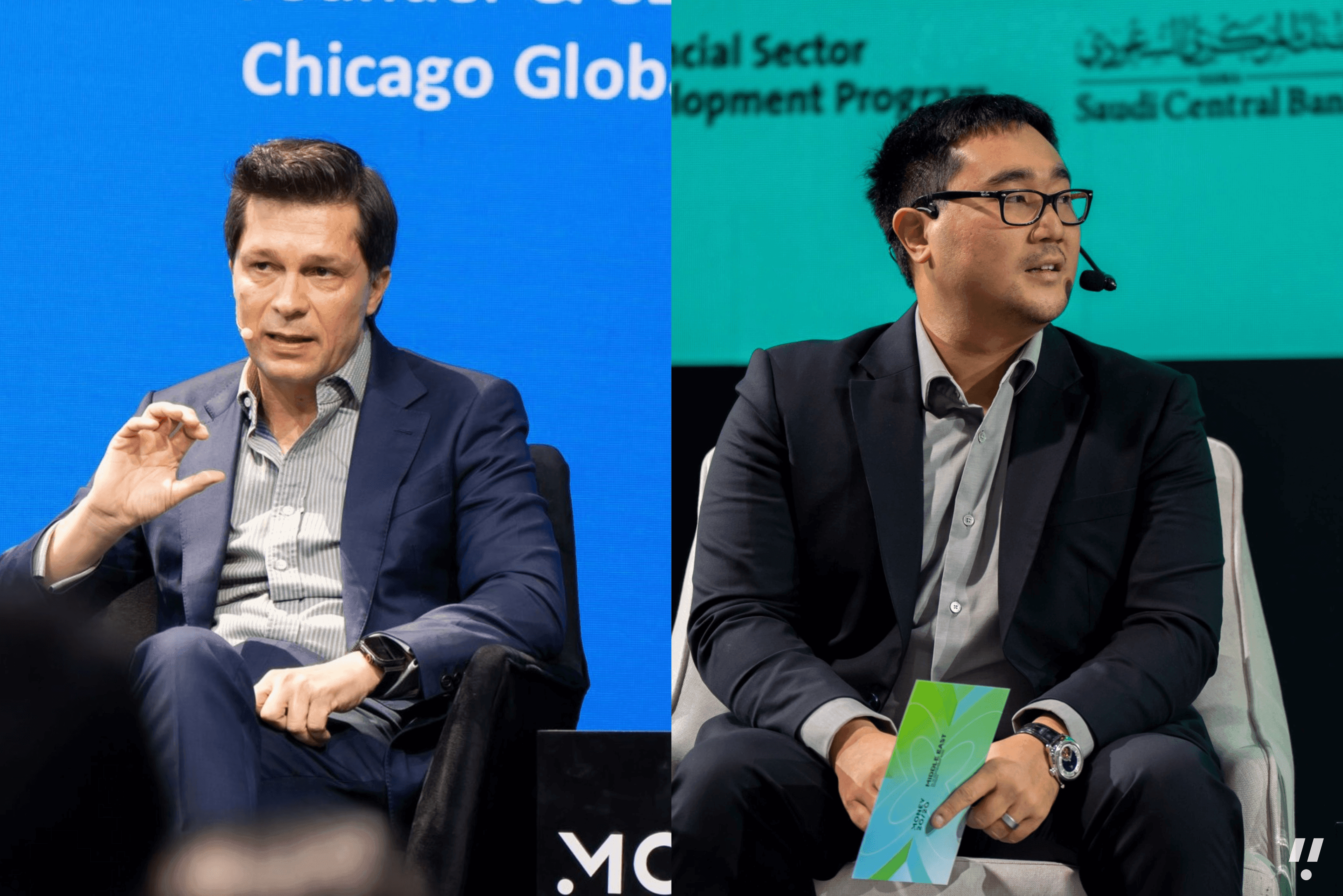
Two firms used their appearance at Money20/20 Middle East in Riyadh to argue that artificial intelligence is arriving in finance faster than the rules for governing it. Ghaia Investment Holding, a Saudi investment firm, and Chicago Global, which builds AI-powered investment intelligence, demonstrated the Parallax platform and joined sessions on capital allocation and institutional responsibility.
Parallax launched in Saudi Arabia earlier in 2026. The platform is built for financial institutions, covering investment research, portfolio construction and risk assessment, and it draws on real-time analysis of market data from both inside the Kingdom and abroad. Chicago Global puts the scale of the system at more than one billion data points processed each week, coverage of over 65,000 companies across 48 global markets, and 387 publicly listed Saudi companies. The company says the platform supports more than a million users and investment portfolios worldwide.
Ivan Chelebiev, founder and CEO of Chicago Global, focused on explainability. Transparency and explainability are no longer optional now that AI sits inside financial decision-making, he said, and investors and institutions need to see both the recommendation and the reasoning behind it. Trust, in his framing, rests on whether outputs can be verified, challenged and understood. He spoke on a panel titled 'Who Should Allocate Capital?', which examined AI across venture investing, private markets and corporate finance, and weighed how human oversight and institutional accountability hold up as machines take on more of the allocating.
Ben Charoenwong, founder and chief scientist at Chicago Global and an associate professor of finance at INSEAD, took the question of failure. His panel, 'When AI Fails: Who Pays?', dealt with liability, model oversight and who carries responsibility when AI-powered financial systems go wrong. For Charoenwong, the difficulty facing the industry is not whether AI can make decisions. It is how institutions keep those decisions accountable, auditable and consistent with regulatory and fiduciary obligations.
The governance question lands differently in a market still building out its financial infrastructure. Institutions adopting these tools are being asked to sign off on models whose reasoning they may not fully control, at a moment when boards, regulators and fiduciaries are only beginning to define what a defensible AI-supported decision looks like. A platform that exposes its reasoning, and an institution able to audit it, are what make an answer possible when a model gets a call wrong.
Alwaleed Alshuwaier, director of corporate affairs at Ghaia Investment Holding, described a sector moving quickly. Saudi Arabia is advancing as a hub for financial and AI innovation, he said, and as Vision 2030 ambitions accelerate, transparency, accountability and strong governance are what will let the technology deliver its full potential in finance. Ghaia and Chicago Global have worked together to give Saudi financial institutions access to AI-based investment intelligence, a collaboration taking shape as AI use spreads through the country's financial sector.

